NEW YORK — Karen Matthews was busy getting her three-year-old daughter ready for preschool in her Manhattan apartment on the morning of September 11, 2001, when an unearthly, deafening boom shattered the quiet.
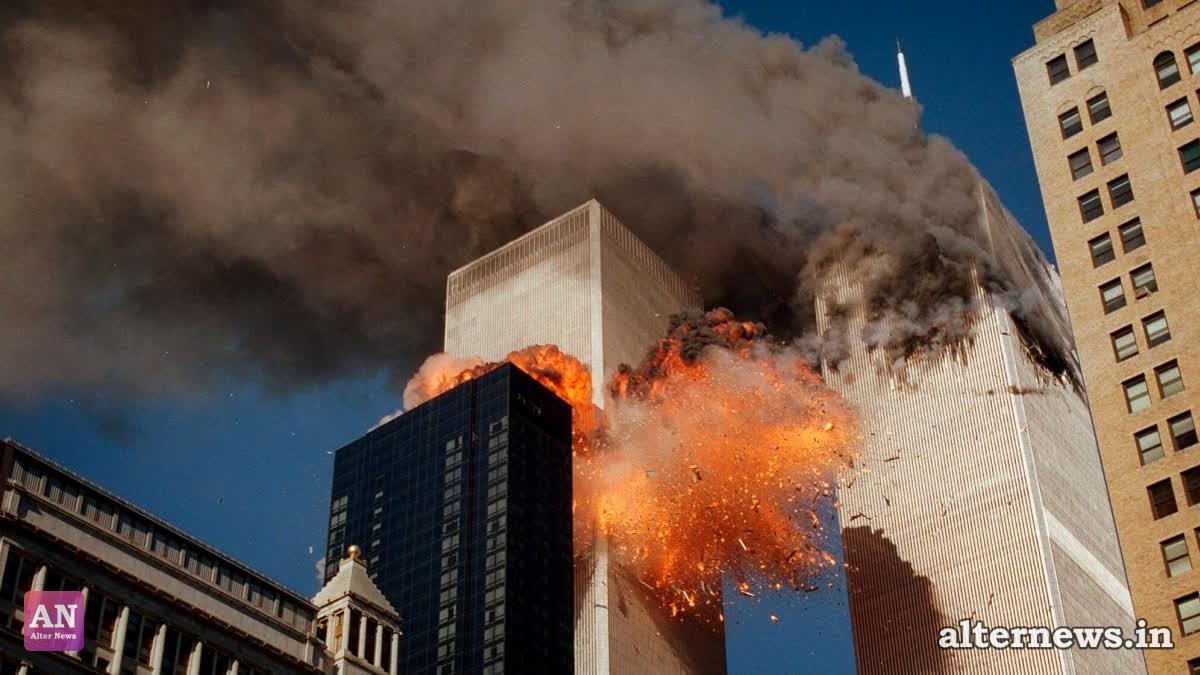
Grabbing her child, she rushed outside. Around her, people stared in disbelief at a massive gash billowing thick black smoke from the north tower of the World Trade Center, just blocks away.
"What did you see? What did you see?" pedestrians asked one another in panic. Matthews, an Associated Press reporter, found herself instinctively asking the same question—fumbling for her notebook while holding her daughter tight. What was supposed to be a routine morning dropping her child off before covering New York’s primary election instantly transformed into living through and documenting one of the darkest days in modern history.
Twenty-five years later, Matthews and other veteran AP journalists who lived through that fateful morning are looking back, sharing vivid and haunting memories of what they saw.
At First, No One Knew What Was Happening
In the building's lobby, Matthews passed a weeping neighbor. Many initially assumed a small, stray plane had accidentally clipped the skyscraper. Then, a second hijacked jet slammed into the south tower, sending a massive fireball erupting into the sky.
"'I want to go to school, I want to go to school,'" her daughter began to cry.
"That's when we all knew that we were under attack," Matthews recalled.
As teachers frantically rushed crying children north, Matthews hurried back inside to safety. Moments later, two more impossible roars echoed through the city as first one tower collapsed, and then the other. Nearly 3,000 lives were lost that day at the World Trade Center, the Pentagon, and in Pennsylvania. Today, retired, Matthews still divides her life strictly into a "before" and "after" September 11.
The Camera as a Wall
Richard Drew stepped off the subway at Chambers Street expecting a routine assignment: covering the glamour and runway shows of New York's Fashion Week. Instead, he stepped into a nightmare of smoke and gray ash.
An emergency medical worker pointed upward, alerting him to people plummeting from the burning towers. Drew raised his camera and began capturing the tragedy, producing an iconic and deeply controversial image known as "The Falling Man."
Reflecting on the assignment, Drew noted that his wife calls his camera a "wall"—a psychological filter separating the photographer from the raw reality in front of him. Even decades later, he thinks about that unidentified man and that day at least once a week.
The Empty Wheelchairs
As pulverized tower dust fell like a toxic snowstorm, AP reporter Larry Neumeister rushed to a hospital near Ground Zero. Doctors, nurses, and rows of empty wheelchairs stood waiting at the entrance, bracing for a massive wave of injured survivors.
As hours bled into the afternoon, no one came. By midnight, a doctor delivered a grim reality check at the site: "You either walked away from the site or ran away from the World Trade Center buildings when they fell, or you were gone. There was no in-between."
Hearing a Father's Voice
Jeremy Brown, then a 26-year-old AP cameraman, was filming near the complex when a firefighter yelled at him to grab his gear and follow. Plunged into the loading dock of 7 World Trade Center amidst suffocating heat and darkness, Brown sought shelter before navigating his way out to safety.
Amidst the chaos and lack of cell service, a voice suddenly shouted his name: "Jeremy!" It was his father, who worked nearby. Father and son spent the day together, carrying equipment and recording history.
"Every time I looked up as a human I could see the devastation, the hurt, and I knew that the world was never going to be the same," Brown said.
Muscle Memory and Survival
Amy Sancetta, a retired AP photographer who was in New York after covering the U.S. Open, rushed downtown just as the south tower began to collapse.
"The weirdest thing that went through my head at the time was, it was kind of muscle memory, like shooting a basketball game," she shared.
After sheltering in a parking garage and comforting a distraught survivor, Sancetta emerged into a blinding, white-coated landscape of floating office paper and weeping crowds. A quarter-century later, she still remembers the collapse as "unearthly."
"As a journalist, I'm glad I was there," Sancetta reflected. "लेकिन as a human being, I wish I'd gone home on Monday."