TEZPUR / HYDERABAD — As India prepares to celebrate Independence Day, the atmosphere in the strategic frontier settlements along the Line of Actual Control (LAC) presents two sharply contrasting narratives. While improved roads, grid connectivity, and welfare initiatives have brought visible transformations to some border pockets, ongoing youth migration in others threatens to leave state-of-the-art government infrastructure largely unused.
The Government of India launched the flagship Vibrant Villages Programme (VVP) in April 2023 from Kibithoo in Arunachal Pradesh, expanding its reach in subsequent phases across border states. Designed to redefine remote border settlements as the "first villages of the country" rather than the "last," the national security initiative aims to halt outward migration, turn isolated communities into self-sustaining hubs, and transform frontier populations into active security assets.
Arunachal Pradesh shares an unstable 1,080 to 1,200-kilometer border along the McMahon Line with China, a neighbor that frequently attempts to claim portions of the state as "South Tibet." While New Delhi maintains a firm stance against external aggression, ground realities across different sectors of Arunachal Pradesh show that building physical structures alone may not fully address the challenge of border depopulation.
Zemithang: Where Connectivity Meets Local Enterprise
In the Western sector’s Zemithang valley, located in Tawang district near the India-China-Bhutan tri-junction, the impact of the Vibrant Villages Programme and military outreach is unmistakable.
According to village head Wangshu, daily life in Zemithang once involved grueling treks across treacherous terrain and unsafe river crossings just to reach basic services or military outposts. Today, all-weather motorable roads, steady electricity, clean drinking water, and upgraded healthcare facilities have altered the landscape.
Central to this transformation is the Indian Army’s Operation Sadbhavana under the Gajraj Corps, alongside active support from the Indo-Tibetan Border Police (ITBP). Beyond guarding the border, security forces conduct regular medical camps, provide veterinary care, and organize social welfare programs for residents.
Local tourism is also taking root around cultural landmarks like the Gorsam Chorten and the annual Gorsem Festival. Self-help groups are leveraging this momentum to create sustainable livelihoods. Ahead of August 15, the women-run 'Komo's Café' in Zemithang is setting up special festive food stalls selling momos, chowmein, fried rice, and traditional millet-based snacks to tourists and visiting personnel alike.
Limeking-Taksing: Empty Classrooms and Infrastructure Disconnect
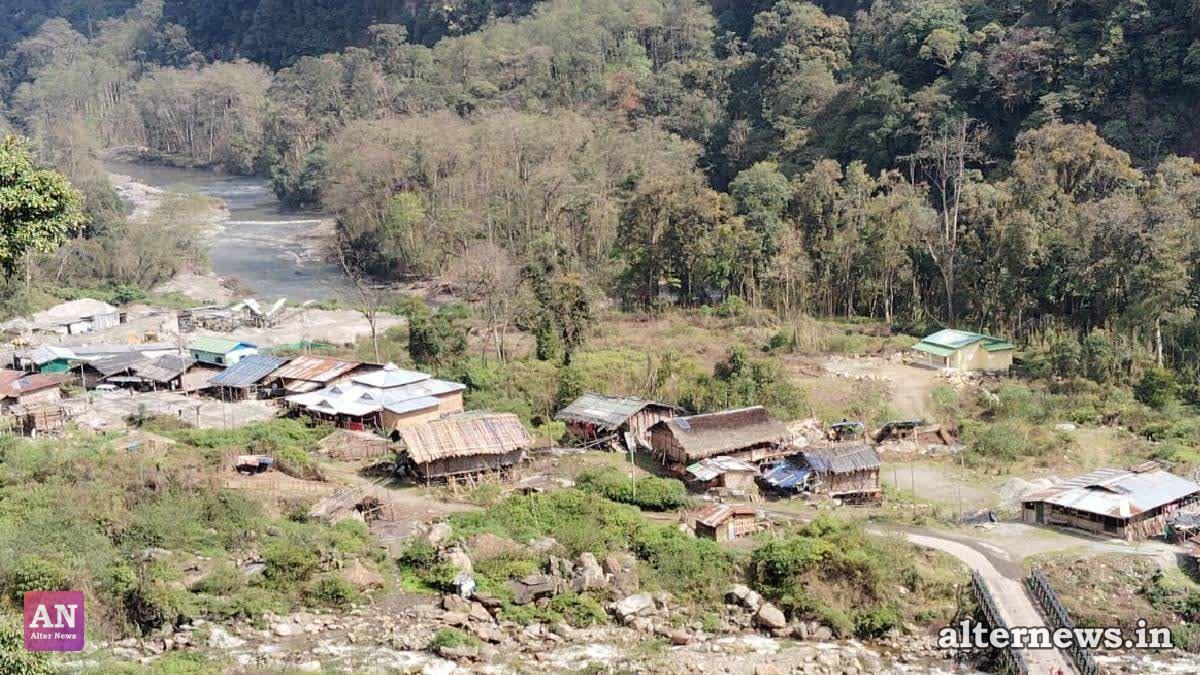
A few hundred kilometers east, in the Limeking–Taksing region of Upper Subansiri district, a very different picture emerges. Here, despite the construction of schools, community centers, and administrative buildings, the local population continues to decline steadily as young people leave in search of higher education and steady income.
Tabya Mra, a resident of Bidak village, recalls a time when Independence Day celebrations drew large crowds, featuring lively school parades, band performances, and sports competitions organized jointly by locals and security forces. While ceremonies continue today, public participation has dropped noticeably.
"If there are no children left in the village, what is the purpose of having a school building?" Mra noted, pointing out that the Taksing-Limeking circle has three middle schools and 11 primary schools that struggle with dwindling attendance. "We need to ensure people stay in these villages first. Community halls and sports facilities are only useful when there is actually a community to use them."
Residents in the area advocate for a shift in development strategy—moving from basic construction toward direct economic support. Key suggestions include encouraging reverse migration through local business grants and integrating border farmers directly into supply chains by purchasing fresh produce locally for military garrisons, rather than transporting food items from distant urban markets.
Demographics as a National Security Shield
Experts and local leaders emphasize that retaining civilians in border areas is not merely an economic concern, but a fundamental pillar of national security. Frontier residents possess irreplaceable territorial knowledge and serve as crucial eyes and ears along remote stretches where physical fencing is non-existent.
A detailed ground analysis published by Alter News highlights that while infrastructure provides the essential foundation, generating sustainable local income remains the ultimate key to retaining populated, secure borderlands along India's northern frontier.