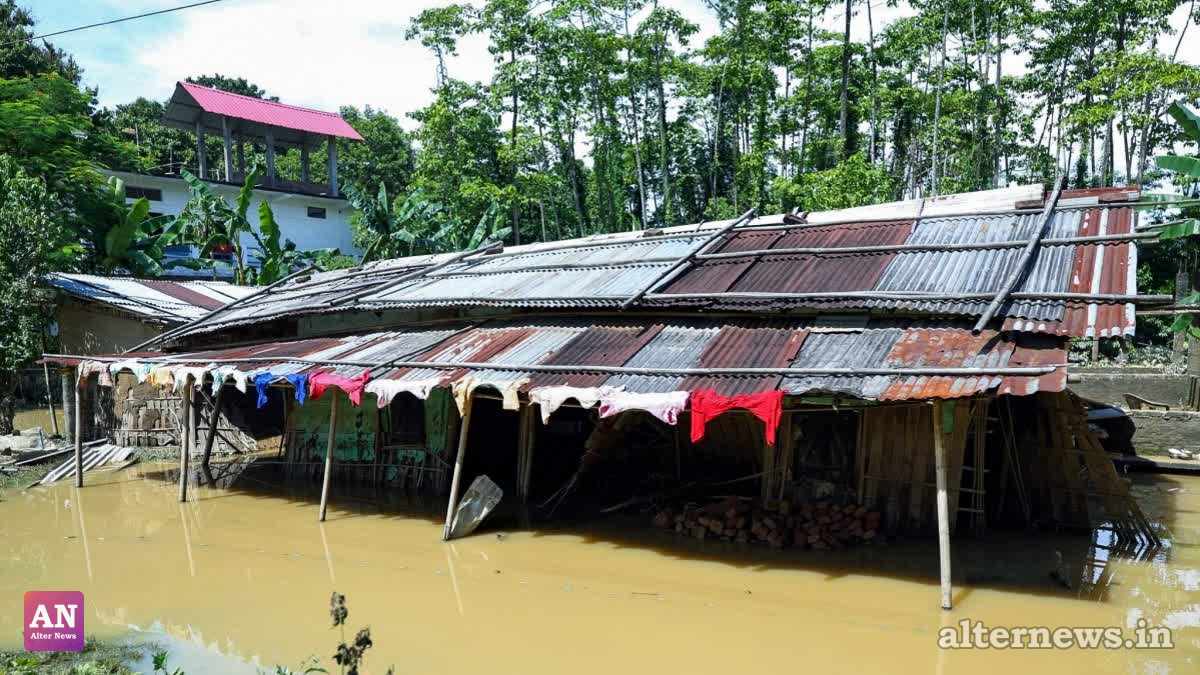
GUWAHATI — The overall flood situation in Assam registered a slight marginal improvement, though hundreds of thousands of residents continue to face severe distress. According to the latest bulletin released by the Assam State Disaster Management Authority (ASDMA), nearly 6.55 lakh people across six eastern districts remain submerged in floodwaters, while four fresh fatalities reported in a single day have pushed this year's total deluge death toll to 66.
The four newly recorded fatalities occurred in Upper Assam, with Sivasagar reporting three deaths and neighboring Charaideo recording one.
While flood waters receded in three districts overnight—bringing the total affected districts down from nine on Friday to six—the humanitarian strain remains critical. As of Saturday, exactly 6,54,800 individuals are reeling under inundation across Sivasagar, Charaideo, Jorhat, Dibrugarh, Golaghat, and Nagaon districts.
Sivasagar Remains Hardest Hit
Sivasagar continues to be the epicenter of the crisis, accounting for nearly 2.9 lakh affected residents. Charaideo follows closely with over 1.9 lakh people impacted, while Jorhat reports more than 1.3 lakh affected citizens.
To accommodate families whose homes have been swallowed by rising rivers, local district administrations are currently operating 274 relief camps and emergency distribution centers across the six affected zones. A total of 18,902 displaced persons are taking shelter in these official relief centers.
Infrastructure and Agriculture Devastated
The floodwaters have inundated 810 villages and laid waste to over 34,970 hectares of crop fields across the state, dealing a massive blow to the rural agrarian economy. Widespread destruction of critical infrastructure—including breached river embankments, submerged roadways, and collapsed bridges—continues to disrupt transportation and rescue operations.
Key waterbodies continue to run dangerously high. ASDMA confirmed that major rivers, including the Dikhou in Sivasagar and the Dhansiri at Numaligarh, are still flowing above their critical danger levels. Relief agencies, state response units, and district administration teams remain deployed in affected sectors to provide medical assistance and emergency rations.