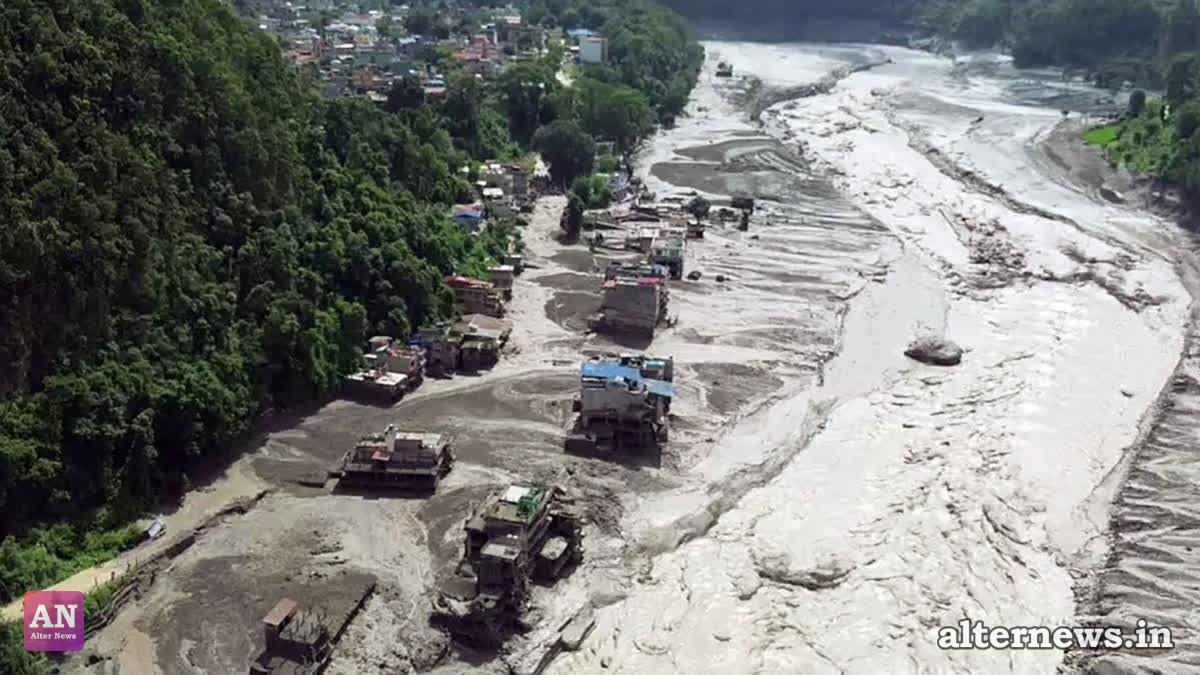
NEW DELHI / PATNA / LUCKNOW — Disaster management authorities and district administrations in Bihar and Uttar Pradesh were put on high alert following catastrophic flash floods originating in Tibet that devastated several districts across central Nepal. The deluge has severely impacted the upper reaches of the Trishuli and Narayani river systems, sparking fears of widespread inundation across downstream border regions in northern India.
Union Home Minister Amit Shah reached out to Bihar Chief Minister Samrat Choudhary to evaluate the evolving situation, assuring the full support of the central government. Teams from the National Disaster Response Force (NDRF) and the State Disaster Response Force (SDRF) have been mobilized across sensitive zones. Simultaneously, the Sashastra Seema Bal (SSB) placed all border outposts along the 1,751-km India-Nepal international frontier on high vigilance, detailing 18 operational rescue teams for immediate response.
High Alert Across Bihar Districts
In Bihar, special surveillance has been ordered across key districts in the Gandak basin, including West Champaran, East Champaran, Gopalganj, Saran, Muzaffarpur, Vaishali, Sitamarhi, and Sheohar.
To handle the immense volume of water entering from Nepal, engineers opened all 36 gates of the Valmikinagar Barrage along the Gandak River. Bihar Deputy Chief Minister Vijay Kumar Choudhary, who holds the Water Resources portfolio, confirmed that a initial discharge of approximately 86,000 cusecs of water was executed around noon.
"A dedicated technical team led by a Superintending Engineer is positioned at the barrage to monitor real-time discharge," Choudhary stated, adding that warnings have been issued across all river basin districts. Although the Narayani river level at Devghat in Nepal measured 4.77 meters—well below the 7.30-meter warning threshold—officials warned that any sudden surge in Nepal would reach the Valmikinagar Barrage in roughly 3.5 hours, warranting overnight vigilance.
Bihar Chief Secretary Pratyaya Amrit conducted an emergency review with District Magistrates and Superintendents of Police, ordering immediate readiness of evacuation shelter sites, motorboats, and community kitchens.
Uttar Pradesh Steps Up Evacuations
In neighboring Uttar Pradesh, Chief Minister Yogi Adityanath instructed officials in Maharajganj and Kushinagar to take proactive emergency measures as water levels in the Gandak and Narayani rivers threaten low-lying villages.
In Kushinagar district, local authorities initiated evacuations in vulnerable riverside settlements, including Marchahwa and Shivpur, using public address systems to urge residents to move to higher ground. Maharajganj District Magistrate Gaurav Singh Sogarwal mandated 24-hour monitoring of the river system, directing quick-response teams to remain prepared for swift evacuations if downstream flows accelerate.
The Nepal Trigger
The cross-border emergency follows a massive flash flood triggered in Tibet that swept through central Nepal's Rasuwa, Dhading, Nuwakot, and Chitwan districts. The deluge roared through the Bhote Koshi River—an upper tributary feeding the Trishuli and Narayani/Gandak basins—leaving at least 17 dead and nearly 500 people missing, including over 100 Indian nationals.
Authorities in both Indian states have appealed to the public to avoid panic, follow official bulletins, and ignore unverified social media rumors as disaster response agencies maintain round-the-clock monitoring.