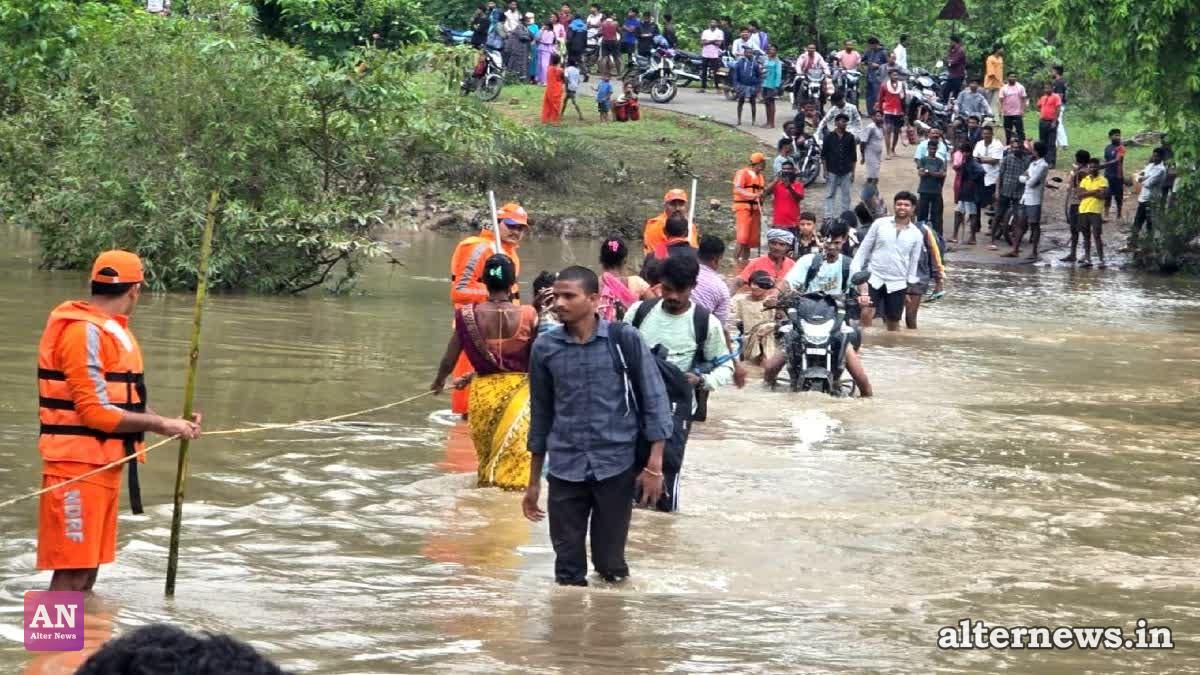
BIJAPUR, CHHATTISGARH — Relentless downpours over three consecutive days have thrown normal life into disarray across Chhattisgarh’s southern Bijapur district, flooding low-lying areas, cutting off roads, and triggering emergency rescue operations.
In response to rapidly rising water levels, district authorities suspended traffic movement across submerged culverts, set up relief shelters, and placed all disaster response teams on high alert on Friday.
Joint Teams Lead High-Stakes Rescue
The most critical rescue operation unfolded in Kutru, situated within the Bhairamgarh development block, where the Amberi Nala overflowed its banks following heavy catchment rainfall. Swelling currents trapped dozens of residents, leaving several isolated in inundated areas.
A joint task force comprising the National Disaster Response Force (NDRF) and the State Disaster Response Force (SDRF) navigated choppy waters using inflatable motorboats to safely evacuate trapped villagers. Officials confirmed that all stranded residents were moved to designated relief centers and safer locations without casualties.
Arterial Roads and Borders Closed
Swelled by upstream discharges, the Indravati River and localized tributaries surged past warning thresholds, flooding low-lying bridges and culverts. Local administration closed major thoroughfares to traffic, including the key Barigoda Road Culvert, to prevent hazardous crossings.
Along the Chhattisgarh–Maharashtra border regions of Somnath and Penlaya, police and transport authorities instructed heavy transport vehicles and truck drivers to halt movement and park in designated safe zones until floodwaters recede.
On-the-Ground Administration and Medical Relief
To assess damage and coordinate relief measures, Bijapur Collector Vishwadeep and District Panchayat CEO Namrata Chaubey conducted an inspection of the flood-affected Chandangiri village. Collector Vishwadeep directed line departments to guarantee an uninterrupted supply of clean drinking water, food packets, and basic essentials to displaced families.
Simultaneously, the Health Department dispatched medical teams to set up emergency relief camps inside a primary school facility at Gullapenta. Medical staff are delivering first aid, essential medications, and monitoring for waterborne disease outbreaks among flood victims.
District authorities continue to monitor water levels round-the-clock and have advised residents in vulnerable, low-lying zones to refrain from non-essential travel while heavy rainfall persists across the region.