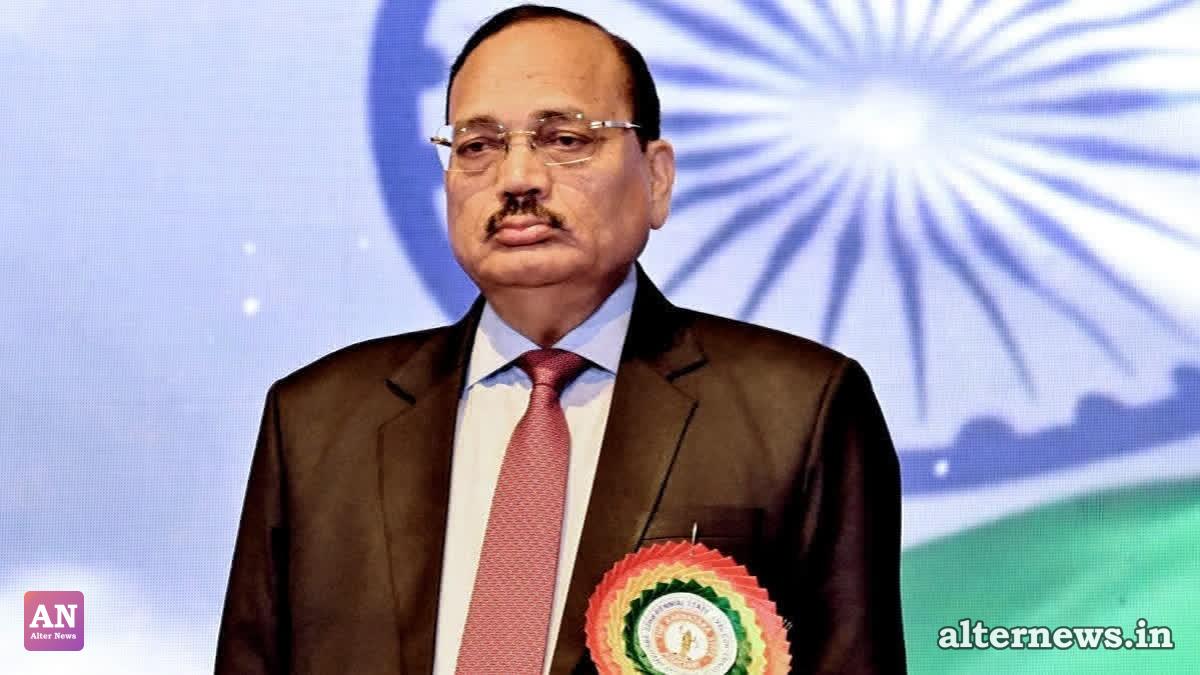
Jaipur: Chief Justice of India Surya Kant has sounded a note of caution against leaving online dispute resolution entirely in the hands of artificial intelligence. Speaking at the inaugural session of the Commonwealth Peace Mediation Conference 2026 in Jaipur, the CJI highlighted that while AI platforms can synthesize human voices, they remain fundamentally incapable of offering genuine "human empathy and apology."
Addressing legal luminaries, international delegates, and practitioners, CJI Surya Kant stressed that online mediation should continue to be guided predominantly by trained human professionals.
AI Useful for Reach, But Human Touch Is Indispensable
Reflecting on the integration of modern technology into the judicial landscape, the Chief Justice welcomed the growth of Online Dispute Resolution (ODR) mechanisms, noting their potential to carry mediation services to the farthest corners of Commonwealth nations. However, he warned against over-reliance on automated tools.
"Online mediation may not be left entirely to AI-based software," Justice Kant remarked. "They may carry a human voice but won't be able to display human empathy and apology. I recommend that online mediation should be conducted predominantly by trained mediators only."
Mediation Earns Its Seat Beside Litigation
Rejecting the traditional view that non-court settlements are secondary options, CJI Surya Kant asserted that mediation has matured into an independent pillar of justice.
"Mediation must no longer be treated as a lesser cousin of litigation, waiting outside the courtroom for its turn," he said, citing the statutory framework established under the Mediation Act. "It has earned a seat at the same table as the court. The two are not competitors; they are complementary to each other."
Comparing the two mechanisms, he explained: "The court gives us certainty, precedent, and the final word when all else fails. Mediation gives us the space to write our own ending, before the last word ever needs to be spoken."
Rooted in Community: From Village Panchayats to Global Peacebuilding
Drawing from his personal background growing up in a village in Haryana, Chief Justice Kant drew parallels between formal Alternative Dispute Resolution (ADR) and traditional Indian community dialogue.
He recalled how family or neighborhood disputes were historically settled under village trees by local elders long before formal terms like 'ADR' existed. "Nobody called it Alternative Dispute Resolution in those days. We called it panchayat. It was mediation before the word became fashionable," he shared.
He emphasized that the true measure of any peace process lies not in formal paperwork, but in whether interpersonal relationships endure after the conflict is over. "Not whether the paperwork is signed, but whether the neighbours can still share a cup of tea the next morning," Justice Kant noted.
About the Commonwealth Peace Mediation Conference 2026
The three-day international conference, organized by the Rajasthan State Legal Services Authority (RSLSA), brings together representatives from 52 Commonwealth countries to deliberate on diverse mediation streams—including workplace, environmental, criminal justice, family, and commercial disputes.
The inaugural event was attended by notable dignitaries, including Union Minister of State for Law Arjun Ram Meghwal, Rajasthan Chief Minister Bhajanlal Sharma, Rajasthan High Court Acting Chief Justice S. P. Sharma, and Zambia Supreme Court Judge Abha Nayar Patel.
Organizers expect the conference to culminate in the adoption of the 'Jaipur Declaration on Peace Mediation,' aimed at serving as a practical guide for legal systems worldwide.