ATHENS / PARIS — A unprecedented summer heatwave accompanied by prolonged dry conditions tightened its grip across Europe on Monday, fueling ferocious wildfires in Greece and France while pushing large swathes of the United Kingdom into severe drought conditions.
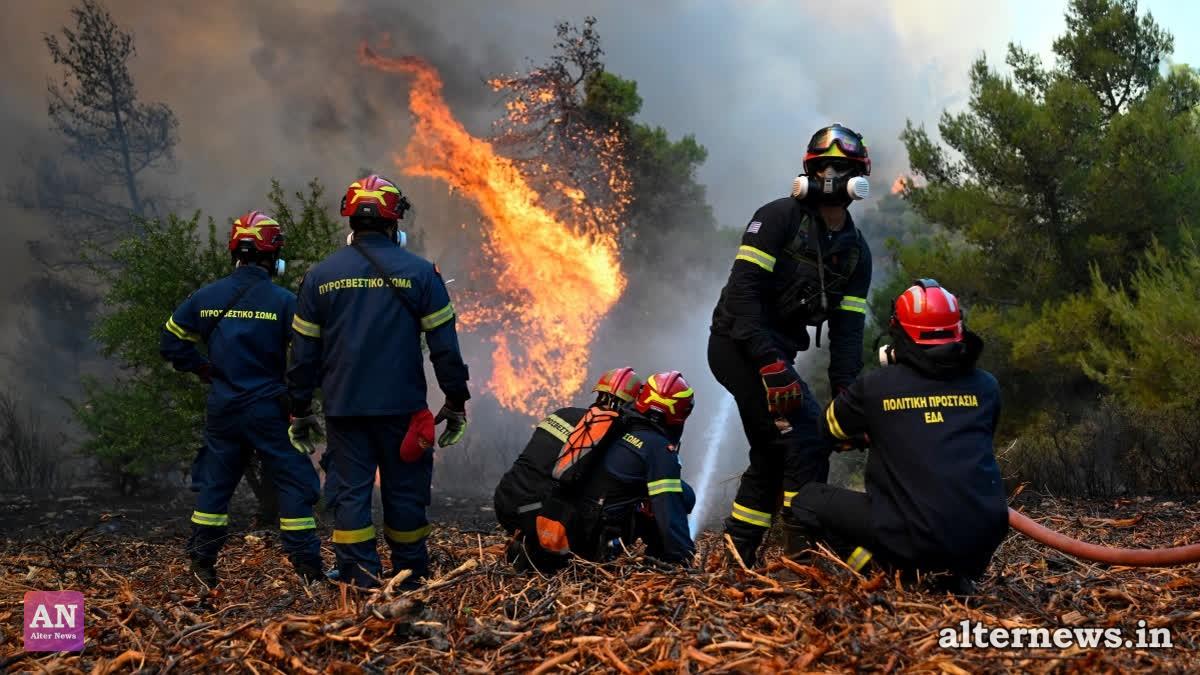
In Greece, water-dropping aircraft swooped continuously over blazing ridge lines west of Athens as firefighters battled to hold back flames reinvigorated by erratic mountain winds. The firefighting effort came amidst tragedy after a midair collision between two chartered firefighting helicopters on Sunday claimed the lives of a Greek and a Danish crew member and hospitalized two others near Porto Germeno.
Despite aerial reinforcements—including 12 water-dropping planes and 11 helicopters—strong gales late Monday pushed flames into residential clusters, destroyed property and farms, and forced the closure of key highway arteries. Greek authorities confirmed that more than 1,000 residents and tourists were evacuated from coastal communities west of the capital, with maritime rescue teams pulling over 250 individuals directly off beaches. Initial investigations point to a faulty wind farm power line as the cause of the inferno, leading to the arrest of two contractors on charges of negligent arson.
Further west, French emergency teams maintained a cautious vigil over the country’s largest wildfire on record, which scorched approximately 420 square kilometers (162 square miles) in the Gironde region—an area four times the size of Paris.
With fire lines holding, authorities permitted thousands of evacuees to return to devastated communities, including Le Porge and the tourist hub of Cap Ferret, marking the gradual end of France's largest civilian evacuation since World War II. However, a second blaze in Provence remained uncontained as firefighters fortified containment lines ahead of forecast high winds.
Meanwhile, northern Europe offers little respite from the scorching summer. Provisional figures released Monday by the UK’s Met Office revealed that England and Wales experienced their driest July in nearly 200 years of official recordkeeping. Drought status has now been declared across all of Wales and more than half of England following months of sub-average rainfall and back-to-back heatwaves.
The extreme weather pattern extended to the Netherlands, where Dutch military Chinook helicopters were deployed to drop water on a large forest fire in Limburg, disrupting regional rail traffic and forcing campsite evacuations due to dense smoke.
Data from the European Union’s Copernicus Climate Change Service highlights that Europe remains the world's fastest-warming continent, heating at more than twice the global average rate since the 1980s. Climate experts warn that these rising baseline temperatures leave vegetation increasingly combustible, turning summer heatwaves into catastrophic compound disasters.