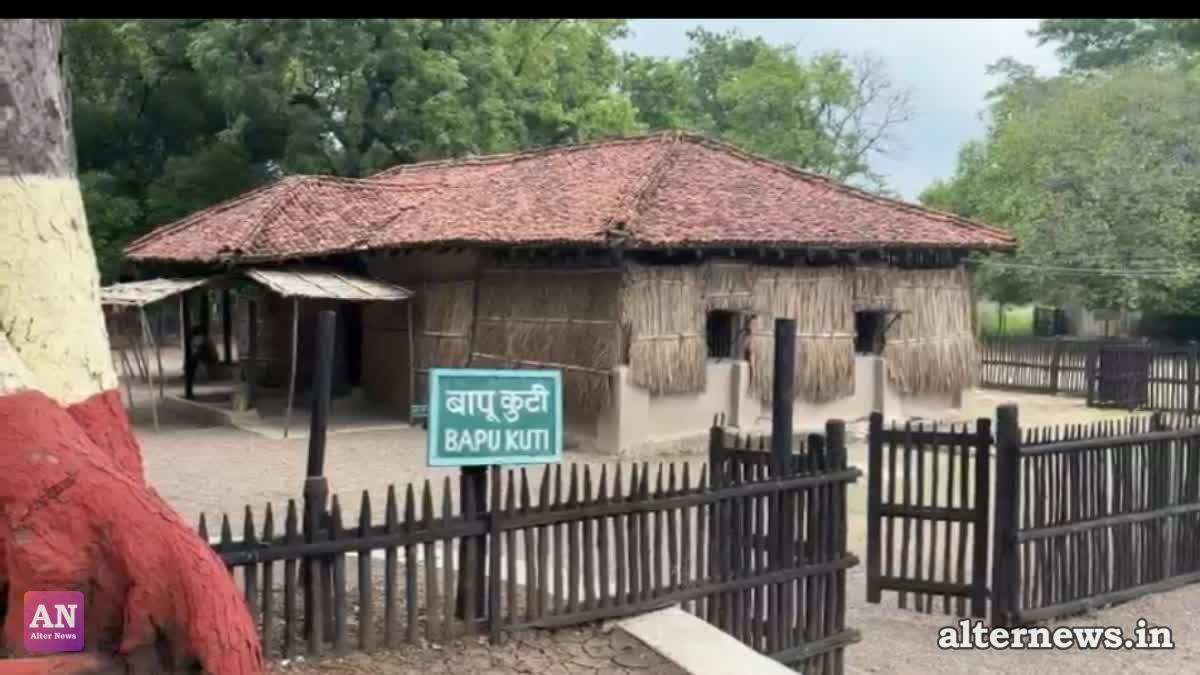
WARDHA: Long before millions would commemorate his birth anniversary, Mahatma Gandhi laid down a strict condition for building his home in a remote Maharashtra village: spend as little as possible, ensuring the construction cost did not exceed Rs 100 under any circumstances.
The man spearheading India's freedom movement wanted a residence that an ordinary villager could instantly recognize and relate to as their own. When Gandhi first expressed this wish on March 19, 1936, ahead of settling in Segaon—later renamed Sevagram—it wasn't just about thriftiness. Ninety years later, that initial instruction provides an intimate window into his deep-rooted philosophy that private choices must reflect public convictions.
Finding a Home in Village India
Gandhi’s bond with Wardha deepened during the 1930s, largely driven by Jamnalal Bajaj’s persistent invitation. Driven by a desire to live shoulder-to-shoulder with rural citizens and understand their daily struggles firsthand, Gandhi was drawn to Segaon.
When he arrived on April 30, 1936, the settlement lacked basic infrastructure: no proper roads, no post offices, and an abundance of dense forests populated by snakes and scorpions. With his permanent cottage still under construction, Gandhi initially camped in a temporary shelter inside a guava orchard near a well.
Rajendra Sharma, a prominent Gandhian researcher and thinker, notes that Gandhi sought daily contact with villagers to truly understand rural self-reliance (Gram Swaraj). "His home had to belong to that setting," Sharma explains. "He wanted local artisans to build a simple hut using locally available materials like earth, bamboo, wood, and roofing tiles."
The Thinking Behind the Rs 100 Limit
Gandhi’s ceiling of Rs 100 underscored his unwavering commitment to Swadeshi (indigenous self-sufficiency). By employing local craftspeople and utilizing regional resources, construction could directly support the fragile village economy. Leading a country where millions lived in austere mud-and-thatch homes, Gandhi felt it improper to seek greater comfort for himself.
However, the final construction exceeded the initial Rs 100 threshold—an overrun that reportedly displeased Gandhi and required Jamnalal Bajaj to step in and pacify him. Thus, the figure served as an ideal benchmark proposed by Gandhi rather than the absolute final cost.
Living Together at Adi Niwas
On June 16, 1936, Gandhi moved into the cottage known as Adi Niwas. He shared this modest dwelling with Kasturba Gandhi, his secretary Pyarelal, and other ashram residents and guests.
Madhuri Ravindra Chambhare, a guide at the Sevagram Ashram Pratishthan, shares that the cottage accommodated both his daily chores—such as reading, writing, and spinning on the charkha—and domestic life, complete with a small kitchen, bathroom, and a verandah where residents gathered for collective meals. Adi Niwas stands distinct from Bapu Kuti, the separate cottage where Gandhi subsequently lived.
Where Village Life Met the Freedom Struggle
Sevagram soon transformed into a bustling hub where political heavyweights gathered to map out the freedom struggle and chart India’s future. Adi Niwas holds a distinguished place in history as the site where the preliminary meeting for the historic Quit India Movement was convened in 1942.
Originally called Segaon, the village was renamed Sevagram ("village of service") because letters addressed to Gandhi frequently got misrouted to Shegaon, another town in Maharashtra. The new name fittingly encapsulated the diverse social experiments unfolding there—ranging from khadi promotion and village sanitation to basic education and the eradication of untouchability.
Today, the preserved cottages of Sevagram stand as enduring testaments to a leader whose political ideals were seamlessly mirrored in the bricks, mud, and humble simplicity of his everyday life.