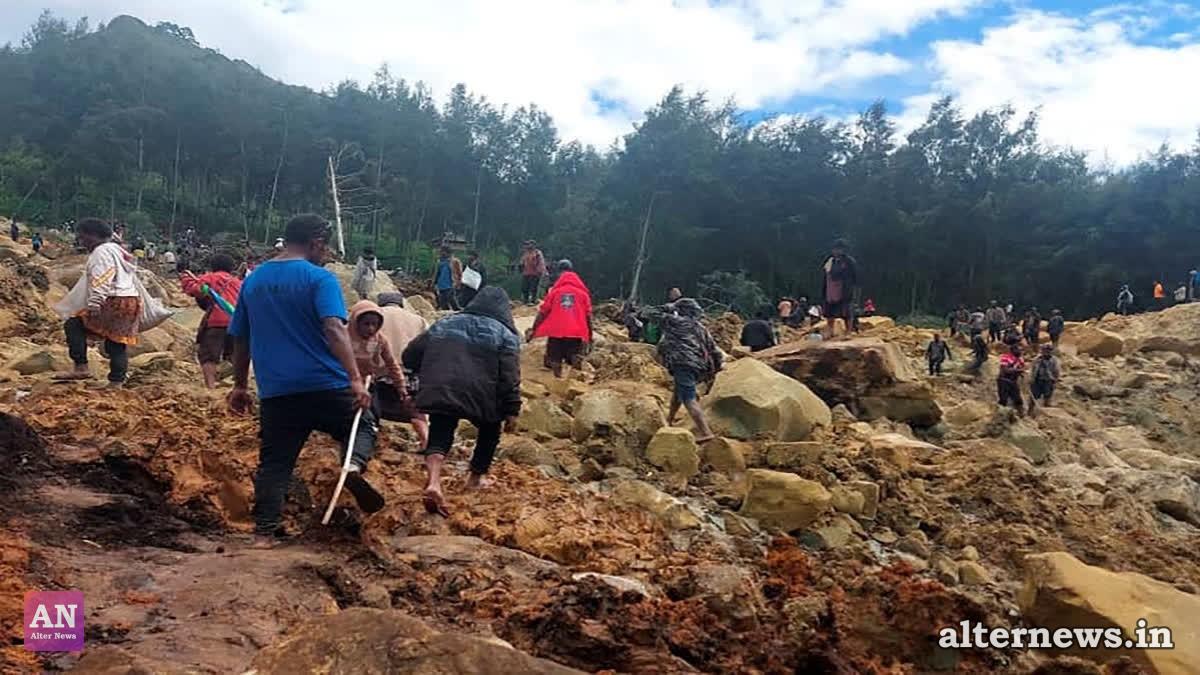
CONAKRY, Guinea — A towering heap of refuse collapsed early Sunday at the largest open-air landfill in Guinea’s capital city, killing at least 30 people, government authorities confirmed. Search and rescue crews worked urgently through heavy debris to locate survivors buried under tonnes of waste.
The tragedy unfolded at the Dar Es Salam landfill in Conakry following hours of torrential rain that began around 2:00 a.m. The relentless downpour weakened the massive waste mound, triggering a violent landslide that swept over nearby informal settlements and completely crushed several makeshift shacks.
According to municipal officials, at least six individuals sustained severe injuries and were rushed to local medical facilities, while multiple homes at the base of the waste site were completely flattened.
Scheduled Closure and Forced Evacuations
The site had long posed a severe environmental and structural hazard to surrounding communities. Lt. Col. Baldé Mamadou Bailo, a sanitation officer with the military engineering battalion, disclosed that the massive landfill was officially scheduled to close on the very day the disaster occurred.
While authorities had issued eviction notices directing families to abandon the perimeter of the hazardous site, many residents remained in their homes due to a lack of viable alternative shelter.
Visiting the scene during emergency response efforts, Dienabou Touré, Minister of Territorial Administration and Decentralisation, assured the public that immediate action would be taken. "We will ensure that the remaining families are relocated elsewhere," Touré stated to press on-site.
Poverty Amid Resource Wealth
The disaster underscores the stark contrast between Guinea’s rich resource endowment and the daily vulnerabilities of its population. Despite holding the world’s largest reserves of bauxite alongside vast deposits of gold, iron ore, and diamonds, infrastructure and socio-economic support remain limited. World Bank data estimates that roughly 43.7% of Guinea's population lives below the national poverty line, leaving thousands living in high-risk informal settlements adjacent to municipal dumpsites.
Emergency responders, supported by military personnel and local community members, remain on scene as clearance operations continue. Officials caution that the casualty count could fluctuate as rescue operations progress through the impacted zone.