BEIJING / NEW DELHI — In a major diplomatic breakthrough aimed at insulating bilateral ties from border disputes, India and China have agreed to a multi-pronged strategy to strengthen military communications and advance long-pending boundary delimitation talks.
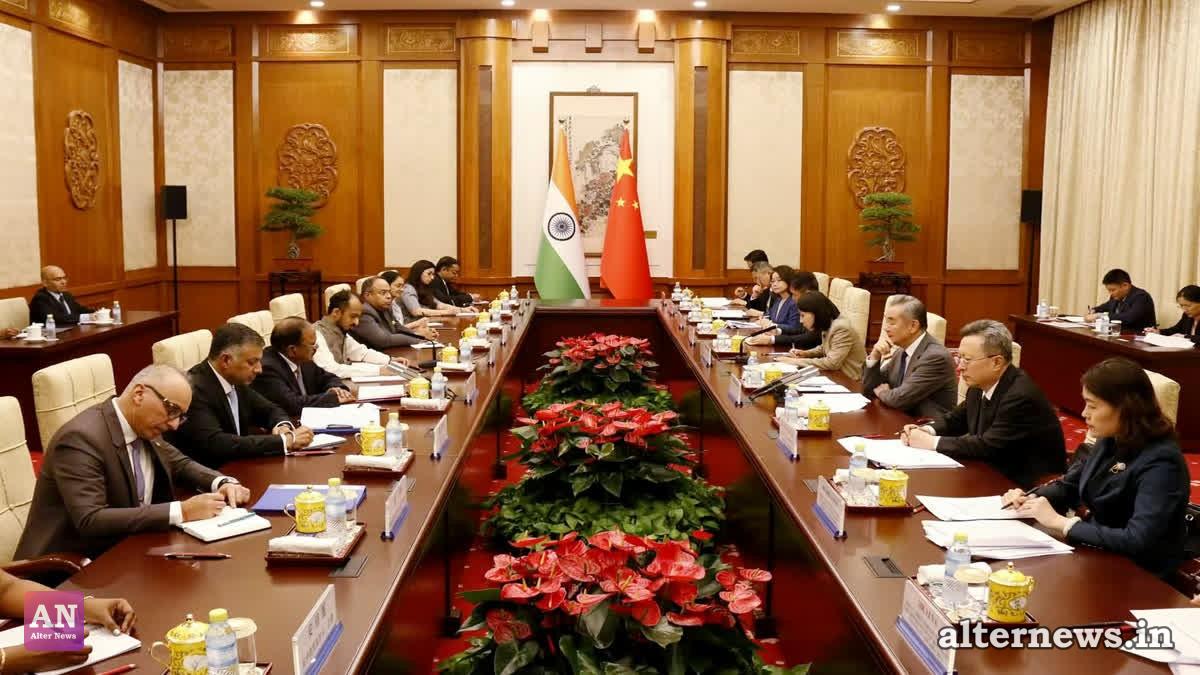
The breakthrough comes in the form of an eight-point "outcome and consensus" reached during the 25th Meeting of the Special Representatives (SR) on the India-China Boundary Question, held in Beijing. The high-level talks were co-chaired by India’s National Security Advisor Ajit Doval and Chinese Foreign Minister Wang Yi.
Specialized Groups for Border Management and Delimitation
Central to the new agreement is the setup of two dedicated bodies operating under the existing Working Mechanism for Consultation and Coordination on India-China Border Affairs (WMCC):
Expert Group on Boundary Delimitation: Tasked with driving negotiations toward an "Early and Substantial Harvest" in defining border sectors.
Working Group on Border Management: Focused on maintaining peace and preventing localized friction along the Line of Actual Control (LAC).
Both nations will first establish the respective Terms of Reference (ToR) for these working groups before initiating operational meetings.
Expanding Military Communications Along the LAC
To minimize operational misunderstandings and prevent escalation along sensitive sectors, New Delhi and Beijing have resolved to enhance direct military contact.
The two sides agreed to open two additional meeting points for senior military commanders and set up two new military hotline channels. These channels will specifically cover the Eastern Sector (bordering Sikkim and Arunachal Pradesh) and the Middle Sector (running along Himachal Pradesh and Uttarakhand).
This operational expansion builds upon intense negotiations designed to avoid a recurrence of the lethal 2020 Galwan Valley standoff, which severely strained diplomatic and economic ties.
Trade, Pilgrimage, and River Data Sharing
Beyond military infrastructure, the eight-point framework prioritizes confidence-building measures to foster a peaceful atmosphere:
Kailash-Manasarovar Yatra: The Indian delegation acknowledged China’s commitment to increase the number of official pilgrimage batches to the Tibet Autonomous Region.
Border Trade: Both sides agreed to reinforce exchanges through historical trading routes like Nathu La and Shipki La, which recently resumed after years of suspension.
Trans-Border Rivers: India and China confirmed that the Expert-Level Mechanism on Trans-border Rivers will meet in September to discuss hydrological data sharing and the renewal of relevant Memorandums of Understanding (MoUs).
Strategic Reset Amid Global Shocks
The diplomatic thaw takes place against a backdrop of global economic disruption and geopolitical conflicts in Ukraine and the Middle East, which have placed immense pressure on energy supply chains.
With Chinese President Xi Jinping slated to visit New Delhi for the upcoming BRICS Summit, the consensus between Doval and Wang marks a decisive step toward stabilizing regional ties and preventing localized border spats from paralyzing broader strategic cooperation.