BEIJING — In a significant step toward stabilizing relations along their contested 3,488-kilometer Himalayan frontier, India and China have agreed to advance talks on boundary delimitation and significantly bolster direct communication channels between their respective militaries.
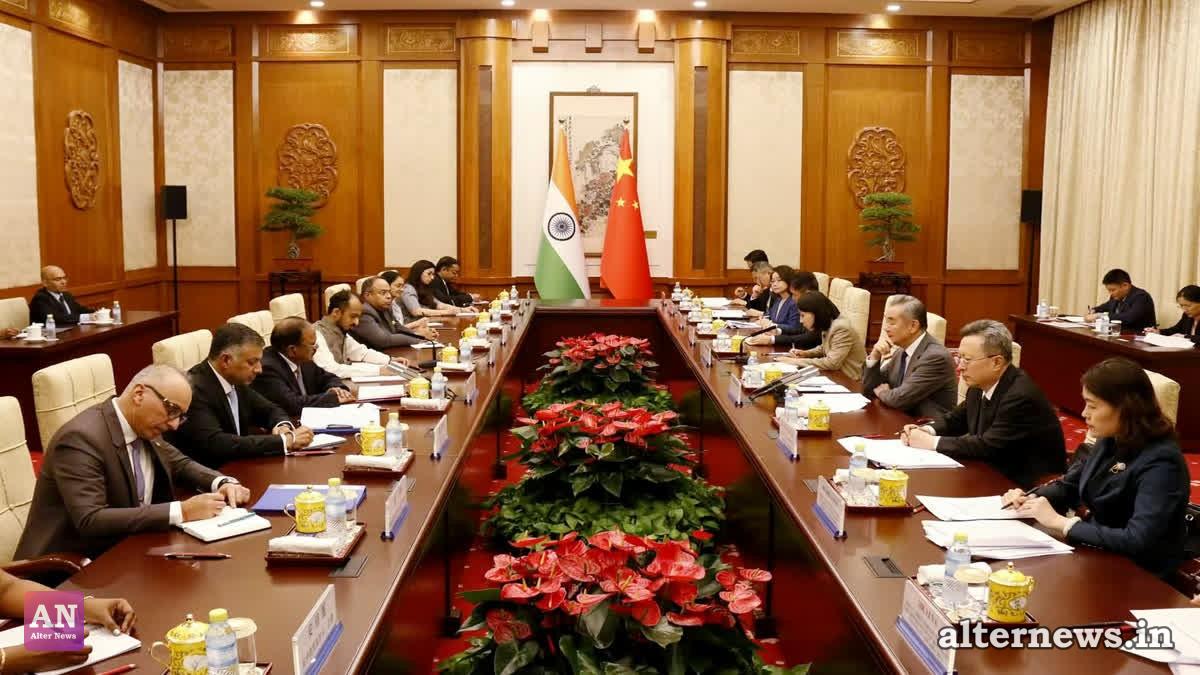
The breakthroughs were finalized during the 25th round of Special Representatives (SR) talks held in Beijing, featuring Indian National Security Advisor Ajit Doval and Chinese Foreign Minister Wang Yi.
Expanding Military Hotlines and Ground-Level Contacts
To enhance tactical coordination and maintain stability on the ground, both nations resolved to add two new meeting points for General-Level and Senior Highest Military Commander (SHMC) discussions.
Official diplomatic statements emphasized that any emerging operational situations along the border will be managed swiftly using existing diplomatic framework channels, such as the Working Mechanism for Consultation and Coordination on India-China Border Affairs (WMCC), alongside local commander-level meetings.
Breakthrough on Boundary Delimitation Framework
In a major procedural advance, both sides instructed the Expert Group on Boundary Delimitation and the Working Group on Border Management to chart out an "Early and Substantial Harvest" plan for border demarcation.
Both special representatives reiterated their commitment to driving negotiations under the framework of the 2005 Agreement on Political Parameters and Guiding Principles for Settlement of the India-China Boundary Question.
Trans-Border Rivers, Trade, and Pilgrimage
Beyond security mechanics, the eight-point consensus outlined tangible expansions in civilian and economic engagement:
Trans-Border Rivers: India and China scheduled the next meeting of the Expert-Level Mechanism on Trans-Border Rivers for September, focusing on hydrological data sharing and renewing key Memorandums of Understanding (MoUs).
Pilgrimages: New Delhi expressed appreciation for Beijing's move to increase the capacity and batch allocations for Indian pilgrims undertaking the annual Kailash-Manasarovar Yatra in the Tibet Autonomous Region.
Border Trade: Following the recent reopening of historic border trading posts—including Nathu La and Shipki La—both countries committed to deepening local exchanges to foster an environment of consultation and economic cooperation.
Strategic Context Ahead of BRICS
The talks carry immense geopolitical weight as Chinese President Xi Jinping is expected to visit India for the upcoming BRICS Summit in New Delhi.
Both sides confirmed that the 26th round of the Special Representatives talks will take place in India in 2027.