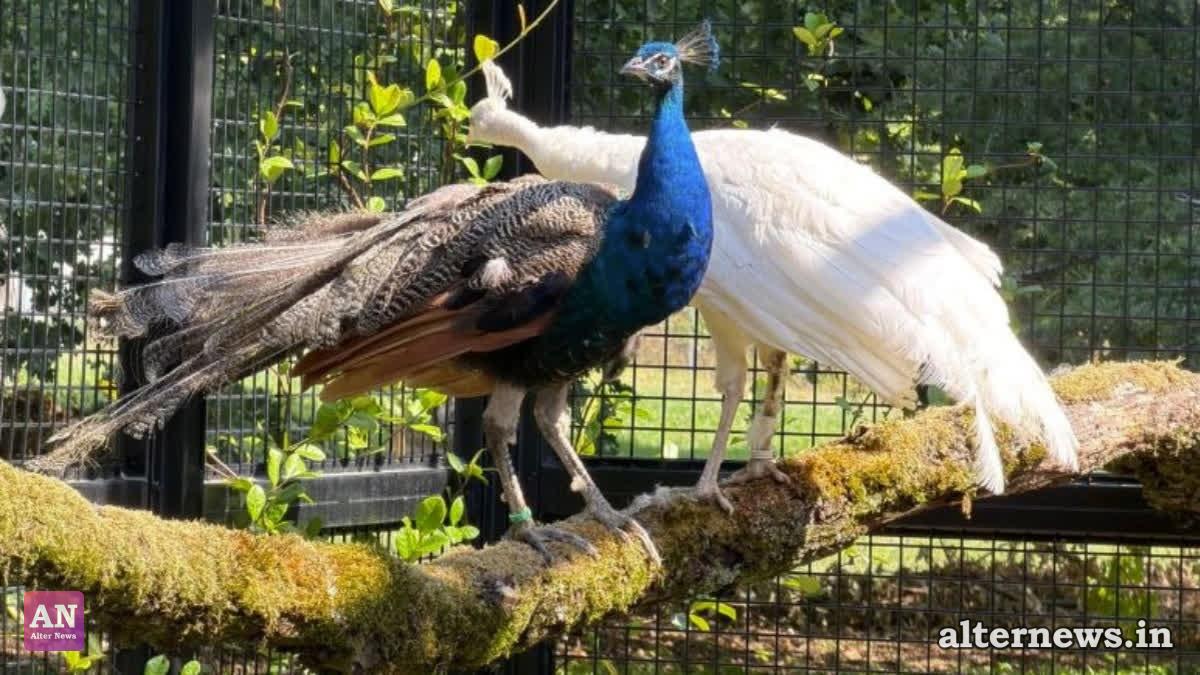
GENEVA — In a symbolic gesture combining diplomatic diplomacy with environmental stewardship, India has presented five Indian peacocks (Pavo cristatus)—including a striking, rare white-feathered male—to the United Nations Office at Geneva (UNOG).
The formal handover took place during a ceremony at the historic UN complex, where India’s Permanent Representative to the UN in Geneva, Ambassador Arindam Bagchi, presented the birds to UNOG Director-General Tatiana Valovaya.
A Palette of UN Colors
The group consists of four classic blue peacocks and one white male. Together, their plumage reflects the signature blue-and-white color palette of the United Nations logo and flag.
"The Indian Peacock, a symbol of grace, beauty, and resilience, represents India’s enduring commitment to the conservation of biodiversity and environmental stewardship," the Permanent Mission of India in Geneva stated following the event.
UNOG Director-General Tatiana Valovaya expressed her appreciation to the Indian government, welcoming the newest members of the grounds’ flock. The UN Geneva office also took to X (formerly Twitter) to express its gratitude, noting that the gesture pays homage to India's national bird and honors a sanctuary tradition stretching back to the 19th century.
Care and Transition at Ariana Park
The five peacocks will initially spend approximately three months in a protective enclosed habitat to acclimate to their new environment. Following this transition phase, they will be granted free roam over Ariana Park, the 46-hectare estate surrounding the UN’s European headquarters.
Care for the birds will be overseen jointly by UN facilities staff and Tobias Blaha, Director of the Geneva Bioparc zoo. Describing the spacious grounds as a "dream habitat," animal care experts expect the young peafowl to adapt smoothly to their lush Swiss surroundings.
Honoring a Century-Old Diplomatic Legacy
This donation marks the second time India has officially gifted peacocks to the Geneva headquarters. In 1981, former Indian Prime Minister Indira Gandhi sent a breeding pair from the Delhi Zoo to help replenish the grounds' resident population.
The tradition of keeping peacocks on the site predates both the United Nations and its predecessor, the League of Nations. In 1890, Swiss archaeologist and art collector Gustave Revilliod bequeathed his private estate—Ariana Park—to the City of Geneva on the strict legal condition that peacocks be permitted to roam the grounds freely for perpetuity. The city later leased the land to the League of Nations and eventually to the United Nations.
Over the decades, international partners have contributed to maintaining the flock; most notably, a zoo in Japan donated several birds to UNOG in 1997.
By adding five vibrant birds to the park, India reinforces both the natural heritage of Ariana Park and its enduring partnership with the global diplomatic community.