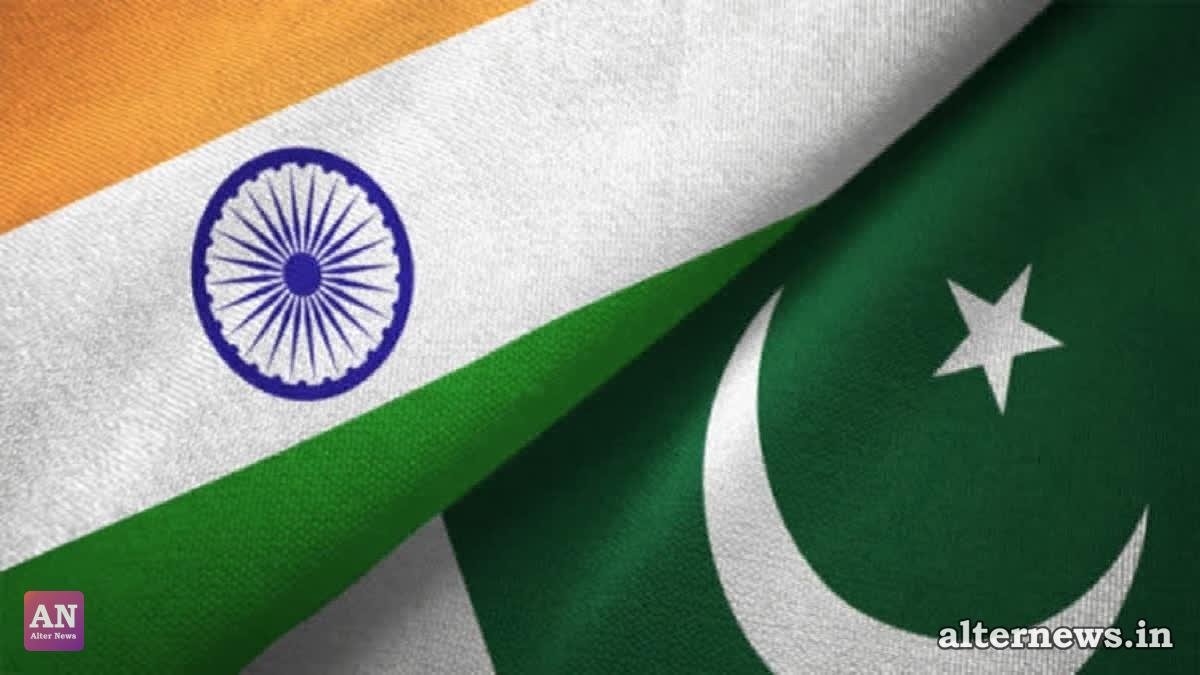
WASHINGTON — Decades of strategic rivalry and historical tensions continue to dictate how citizens in South Asian nations perceive global security. A new survey conducted by the Washington-based think tank Pew Research Center reveals that a substantial majority of citizens in both India and Pakistan regard each other as their single greatest geopolitical threat.
The findings underscore the enduring distrust between the nuclear-armed neighbors, even as their strategic alliances diverge significantly across the global landscape.
Perceptions of National Security Threats
According to the report, 54 percent of surveyed adults in India identified Pakistan as their nation's primary security risk. China ranked as the second largest threat among Indian respondents at 21 percent.
On the other side of the border, 43 percent of Pakistanis designated India as their chief geopolitical threat. Notably, Israeli and Chinese global postures were also cited as major concerns by Pakistani respondents, with 24 percent identifying Israel and another 24 percent pointing to China as significant threats.
Divergent Global Alliances
The research highlights stark contrasts in how both populations choose their global partners:
Pakistan's Strategic Ties: An overwhelming 75 percent of Pakistani respondents named China as their most crucial international ally, with a smaller fraction (12 percent) identifying Saudi Arabia. Despite diplomatic engagements between top Pakistani leadership and Washington, public sentiment toward the United States remains cold: only 15 percent of Pakistanis hold a favorable opinion of the U.S., while 90 percent view Beijing favorably. Furthermore, Chinese President Xi Jinping commands an 83 percent trust rating among Pakistanis, compared to just 12 percent for U.S. leadership.
India's Diplomatic Balance: Among Indian citizens, Russia continues to hold a strong position as a trusted partner, with 36 percent naming Moscow as their primary ally and 58 percent viewing Russia favorably. The United States was identified as a key ally by 16 percent of Indians, with 45 percent expressing a positive view of Washington. Conversely, only 23 percent of Indians hold a favorable view of China, and 25 percent expressed confidence in Beijing's global leadership. Approximately one-third of Indian participants did not express a preference on top diplomatic allies.
Regional Dynamics Across South Asia
The survey also examined public sentiment across other South Asian countries, showcasing mixed regional perceptions of India's role:
Sri Lanka: Demonstrates strong warmth toward its northern neighbor, with 79 percent viewing India favorably and 63 percent identifying India as their nation's most vital ally.
Bangladesh: Reflects a more divided stance, where only 42 percent hold a positive view of India, and a majority frequently categorize India as a significant threat.
U.S. Public Sentiment on India
In the United States, public opinion regarding India remains closely divided. The survey revealed that 45 percent of American adults view India favorably, while 50 percent hold unfavorable views. Sentiment is somewhat split along political lines, with 50 percent of Democrats and Democratic-leaning independents viewing India positively, compared to 42 percent among Republicans.
Regarding India's position on the global stage, 54 percent of Americans believe India's international influence has remained steady in recent years, 30 percent view its influence as growing stronger, and 13 percent perceive it as diminishing.