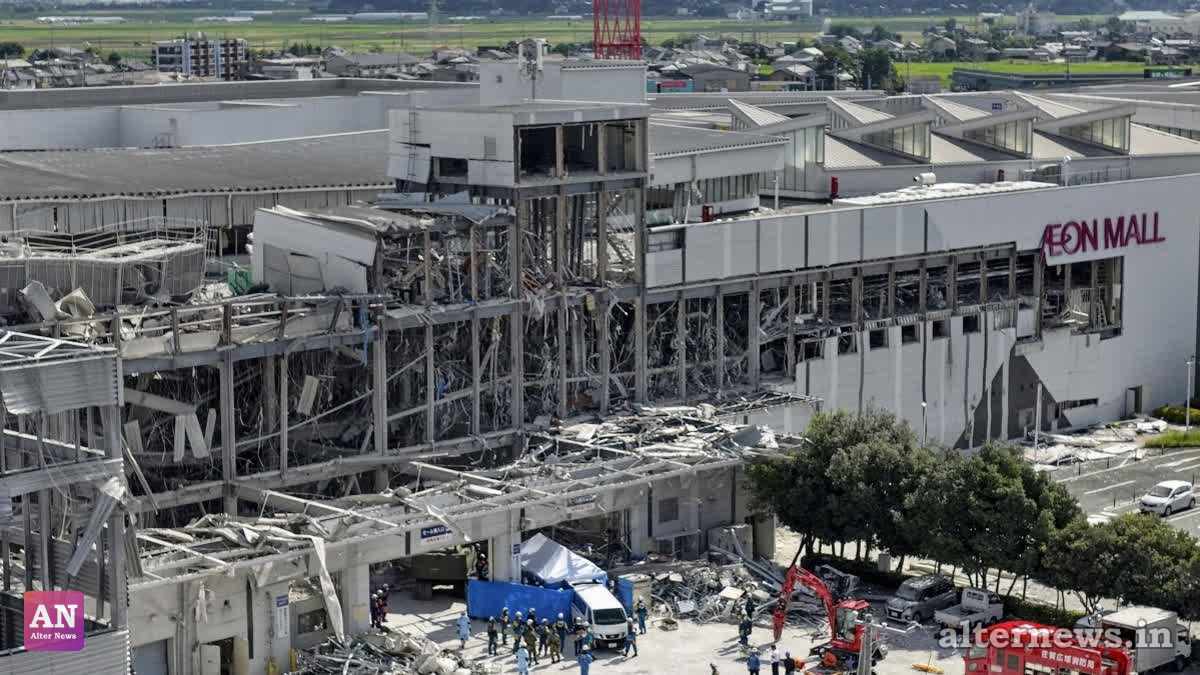
KUMAMOTO, Japan — Hopes of finding survivors under flattened structures were rapidly dwindling across southwestern Japan on Thursday, as search-and-rescue operations stretched into their third day following a devastating magnitude 7.1 earthquake.
The death toll confirmed by Kumamoto prefectural authorities rose to at least 23, with at least 63 people injured, five of them critically. Chief Cabinet Secretary Minoru Kihara noted during a press briefing in Tokyo that a preliminary police tally places the fatality count at 28, though some of those cases remain under investigation to determine whether they directly resulted from the tremor.
The powerful quake struck late Tuesday afternoon, centering on Japan’s southern main island of Kyushu. The heavy tremors triggered catastrophic structural collapses and secondary disasters across the region, heavily damaging rural infrastructure and older homes built before modern earthquake codes were enacted.
Tragedies at Mall and Industrial Sites
The heaviest loss of life centered around two major locations in Kumamoto Prefecture.
At the AEON Mall in the town of Kashima, which was packed with shoppers when the earthquake struck, an explosion erupted shortly after thousands were evacuated into surrounding parking lots. The secondary blast caused the building's upper floor to collapse onto workers and remaining occupants. Rescue teams pulled 11 people from the debris, with six later confirmed dead. Distraught relatives gathered nearby Thursday, holding out hope for news regarding family members still unaccounted for.
In the coastal city of Yatsushiro, an industrial chimney collapsed at a paper manufacturing plant operated by Nippon Paper Industries. Disaster officials reported that while 10 workers were pulled out alive, eight people were confirmed dead and one remains missing.
Sweltering Heat and Power Outages Compound Crisis
Humanitarian conditions at evacuation zones are deteriorating as Japan’s Ministry of Environment issued high-temperature alerts for the region. Temperatures in Kumamoto were projected to climb to 33°C (91°F), escalating health risks—particularly heatstroke—for displaced residents.
More than 10,000 people are currently living across roughly 400 makeshift shelters, mostly housed in public school gymnasiums. Regional power providers reported that nearly 23,000 households remain without electricity, prompting emergency management agencies to deploy mobile generators to keep air conditioning units running inside evacuation centers.
Emergency crews, local firefighters, and military personnel continue to clear debris, clear roads, and search for missing residents as seismic aftershocks continue to rock the region.