TRIPOLI / BENGHAZI — Libya was hit by a coordinated surge of violence on two fronts over the weekend and into Tuesday, as intense drone strikes hammered vital oil infrastructure in the western coastal town of Zawiya while a targeted car bomb assassinated a high-ranking military intelligence commander in the eastern city of Benghazi.
The attacks underline the precarious security climate across the North African nation, where political fragmentation and militia rivalries continue to threaten critical national assets and stability. No group has yet claimed responsibility for either incident.
Inferno at Zawiya Energy Facilities
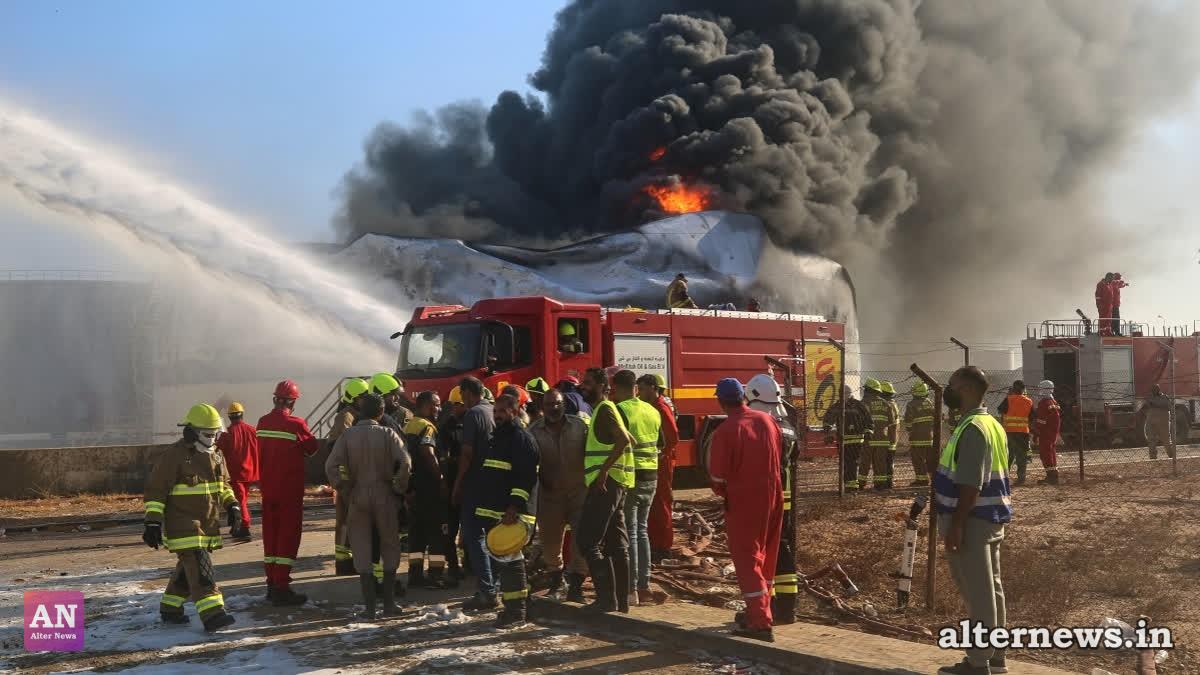
Emergency crews and Civil Defense firefighters in western Libya battled through Tuesday evening to extinguish massive blazes sparked by repeated drone attacks on Zawiya, located roughly 47 kilometers (30 miles) west of the capital, Tripoli.
Zawiya houses some of Libya's most essential energy operations, including its largest oil refinery, a power plant, a water desalination unit, and an oil export terminal.
The initial strike on Monday evening ignited a massive fire in a major gasoline storage tank, sending towering fireballs and thick black smoke into the night sky. On Tuesday, subsequent drone strikes hit adjacent energy units:
Collapse of Fuel Tank: A drone struck near a massive storage unit holding 4.5 million liters of fuel, causing the structure to collapse and prompting state-owned National Oil Corporation (NOC) to declare a state of maximum emergency.
Power Plant Hit: Two drones struck the town's power plant, damaging its firefighting apparatus and igniting a secondary blaze near the main fuel depot.
The NOC confirmed by late Tuesday evening that emergency crews had successfully contained and extinguished all blazes across the refinery and power plant. Remarkably, local health authorities reported no casualties from the drone strikes.
Political Friction in the West
The assault on Zawiya coincides with mounting hostilities between the Tripoli-based Government of National Unity, led by Prime Minister Abdul-Hamid Dbeibah, and local armed commander Mohamed Bahroun, who exercises strong control over Zawiya.
Security analysts point out that pressure on local militias in the west has pushed factions toward extreme tactics. Jalel Harchaoui, an associate fellow at the Royal United Services Institute (RUSI) in London, noted that Bahroun has been increasingly cornered by Tripoli-backed forces, leaving his network prone to desperate retaliatory maneuvers.
Senior LNA Commander Killed in Benghazi Car Bombing
As firefighters fought the blazes in the west, a lethal attack unfolded in Libya's eastern hub of Benghazi on Monday evening.
Maj. Gen. Fawzy al-Mansouri, Director of Military Intelligence for the Libyan National Army (LNA), was killed when an explosive-laden vehicle detonated alongside his convoy in Benghazi's Sayyida Aisha neighborhood.
The LNA, commanded by Field Marshal Khalifa Hifter, forms the military backbone of Libya's eastern administration under Prime Minister Ossama Hammad. Al-Mansouri’s assassination represents one of the highest-profile military targeted killings in eastern Libya in recent years.
A Divided Nation on Edge
Libya has remained entangled in political volatility and factional strife following the 2011 NATO-backed uprising that ousted long-time ruler Moammar Gadhafi. Today, the country stands split between rival governance structures in Tripoli (West) and Benghazi (East), both reliant on competing armed groups and foreign backers.
The dramatic uptick in violence comes just ahead of an official visit by Turkish Foreign Minister Hakan Fidan, who is scheduled to hold talks with leaders in both Tripoli and Benghazi in an effort to navigate diplomatic relations across the divided nation.