KATHMANDU — The human and financial devastation wrought by Wednesday’s catastrophic flash floods across Nepal and the Tibet border region is set to far exceed early assessments, with experts warning that the casualty count could surpass 1,000.
Speaking in an exclusive interview with Eenadu-ETV Bharat, Professor Meen Bahadur Poudyal Chhetri, Executive Director of the Nepal Centre for Disaster Management (NCDM), revealed that the sheer velocity and scale of the deluge left entire communities with virtually no time to evacuate.
"Although the region experienced flooding in 2024, a disaster of this catastrophic magnitude unfolding so rapidly is completely unprecedented," Prof. Chhetri stated. "The threat remains active and critical as accelerating snowmelt continues to swell upstream glacial lakes."
Triggered by Glacial Collapse and Seismic Tremors
Investigative teams are currently analyzing satellite data to determine the exact sequence of events. Preliminary findings indicate that a massive collapse of bedrock and ice occurred in the Gyirong area on the Tibetan side of the Nepal-China border, upstream from Rasuwa Gadhi.
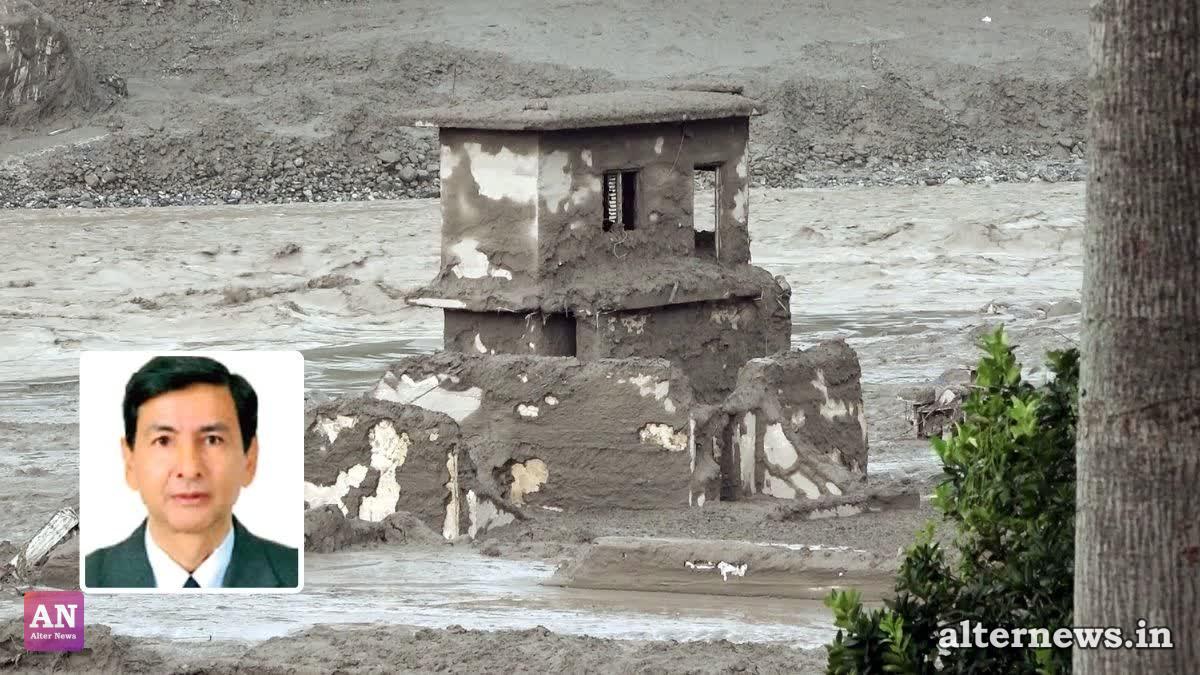
The debris crashed into the high-altitude Lende River system, forming a temporary natural dam. When the blockage suddenly breached, millions of tons of water mixed with mud and giant boulders surged downstream toward the Timure and Rasuwa Gadhi settlements.
Adding to the complexity, a 4.4-magnitude earthquake struck the high-altitude zone at 8:37 AM on Wednesday, coinciding with rapid glacial outbursts and landslides. Experts are examining whether seismic activity triggered the glacial breach or occurred alongside severe thermal melting.
Infrastructure Wiped Out
The torrent swept away everything in its path along both riverbanks, destroying critical hydroelectric power infrastructure, wiping out border trade posts, and submerging whole villages.
Emergency rescue crews and disaster response units continue to navigate treacherous terrain, but relief operations face severe hurdles due to destroyed access roads and unstable ground. Authorities warn that until full access is restored to isolated high-altitude settlements, the true extent of loss to life and property will remain difficult to fully quantify.