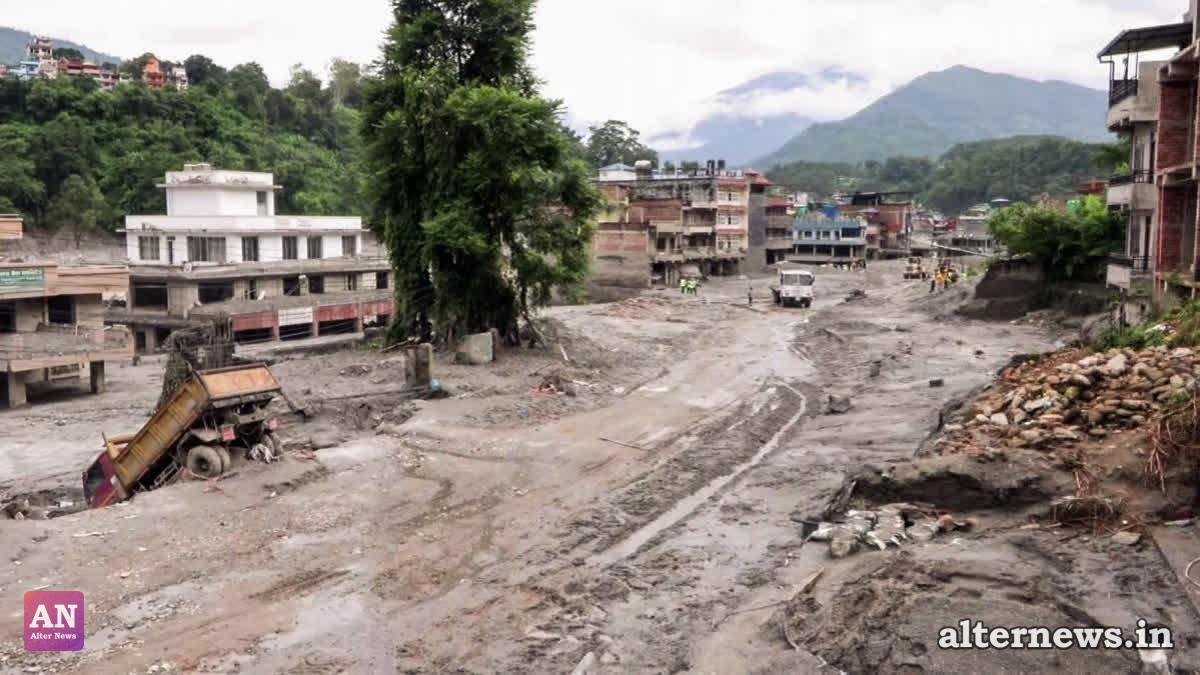
KATHMANDU — Devastating flash floods across northern and central Nepal have impacted more than 32,000 people, according to an official assessment by the National Disaster Risk Reduction and Management Authority (NDRRMA).
The disaster has washed away vital roads, bridges, health posts, and educational facilities, cutting off remote communities along the Nepal-Tibet border.
Devastating Impact on Northern and Central Districts
The rapid surge of floodwaters struck districts including Rasuwa, Nuwakot, Dhading, Gorkha, and Tanahun.
Preliminary evaluations indicate that thousands of families have lost access to basic services.
Glacial Collapse and Climate Links
While initial reports pointed toward seismic activity, scientists now attribute the sudden catastrophe to a massive collapse of ice and rock from a glacier high in the Himalayas near the Nepal-Tibet border.
Addressing the national response, government leadership emphasized that the disaster highlights the heightened vulnerability of mountain communities to climate change. Authorities plan to raise the event's climate links on international platforms to push for enhanced disaster adaptation resources.
Ongoing Rescue and Humanitarian Efforts
Joint search and rescue operations led by the Nepal Army, Armed Police Force, and local authorities remain underway across affected districts.
Humanitarian organisations, including UNICEF, are assisting local authorities in delivering therapeutic food, clean drinking water, hygiene kits, and emergency shelter.