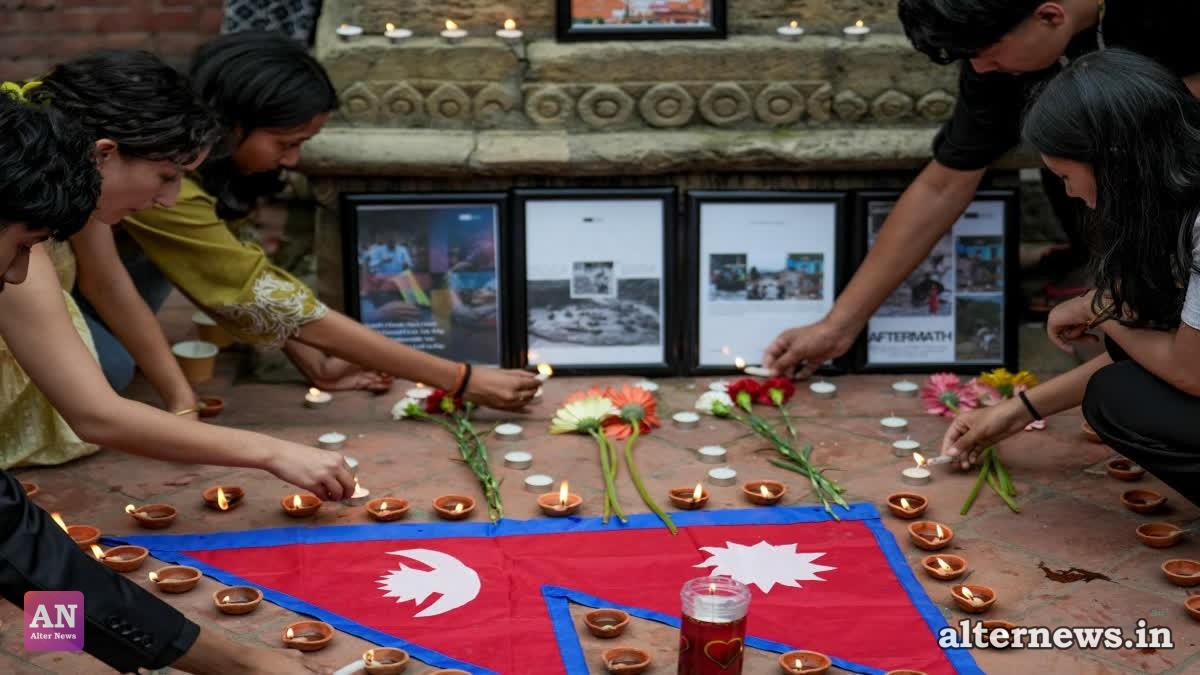
KATHMANDU — Flags flew at half-mast across Nepal and at its diplomatic missions abroad on Monday as the Himalayan nation observed a national day of mourning to honor the victims of one of the deadliest flash flood disasters in its recent history.
The solemn observance comes on the 13th day following the August 26 disaster, aligning with traditional Hindu customs where the 13th day marks the formal conclusion of the primary mourning period.
According to government figures, the official death toll has climbed to over 1,340 people, while nearly 5,000 individuals remain missing, including 589 foreign nationals.
The catastrophe was triggered by a massive high-Himalayan ice-rock avalanche along the Nepal-China border in Rasuwa district.
The raging floodwaters destroyed or severely damaged critical infrastructure, wiping out entire villages, highway bridges, government facilities, and major hydropower installations.
Following a Cabinet decision chaired by Prime Minister Balendra Shah on September 3, the Ministry of Home Affairs directed all state institutions to lower the national flag to half-mast on Monday. In a public address on the eve of the national mourning day, Prime Minister Shah expressed solidarity with grieving families and commended response teams working under perilous conditions.
Search, rescue, and recovery operations remain active across affected zones.
The disaster has disrupted power grids, drinking water networks, and transport routes across central Nepal, presenting massive logistical hurdles for relief operations.