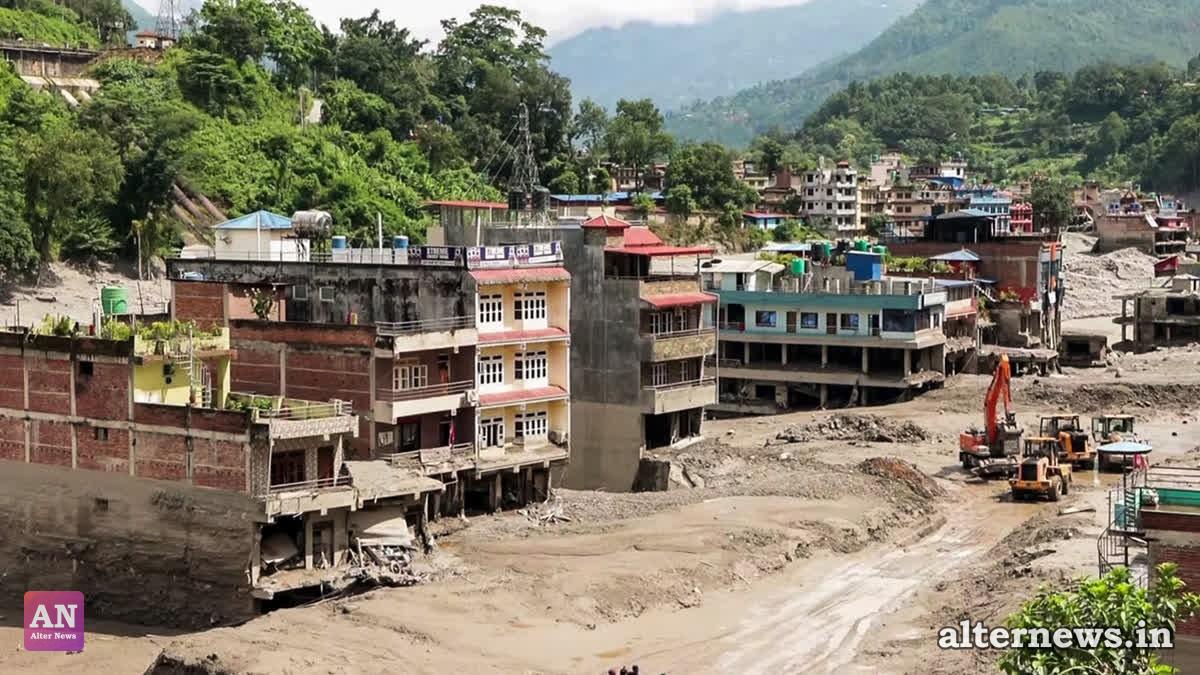
KATHMANDU / NEW DELHI — Search and rescue operations across flood-devastated regions of Nepal and the Tibet border entered a critical fourth day on Saturday, with official sources confirming that the death toll has climbed to 616. Over 2,300 people have suffered injuries, while nearly 2,000 individuals remain missing following catastrophic flash floods in the Himalayan corridors.
According to data released by Nepal Police, recovery teams have retrieved 616 bodies from debris and rising riverbanks across multiple districts. Chitwan has suffered the heaviest loss of life, reporting 233 fatalities, followed by Nawalparasi East with 158, Nuwakot with 89, Gorkha with 48, Nawalparasi West with 47, Dhading with 45, Tanahun with 31, and Rasuwa with 13. Officials noted that the total from Gorkha includes several unidentified human remains recovered downstream.
More than 15,000 security personnel—including 6,755 from the Nepali Army, 4,473 from the Nepal Police, and 4,203 from the Armed Police Force—have been mobilized to search for missing individuals and clear vast fields of mud and submerged infrastructure. Emergency teams have brought 4,451 survivors to safety so far, including 191 workers extracted from inundated hydroelectric project tunnels and over 500 people airlifted from isolated mountain hamlets such as Dhunche, Timure, and Syabrubesi.
The scale of the missing population highlights the wide impact of the disaster. Among the 1,924 people still unaccounted for are 933 workers from various hydropower projects, 517 foreign nationals, and dozens of security and park staff, including 45 Nepal Army and 28 Nepal Police personnel.
In India, the Ministry of External Affairs (MEA) confirmed that 84 Indian nationals have been safely rescued within Nepal, while 149 others crossed into Nepal from Tibet, and around 400 remain safe on the Chinese side of the border under official monitoring. However, approximately 320 Indian citizens remain missing or out of contact. State officials in Maharashtra reported that while 290 tourists from the state are safe, 60 individuals on an organized pilgrimage route remain untraceable. Meanwhile, a group of 77 pilgrims associated with the Isha Foundation who were traveling near the China-Nepal border has remained out of contact for two days.
India has intensified its Humanitarian Assistance and Disaster Relief (HADR) operations to support its neighboring nation. On Saturday morning, an Indian Air Force C-130 aircraft landed in Kathmandu carrying 10 tonnes of essential supplies, including emergency medical provisions, food packets, water purification tablets, and portable generators. This follows earlier consignments and the deployment of an 11-member team of military doctors, paramedics, and specialized tunnel rescue personnel.
Congress President Mallikarjun Kharge urged Union Home Minister Amit Shah to expand India's disaster relief deployment, calling for additional National Disaster Response Force (NDRF) teams to be sent in coordination with Nepalese authorities.
International organizations have also mobilized support. World Health Organization (WHO) Director-General Dr. Tedros Adhanom Ghebreyesus announced the release of $150,000 in immediate emergency funding alongside medical kits designed to serve 10,000 people for up to three months.
Relief efforts face significant weather hurdles. Heavy downpours in the Trishuli region forced authorities to temporarily ground helicopter operations on Saturday morning as water levels continued to swell, prompting preventive evacuations along vulnerable riverbanks.