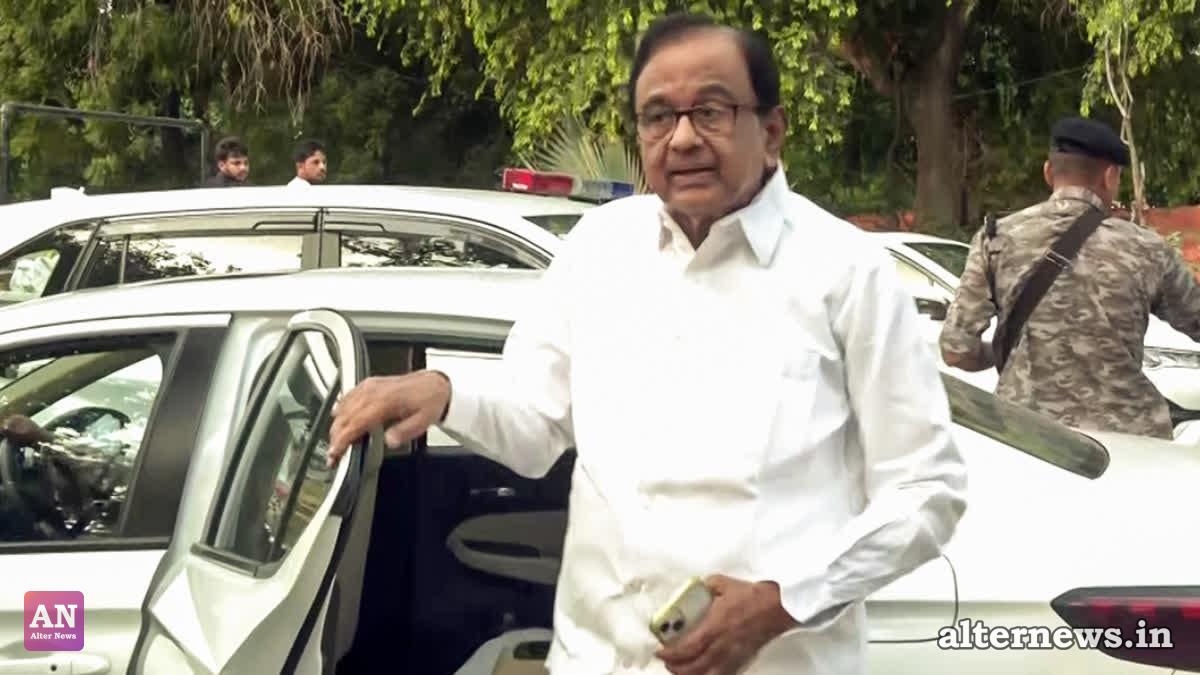
NEW DELHI — Senior Congress leader and former Union Minister P. Chidambaram delivered a scathing critique of the Centre’s "One Nation, One Election" proposal during his appearance before the Joint Committee of Parliament (JPC) examining the Constitution (129th Amendment) Bill, 2024, and the Union Territories Laws (Amendment) Bill, 2024.
Terming the proposed legislation "unconstitutional," "mindless," and "monstrous," Chidambaram argued before the panel headed by BJP MP P.P. Chaudhary that holding simultaneous Lok Sabha and State Assembly elections by 2029 is a practical and constitutional impossibility.
Addressing the committee, Chidambaram emphasized that even if Parliament succeeds in passing the amendment bill, the actual rollout of the simultaneous election framework by 2029 remains unfeasible due to significant constitutional and logistical hurdles.
'Violates Basic Structure of the Constitution'
Central to Chidambaram’s testimony was the assertion that synchronizing elections violates the basic structure of the Indian Constitution.
"My conscience does not permit me to support these Bills," the former Home and Finance Minister reportedly informed the committee.
Chidambaram warned that forcing a simultaneous poll model would dismantle the country's delicate federal compact, shifting India toward an overly centralized form of governance.
Diverse Views Before the Panel
The JPC meeting featured testimony divided into three segments: hearing Chidambaram's objections, taking inputs from prominent Padma awardees, and consulting legal and policy think tanks.
The submissions presented a sharp divide among experts and stakeholders:
Support for Synchronization: Some committee witnesses and Padma awardees supported the concept, arguing that continuous election cycles keep the Model Code of Conduct active for prolonged periods, halting essential development projects, straining security apparatuses, and disturbing academic and public service operations.
Concerns Over Regional Autonomy: Other experts warned that enforcing simultaneous elections would suppress local issues, giving dominant national narratives an unfair advantage over state-specific governance concerns.
Independent legal think tanks, including the Vidhi Centre for Legal Policy and Nation First Policy Research, submitted that the current drafts carry substantial legal infirmities.
The JPC continues its review of the proposed legislation—which stems from the recommendations of the high-level panel chaired by former President Ram Nath Kovind—as opposition parties led by the INDIA bloc maintain their firm stance against the proposal.