NEW DELHI — Following weeks of student protests over competitive exam irregularities and paper leaks, a new digital movement targeting India’s affirmative action system is rapidly gathering pace online.
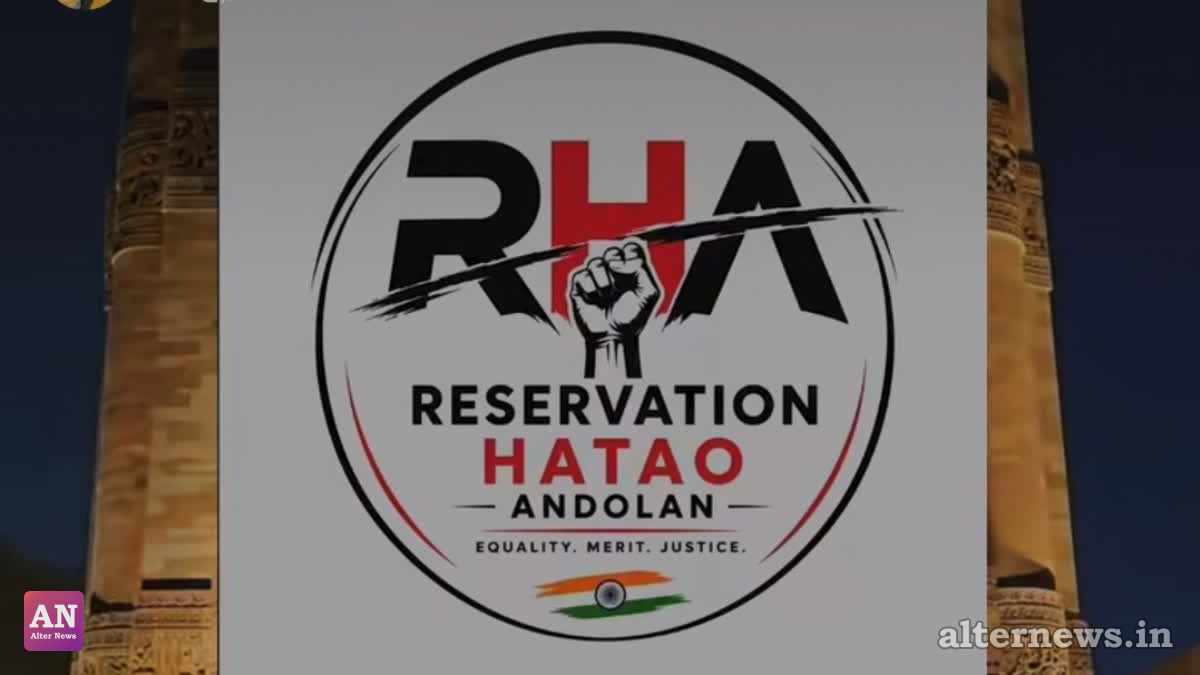
An Instagram campaign titled "Reservation Hatao Andolan" (Remove Reservation Movement) has amassed over 5.5 million followers, sparking heated debates across social media platforms among students, academics, and working professionals regarding the future of caste-based quotas in education and government jobs.
A Peaceful Digital Push Following Earlier Unrests
The campaign emerged shortly after the conclusion of protests organized by the CJP—an online satirical platform formed following NEET paper leak allegations that mobilized students through hunger strikes to demand structural education reforms.
Unlike earlier street-level agitation that saw clashes with police, organizers behind the Reservation Hatao Andolan emphasize a peaceful, digital-first approach. Representatives associated with the page state their goal is to challenge the current quota system without invoking civil unrest or street violence.
The movement advocates for a policy shift where state institutions phase out caste recognition in routine public life, arguing that removing caste parameters from official documentation is a necessary step toward eradicating caste divisions entirely.
Divide Among Students: Merit vs. Historical Affirmative Action
The campaign has drawn polarizing responses across student communities:
Arguments for Reform: General category students cite instances where wide variance in category-wise cut-off marks leaves qualified candidates without seats. Some propose converting vacant reserved seats—when eligible candidates are unavailable—to unreserved merit seats rather than leaving them unfilled.
Arguments for Systemic Justice: Opponents of the movement point out that despite quotas, upper-caste individuals continue to hold a disproportionate share of high-level positions across public and private sectors. They argue that quotas remain a vital constitutional tool to counter historical socio-economic exclusions.
Expert Insights: Systemic Failures vs. Quota Realities
Academics and policy analysts emphasize that growing student frustration is often driven by deeper structural flaws in the country's employment and examination framework rather than reservation alone.
Dr. Sant Prakash Singh, Assistant Professor at Delhi University, noted that systemic issues—such as chronic delays in recruitment, frequent paper leaks, and unorganized exam schedules—fuel anxiety among youth competing for limited opportunities.
"Reservation was designed as a constitutional measure to mitigate centuries of socio-economic and educational inequality," Dr. Singh explained. "While open public debate is healthy, complete removal of reservation without addressing underlying social disparities is not a viable solution. The priority must be enhancing public education infrastructure, generating employment, and ensuring transparent recruitment processes."
Background on India's Quota Architecture
Under the Indian Constitution, reservation policies were established via Articles 15(4) and 16(4) to ensure equitable representation for Scheduled Castes (SCs) and Scheduled Tribes (STs). Over decades, the framework expanded:
1990: Introduction of a 27% quota for Other Backward Classes (OBCs) following the Mandal Commission report.
2019: Implementation of a 10% quota for Economically Weaker Sections (EWS) via the 103rd Constitutional Amendment.
Currently, central reservation stands at 59.5% (15% SC, 7.5% ST, 27% OBC non-creamy layer, and 10% EWS). Educationists urge that any discussion around amending this framework should be guided by constitutional experts, sociologists, and policymakers rather than viral online trends.