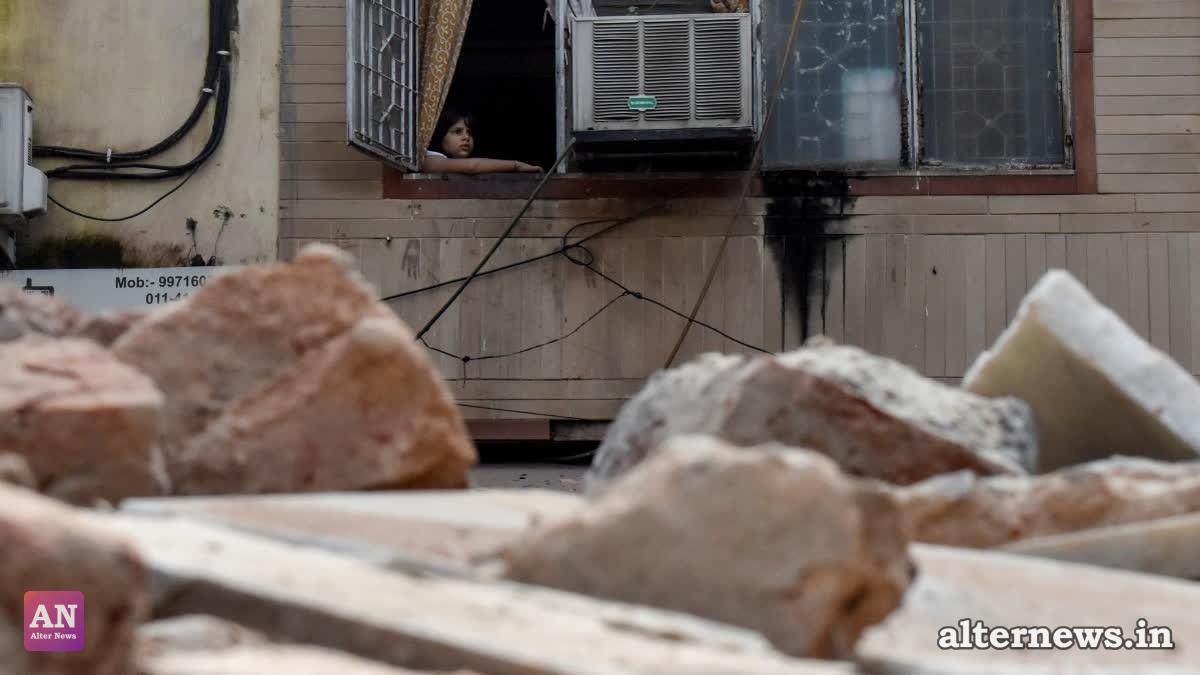
NEW DELHI — In the wake of a fatal five-storey building collapse in South Delhi’s Satya Niketan that claimed at least seven lives, the Municipal Corporation of Delhi (MCD) has initiated a sweeping citywide inspection of unsafe structures.
Citywide Inspections Ordered by MCD
Following directions from top municipal administration and Lieutenant Governor Taranjit Singh Sandhu, the MCD instructed executive engineers (building) across all municipal zones to carry out rapid inspections of structures in their jurisdictions.
The compiled data will form the backbone of an affidavit the MCD is set to submit before the Delhi High Court.
The tragedy unfolded at a residential-turned-commercial property operating as a boys' paying guest (PG) facility near Delhi University’s South Campus.
CJP Demands Probe Into Political Patronage and 'PG Mafia'
Addressing a press conference in New Delhi, CJP Chief Spokesperson and Co-Convener Saurav Das launched a scathing attack on the Delhi government and municipal authorities over regulatory oversights. Das alleged that illegal PG accommodations flourish in areas like Satya Niketan and Mukherjee Nagar due to deep-seated corruption and political patronage.
"Can this PG mafia and the illegal nexus operating in these hubs exist without political backing?" Das questioned.
The CJP laid out a list of seven core demands, which include:
Independent Investigation: A criminal probe into property owners, municipal officials, and political actors protecting unauthorized PG establishments.
Time-Bound Structural Audits: Engineering-grade safety checks of all schools, colleges, and student accommodations nationwide.
Full Transparency of Previous Surveys: Public release within 48 hours of inspection records compiled by 13 district committees formed after the Hauz Rani fire.
Public Safety Database: Creation of a searchable online registry allowing students to verify if a PG or hostel possesses valid safety clearances.
Expansion of Hostel Capacity: Immediate government funding to construct official hostels for Delhi University students to reduce reliance on private PGs.
Financial Compensation: Ex-gratia compensation of ₹1 crore for the families of the deceased and ₹20 lakh for those critically injured.
Ministerial Accountability: Fix direct accountability on Delhi Urban Development and Education Minister Ashish Sood regarding the failure to enforce building safety standards.
Police Action and High-Level Review
Police authorities have arrested three members of the family owning the collapsed property—identified as Hariram Gupta, his wife Urmila, and son Mahesh—under relevant sections of the Bharatiya Nyaya Sanhita (BNS).
Meanwhile, Delhi Lt Governor Taranjit Singh Sandhu chaired an emergency review meeting with Chief Minister Rekha Gupta and Urban Development Minister Ashish Sood.
As search and rescue operations conclude at the disaster site, civic authorities face immense public pressure to ensure that strict structural audits prevent such fatal oversights from repeating in Delhi's student neighborhoods.