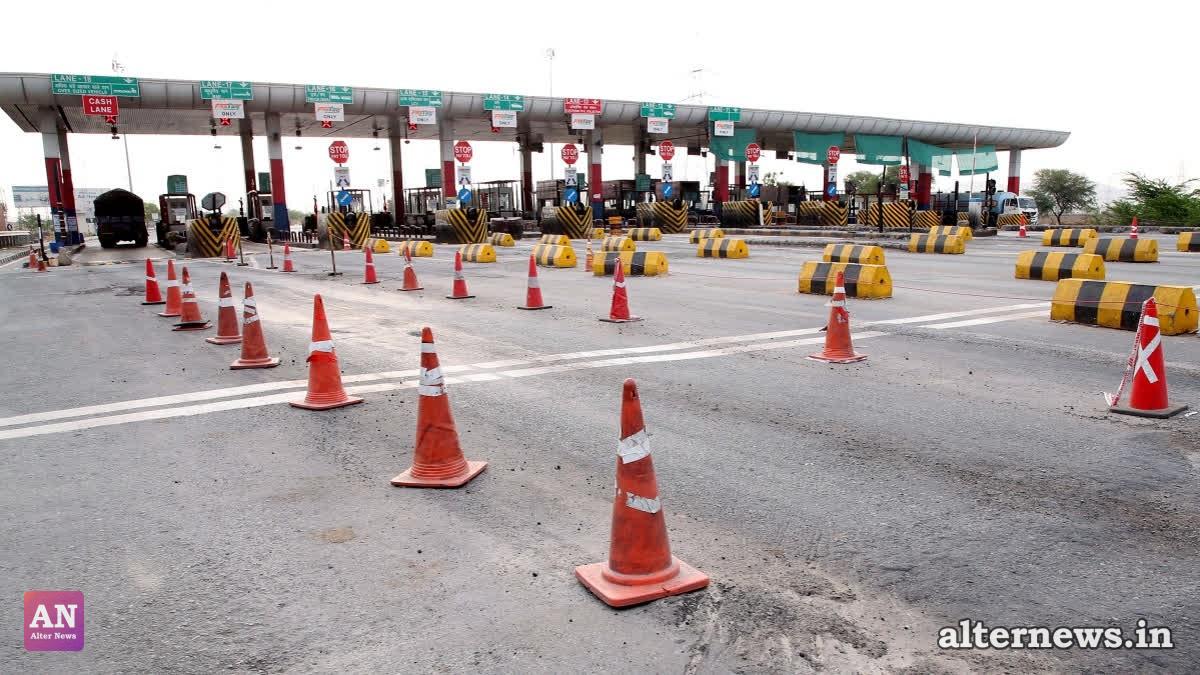
New Delhi: Intensifying its crackdown on rising transit hazards, the Supreme Court on Thursday questioned the National Highways Authority of India (NHAI) over why it cannot deploy automated camera surveillance systems and dedicated monitoring rooms across toll plazas to combat rampant highway encroachments and stationary vehicles.
A bench comprising Justices Vikram Nath and Sandeep Mehta raised the security and traffic concerns while hearing an ongoing suo motu case.
Senior advocate ANS Nadkarni, assisting the apex court as an amicus curiae, underscored that the unlawful parking of heavy and commercial vehicles on active high-speed corridors remains a primary trigger for brutal highway collisions.
Defending the authority's current protocols, the counsel representing the NHAI argued that administrative circulars have already been issued to enforce regular physical inspections and mobile patrolling to deter unauthorized parking.
During the proceedings, the apex court also expressed strong displeasure after noting that the Ministry of Road Transport and Highways (MoRTH), the Ministry of Home Affairs (MHA), and the Tamil Nadu government failed to submit their mandatory compliance affidavits.
The matter has been scheduled for further hearing on October 6. The current judicial scrutiny builds on comprehensive interim directives issued by the court earlier in April, which completely prohibited heavy vehicles from parking on highway carriageways or paved shoulders outside designated bays, banned unauthorized dhabas within right-of-way zones, and ordered the public mapping of critical accident blackspots.