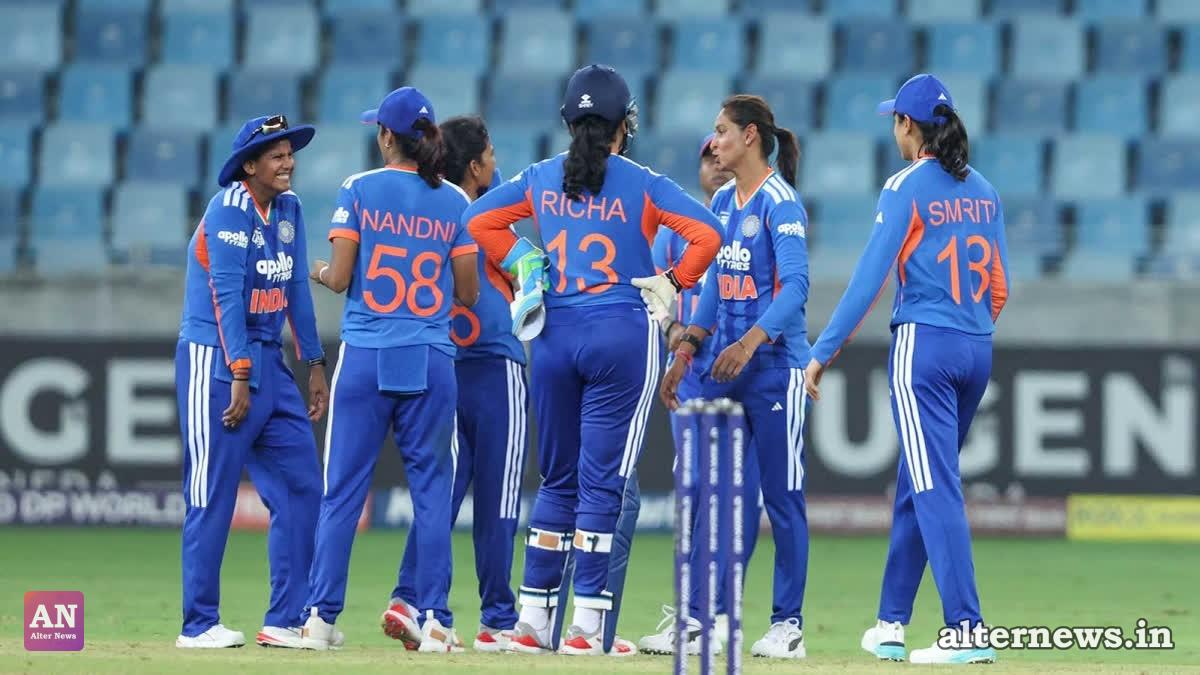
DUBAI: Familiar tension and high drama gripped the Dubai International Stadium on Sunday as the Indian women's cricket team cruised to a dominant 72-run victory over Sri Lanka to capture a record-extending eighth Women's Asia Cup title.
The summit clash saw stellar performances from openers Smriti Mandhana and Shafali Verma, who stitched together a brilliant 129-run partnership to propel India to a formidable total of 183/5.
Yet, as the match concluded, anticipation quickly shifted from the pitch to the podium. Whispers of a boycott began circulating when Naqvi—who also serves as Pakistan’s Interior Minister—was spotted taking his seat in the VIP gallery alongside BCCI vice-president Rajeev Shukla and secretary Devajit Saikia.
When the presentation ceremony finally got underway after a delay of nearly 50 minutes, Naqvi handed over the runners-up cheque and medals to the Sri Lankan squad.
Addressing the media after the match, India coach Amol Muzumdar backed the decision, emphasizing that it was a directive issued by the Board of Control for Cricket in India (BCCI).
"That stand has been taken by the BCCI and we stand by it. For us, this tournament is over. We are the champions. That's good enough," Muzumdar stated.
BCCI secretary Devajit Saikia later elaborated on the rationale behind the boycott, explaining that the women's team acted in strict solidarity with the Indian men’s team, which had taken an identical stance during the Men's Asia Cup.
"One of the main leaders who is working against the interests of our country; we can’t receive the trophy from him. The women's team has expressed solidarity with the decision taken by the men's team last year," Saikia
Despite the unusual podium absence and the missing silverware, the Indian camp maintained that the controversy did not dilute the brilliance of their campaign.