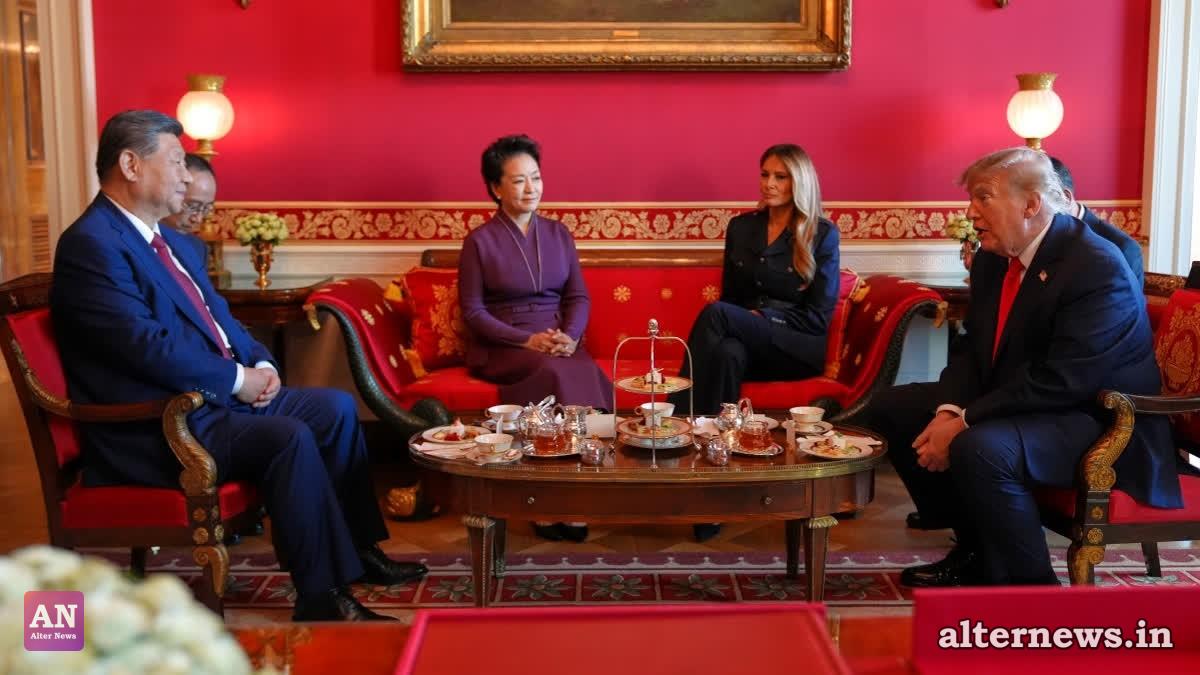
WASHINGTON — U.S. Ambassador to China David Perdue revealed on Sunday that President Donald Trump raised the unexpected prospect of selling American weapons directly to China, asking Chinese President Xi Jinping if Beijing would be interested in making a purchase.
Speaking on Fox News Sunday with host Shannon Bream, Perdue noted that Trump defended ongoing and pending U.S. arms sales to Taiwan by downplaying them as standard commercial transactions that Washington routinely conducts worldwide.
"President Trump continues to say, 'Hey, we sell arms to other people around the world,'" Perdue stated.
While Perdue did not specify the exact timeline of when the casual offer was made, the disclosure follows closely on the heels of a high-profile state visit by Xi Jinping to Washington, where the two leaders held private discussions.
The revelation has drawn significant attention given generations of firmly established U.S. foreign policy.
Lawmakers from both sides of the aisle in Washington have recently scrutinized the pace of weapons deliveries and aid packages destined for Taiwan, a self-ruled democracy that relies on the U.S. for its defense.
Perdue forcefully pushed back against those concerns, insisting that Trump remains intensely committed to Taiwan’s security.
Under U.S. law, Washington is bound to provide Taiwan with the means to defend itself, acting as its premier informal backer despite lacking formal diplomatic recognition.
While the prospect of Beijing buying U.S. weaponry remains an unlikely diplomatic outlier, the ambassador's comments underline the unorthodox, transactional approach President Trump frequently brings to international relations and defense strategy.