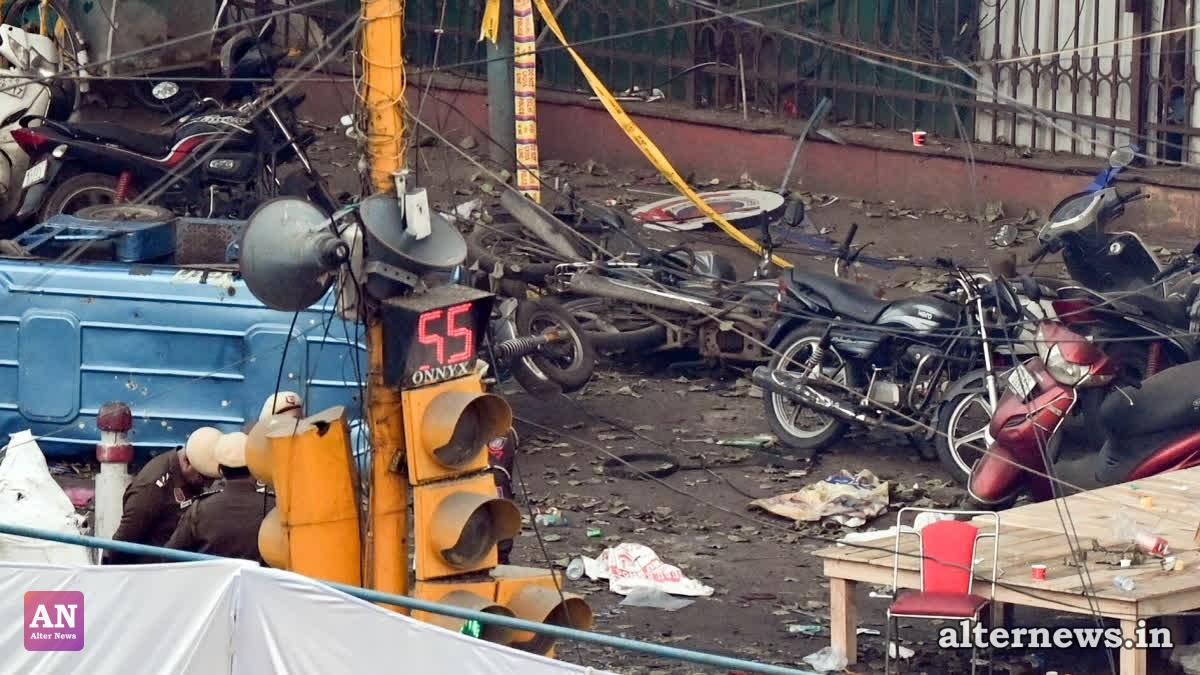
UNITED NATIONS — The November 2025 terror attack near New Delhi’s iconic Red Fort, which claimed around 15 lives and left numerous others injured, has been officially attributed to Al-Qaeda in the Indian Subcontinent (AQIS), according to a high-level United Nations Security Council report.
The finding was published in the 38th report by the UN Security Council’s Analytical Support and Sanctions Monitoring Team, submitted to the 1267 ISIL and Al-Qaeda Sanctions Committee. The report details how AQIS is evolving from a fragmented entity into a more organized regional network by establishing financial and logistical channels operated by small, decentralized cells rather than large operational units.
The deadly high-intensity explosion occurred when a car detonated at a traffic signal near the Red Fort Metro Station in central Delhi, causing widespread destruction and casualties.
Emerging Regional Threats and Chemical Capabilities
Beyond the Delhi attack, UN monitors expressed mounting concern over AQIS’s efforts to establish sleeper cells in Bangladesh. The report also warned about the broader interest of terrorist groups—including Al-Qaeda and ISIL (Da'esh)—in acquiring chemical and biological weapons.
While these groups have so far struggled to cross key technical barriers, instructions on manufacturing hazardous toxins continue to proliferate in online extremist circles. Notably, the report highlighted that ISIL's English publication Invade distributed manuals on producing cyanide and botulinum toxin earlier this year, while ISIL-K circulated guides on developing ricin.
The UN findings referenced arrests made by Indian authorities at the end of 2025, in which three individuals—including a medical doctor—were apprehended for alleged involvement in an overseas ISIL plot to manufacture ricin.
Instability in South Asia and Afghanistan
The UN sanctions report underscored persistent instability across South Asia, pointing to ongoing military flare-ups along the Pakistan-Afghanistan border. Despite public assertions by the Taliban administration that it does not harbor hostile outfits, member states warned that persistent conflict creates fertile ground for militant exploitation.
Furthermore, the report highlighted structural changes within Tehrik-e Taliban Pakistan (TTP). Following its annual Rahbari Shura (leadership council) in December 2025, the TTP announced a organizational overhaul, establishing two main divisions covering Balochistan, central regions, Kashmir, and Gilgit, as well as introducing a unit designated as the "TTP Air Force."
UN monitors concluded that the terrorism threat originating from Afghanistan remains largely unabated, posing a continuous security challenge to neighboring countries and the wider region.