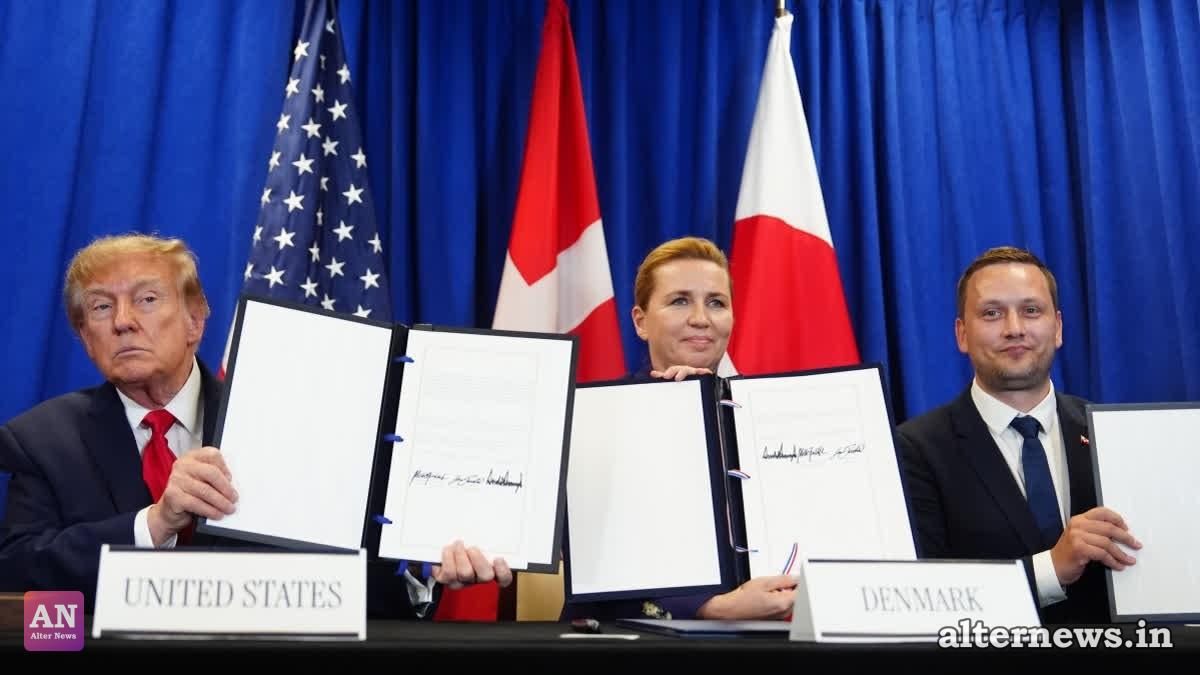
NEW YORK — In a major geopolitical breakthrough, US President Donald Trump, alongside leaders from Denmark and Greenland, formally signed a high-stakes trilateral security agreement. Finalized on the sidelines of the United Nations General Assembly in New York, the pact is aimed at bolstering defense capabilities across the Arctic and North Atlantic regions while successfully easing months of friction sparked by Washington's earlier demands for the territory.
The landmark accord paves the way for an expanded United States military footprint on the vast, resource-rich island, while formally preserving Danish sovereignty and protecting the Greenlandic population’s pathway to self-determination. Crucially, officials confirmed that the framework agreement would remain fully intact even if Greenland chooses to pursue full independence in the future.
The signing follows months of intense, behind-the-scenes negotiations. Tensions had previously escalated after President Trump repeatedly insisted that the US needed deeper control over the strategic territory to counter foreign maneuvers by adversaries like Russia and China. Those initial threats rattled residents on the island and strained relations with European allies. However, the newly minted pact bridges the gap between Washington’s defense demands and local autonomy.
Under the terms of the agreement, the US will modernize and expand its operations at the existing Pituffik Space Base in northwest Greenland. Furthermore, Washington is granted provisions to establish new defense areas at strategic locations such as Narsarsuaq and Mestersvig, while gaining wide military mobility, including undersea access. The accord also lays the groundwork for integrating the region into broader defensive architecture, including potential components of Trump’s proposed "Golden Dome" missile defense system.
To address local interests, the text mandates that contracts for goods and services related to building and maintaining these military installations must be awarded to Greenlandic sources whenever feasible. Additionally, the deal establishes strict barriers against non-NATO adversaries, barring any outside nation from setting up military bases or maintaining a persistent military presence without unanimous consent from all three signatories.
Leaders from all three governments hailed the accord as a historic win. Danish Prime Minister Mette Frederiksen described it as a deal that "can last forever," emphasizing its mutual benefits for European security and the broader NATO alliance. Meanwhile, Greenlandic representatives welcomed the pact as a monumental milestone, marking the first major binding international security agreement signed by Greenland as an autonomous entity on the global stage.