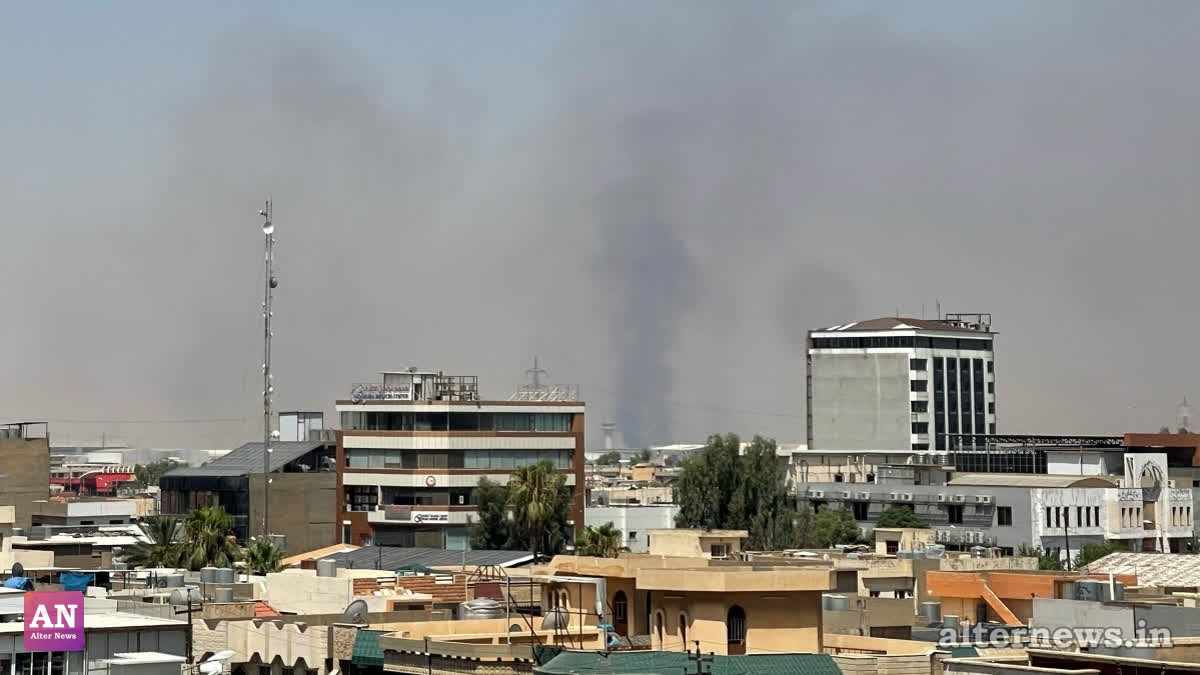
WASHINGTON / TEHRAN — Tensions across West Asia surged to dangerous new highs after the United States military confirmed it opened fire on a commercial tanker trying to breach its maritime blockade of Iranian ports. The incident marks the second commercial ship disabled by American forces in recent days as hostilities between Washington and Tehran enter their 13th consecutive night without any sign of a diplomatic breakthrough.
The strike on the merchant vessel coincided with fresh retaliatory moves across the region: Iranian-backed forces launched strikes targeting U.S. strongholds around the Persian Gulf, while Saudi coalition jets bombarded the Yemeni port city of Hodeida in response to Houthi attacks on Red Sea oil tankers.
US Navy Disables Tanker in Gulf of Oman
According to U.S. Central Command (CENTCOM) spokesman Capt. Tim Hawkins, American forces disabled the M/T Lavine in the Gulf of Oman after the ship repeatedly ignored warnings and attempted to run the U.S.-imposed blockade at least four times.
"The ship's crew was repeatedly warned and failed to comply with lawful commands," Hawkins said. "U.S. forces subsequently fired directly into its engine room to disable the vessel."
The maritime intervention comes as the Trump administration considers whether to step up offensive operations against Iranian targets or maintain its current posture. President Donald Trump convened a high-level national security meeting at the White House with key military and intelligence advisers to deliberate on next steps, though officials declined to reveal whether a formal decision had been reached.
Regional Escalation and Embassy Warnings
With fighting spreading across multiple fronts, foreign governments and regional actors are preparing for potential broader military confrontation:
Embassy Bulletins: U.S. embassies across the Middle East issued advisory alerts urging American citizens to evaluate commercial travel options, warning that departure routes could become severely restricted if airspace closes.
Iranian Warnings: Iran’s Islamic Revolutionary Guard Corps (IRGC) advised civilians residing in neighboring Arab nations to maintain distance from military bases housing American troops and personnel.
Coalition Strikes in Yemen: Early Saturday, the Saudi-led coalition launched heavy airstrikes on the Houthi-controlled port of Hodeida in Yemen, retaliating against rebel drone and missile strikes on commercial oil tankers in the Red Sea.
Tehran Rejects American Coercion at SCO Summit
On the diplomatic front, prospects for an immediate ceasefire remain dim. Speaking to journalists following a meeting of the Shanghai Cooperation Organization (SCO) Council of Foreign Ministers in Kyrgyzstan, Iranian Foreign Minister Abbas Araghchi firmly rejected Washington's coercive posture.
Araghchi emphasized that the obstacle to peace is not a lack of communication channels between Tehran and Washington, but rather the United States' reliance on intimidation and military force.
"Iran has repeatedly demonstrated that it will not bow to U.S. bullying," Araghchi declared. "Under no circumstances will Tehran respond to the language of force, pressure, and threats."
As both sides double down on military maneuvers and warning shots in strategic shipping lanes like the Strait of Hormuz and the Gulf of Oman, analysts warn that the risk of a full-scale regional confrontation remains exceptionally high.