TEHRAN / WASHINGTON — Tensions across West Asia intensified significantly following a fresh wave of military actions and severe political warnings between Washington and Tehran. Senior Iranian leadership warned that the conflict has fundamentally shifted into a far more dangerous phase, threatening swift retaliation against US forces and maritime infrastructure along the vital Strait of Hormuz.
Tehran Issues Stern Warning over Changing 'Rules of Engagement'
Iranian Parliament Speaker Mohammad Baqer Qalibaf delivered a stark warning to Washington, declaring that retaliatory strikes from Iran will now be "faster, heavier, and more painful".
"The rules of the game have changed," Qalibaf stated, warning American military commanders to reassess their strategic calculus in the Persian Gulf.
Adding to the administrative posture, Mohsen Rezaei, Secretary of Iran’s Supreme National Security Council, dismissed White House assertions that Washington exercises full control over maritime lanes.
Escalation in the Strait of Hormuz
The political rhetoric comes on the heels of major maritime engagements. The Islamic Revolutionary Guard Corps (IRGC) claimed its naval units targeted three US-affiliated merchant ships along with three oil tankers alleged to have traversed "unauthorized routes" in the Strait of Hormuz.
In response, US Central Command (CENTCOM) confirmed it carried out targeted strikes destroying three Iranian crude oil tankers.
Economic Shockwaves and Global Energy Markets
The ongoing volatile conditions in the Persian Gulf continue to reverberate across international financial and energy sectors. Benchmark Brent Crude jumped over 0.5% toward $97 a barrel, while West Texas Intermediate (WTI) registered noticeable gains as global traders braced for extended supply chain disruptions.
Despite shipping volume slowdowns, US energy officials asserted that millions of barrels of crude continue to clear the corridor under international escort.
Collateral Conflict Spills Across Lebanon and Gaza
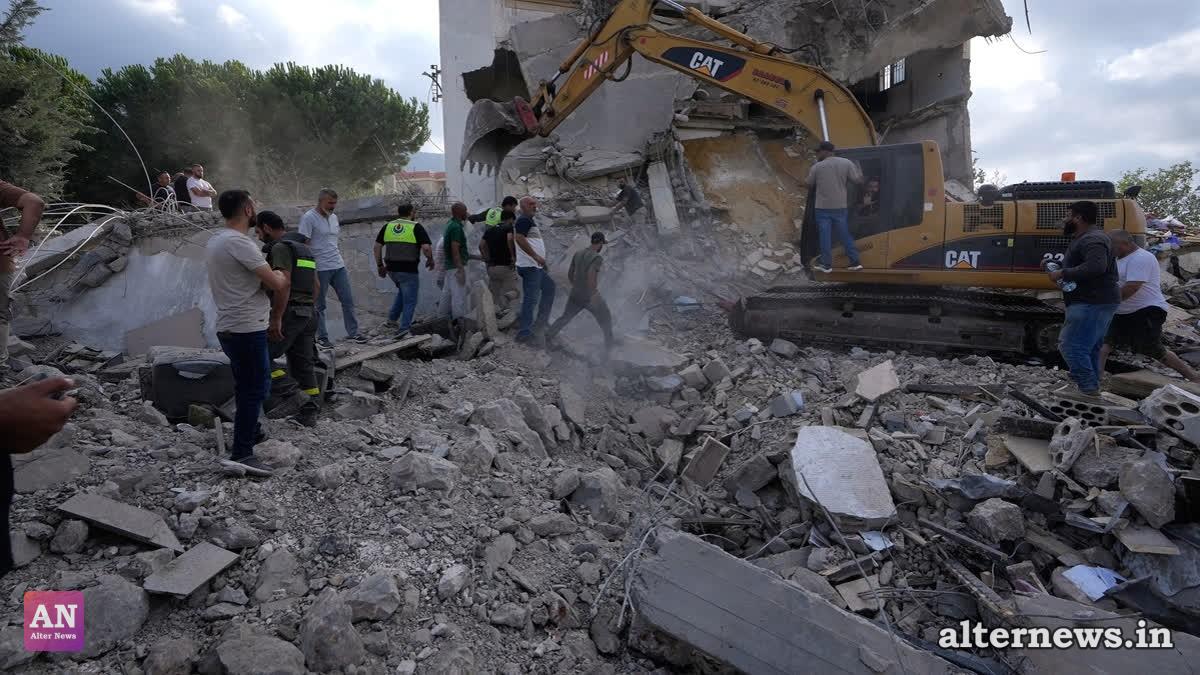
As the US-Iran friction intensifies, regional allies remain directly entangled in widespread exchanges. Israeli military forces launched extensive airstrikes into southern Lebanon, targeting alleged Hezbollah assets in districts including Deir Zahrani and the town of al-Mansouri near Tyre.
Simultaneously, humanitarian conditions inside Gaza and parts of the West Bank deteriorated further amid continued localized operations.