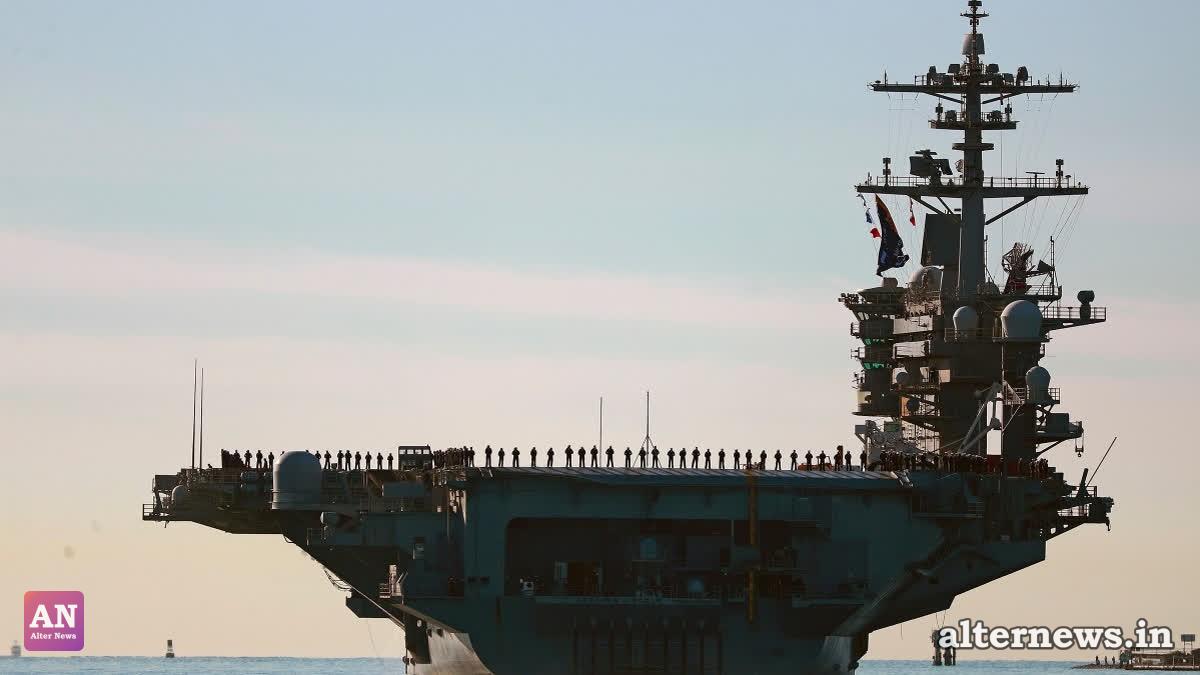
BANGKOK — The aircraft carrier USS Abraham Lincoln will dock in Thailand for a much-needed port visit following an exhaustive Middle East deployment supporting military operations against Iran, local defense officials confirmed Wednesday.
Thai Defense Ministry spokesperson Surasant Kongsiri announced that the nuclear-powered aircraft carrier, along with accompanying vessels from its strike group, is expected to arrive in eastern Thailand next week. The port call aims to give thousands of weary sailors and Marines a chance to go ashore for rest and recovery before heading back to their home port in the United States.
"The stop in Thailand is an opportunity for the crew to step ashore, unwind, and recharge," Kongsiri told reporters at a news conference in Bangkok.
The Royal Thai Navy confirmed that three warships from the strike group are scheduled to arrive, emphasizing that no joint military exercises or drills will take place during the port visit.
Record Days at Sea Take a Toll
The deployment has broken records, keeping the Lincoln at sea for more than 250 continuous days without a standard port call. However, the extended time on station has drawn increasing scrutiny inside the Pentagon and among military advocates over its impact on shipboard morale and mental health. Reports of supply shortages—ranging from personal hygiene items to basic comforts—have highlighted the operational strain placed on the crew.
Addressing the supply issues on Wednesday, Adm. Daryl Caudle, the U.S. Navy’s top officer, acknowledged initial logistical hiccups following the sudden launch of Operation Epic Fury, the code name for the conflict with Iran.
Caudle clarified that while fundamental provisions like basic rations were maintained, the primary bottlenecks affected non-essential items and daily necessities sailors rely on during long sea duty, such as energy drinks, soda, and toiletries.
"It’s a fair critique that there were some initial hiccups at the beginning of Epic Fury until we got that system dialed in," Adm. Caudle explained, adding that logistical networks for parts, provisions, and crew amenities run on separate tracks. "There was definitely a learning curve for our at-sea replenishment process, but we are in a solid position now."
Winding Down a High-Stakes Mission
The Lincoln’s deployment comes amid sustained high-seas tension. While active hostiles have eased slightly in recent weeks, U.S. forces continue to enforce a naval blockade along Iranian ports in the strategic Strait of Hormuz as the conflict approaches its six-month mark.
Extended carrier deployments place heavy operational wear on marine propulsion systems, flight decks, and escort fleet machinery, making port stops critical for basic technical maintenance alongside crew rest.
Neither the U.S. Navy nor the U.S. Embassy in Bangkok issued formal statements regarding the exact schedule of the ship's movement, citing standard operational security guidelines.