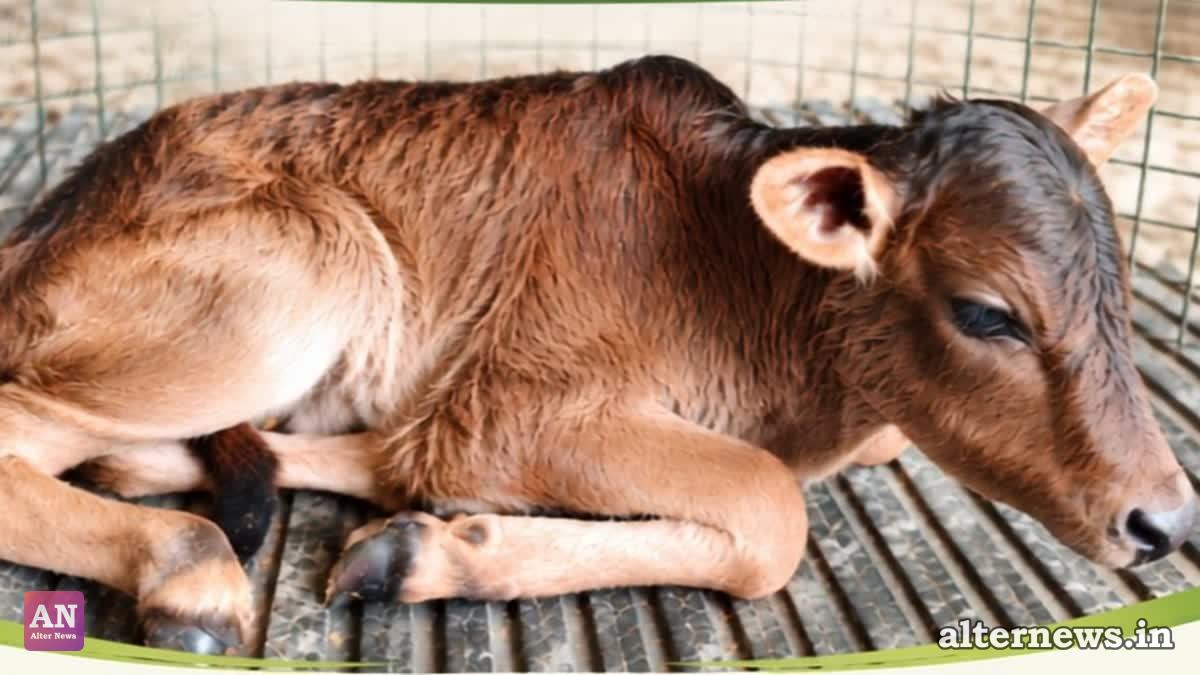
NEW DELHI: In a landmark achievement for the conservation, multiplication, and genetic improvement of indigenous livestock, a healthy female Badri calf has been successfully born through advanced reproductive biotechnology. The calf was delivered via surrogacy after a Badri embryo was transferred into a Sahiwal recipient cow.
According to the Union Agriculture and Farmers Welfare Ministry, the birth took place on September 11, 2026, at the Academic Dairy Farm. Badri cattle hold immense ecological and economic value as an important indigenous genetic resource and are officially recognized as the state animal of Uttarakhand.
A Collaborative Scientific Milestone
This breakthrough is the result of a joint initiative by the ICAR–National Dairy Research Institute (ICAR-NDRI) in Karnal and G. B. Pant University of Agriculture and Technology in Pantnagar, Uttarakhand, with financial backing from the Uttarakhand Biotechnology Council, Haldi. The project underscores the immense potential of reproductive technologies in accelerating the multiplication of elite germplasm.
The research journey began back in 2023 under the vision and leadership of Dr. M. S. Chauhan, the then Vice-Chancellor of G. B. Pant University. Over the past three years, dedicated scientific teams have successfully established protocols for OPU-IVF, embryo production, and embryo transfer specifically tailored for Badri cattle.
How the Surrogacy Experiment Worked
Detailing the procedure, the ministry explained that oocytes were harvested from genetically superior Badri donor cows using ultrasound-guided Ovum Pick-Up (OPU). These collected oocytes were matured and fertilized in vitro using semen sourced from a high-grade Badri bull provided by the Uttarakhand Livestock Development Board.
The resulting embryos were nurtured under stringent laboratory conditions before being transferred into appropriately synchronized recipient cows. In this milestone case, the Badri embryo was successfully carried to term by a Sahiwal surrogate mother. Furthermore, authorities noted that another synchronized crossbred recipient cow is expected to deliver a Badri calf within the next week.
Future Prospects for Livestock Conservation
Dr. Dheer Singh, Director of ICAR-NDRI, Karnal, emphasized that cutting-edge reproductive technologies like OPU-IVF enable the rapid multiplication of elite female germplasm. This provides a robust foundation for structured breed-improvement and conservation programs tailored to the Himalayan region.
Looking ahead, the research team is also exploring the cloning of elite, high-yielding Badri cows, having already successfully generated cloned embryos in preliminary stages. Future phases of the project will involve transferring both OPU-IVF and cloning-derived embryos into suitable Sahiwal, crossbred, and Badri surrogate mothers to safeguard and multiply this prized indigenous breed for generations to come.