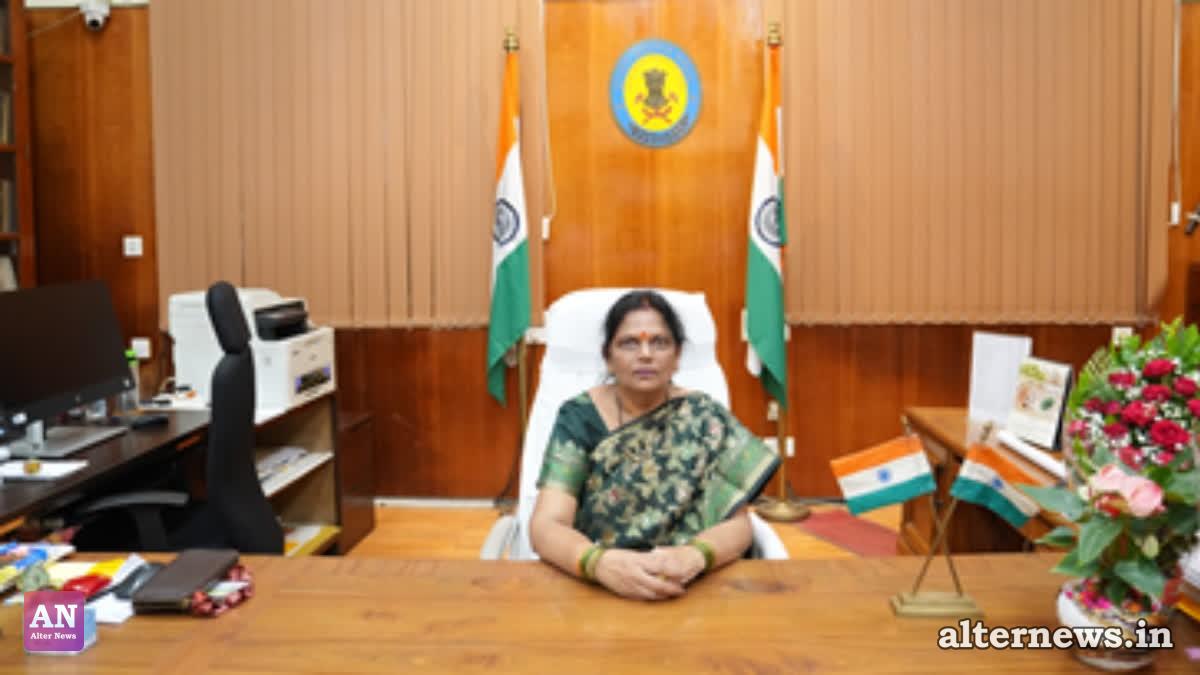
KOLKATA — In a historic milestone for India’s scientific community, palaeontologist Varsha Ashok Aglawe has assumed charge as the 54th Director General of the Geological Survey of India (GSI). Her appointment marks the first time a woman has been named to lead the premier geoscientific research organization in its 176-year history.
According to an official statement issued by the Geological Survey of India on Friday, Aglawe succeeds Asit Saha, who completed a two-year tenure at the helm of the organization.
A Distinguish Career in Geosciences
With over three decades of professional experience in geosciences and palaeontology, Aglawe brings a wealth of expertise to her new leadership role. She initially began her government service with the Indian Bureau of Mines before joining the Geological Survey of India in 1992. Prior to her elevation as Director General, she served as Additional Director General and Head of Department for GSI’s Eastern Region in Kolkata.
Focus on Critical Minerals and National Priorities
Outlining her strategic vision upon taking office, Aglawe emphasized that GSI will closely align its core operational programs with national economic priorities, particularly in securing essential raw materials for the country.
"GSI will align its initiatives with the government's priorities on critical mineral exploration and national mineral security," Aglawe stated.
Key operational priorities under her leadership will include:
Accelerating Deep Exploration: Expanding initiatives to discover deep-seated and concealed mineral deposits across the Indian subcontinent.
Offshore Mapping: Strengthening marine and offshore mineral exploration capabilities.
Modernizing Laboratories: Upgrading high-tech analytical and laboratory infrastructure to support advanced research.
Geoscientific Research & Safety: Deepening studies in glaciology, natural hazards mitigation, and environmental geosciences.
Capacity Building: Mentoring and developing training frameworks for the next generation of young Indian geoscientists while boosting scientific research publications globally.
Founded in 1851, the Geological Survey of India remains an attached office of the Ministry of Mines and serves as the primary custodian of national geoscientific data and mineral resource assessments.