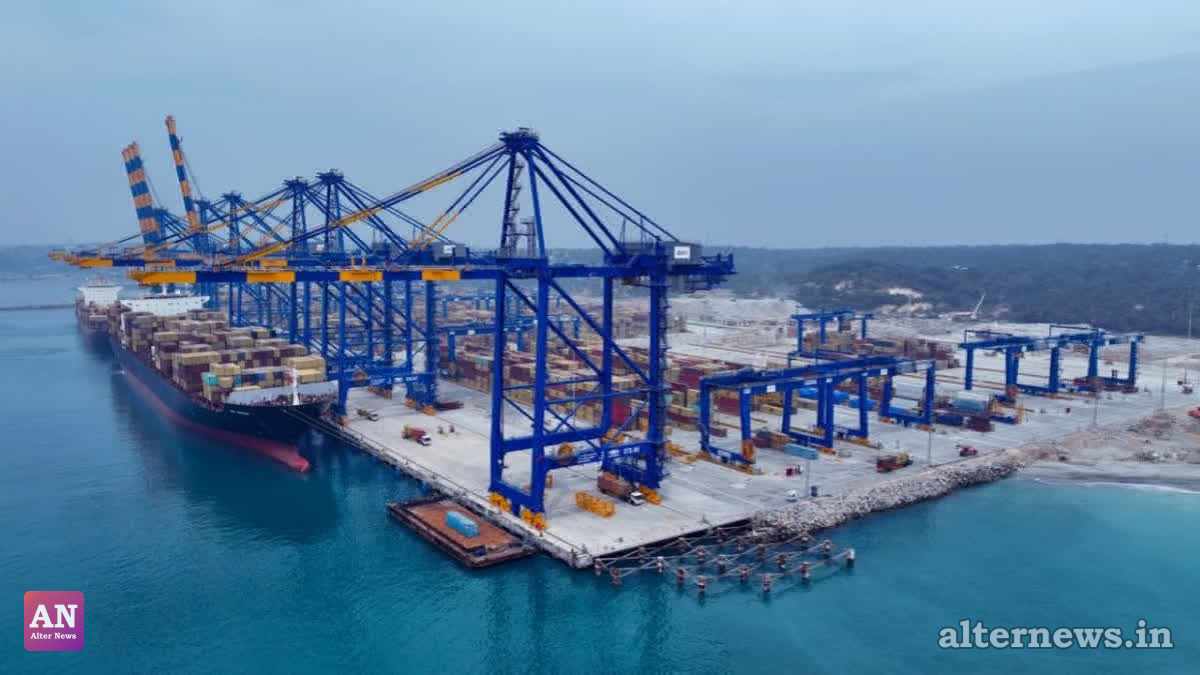
THIRUVANANTHAPURAM — Marking a major milestone for India's maritime trade, Vizhinjam International Seaport is set to transition from a transhipment hub into a full-fledged export-import (EXIM) gateway. The Central Board of Indirect Taxes and Customs (CBIC) has issued final regulatory clearance, allowing the deep-water facility to officially launch EXIM cargo operations on August 18.
The announcement was confirmed by the port’s operating body, Vizhinjam International Seaport Ltd (VISL). Up until now, the state-of-the-art port in Kerala operated exclusively as an international transhipment hub, transferring cargo between mother vessels and feeder ships.
According to the official CBIC order issued on July 24, customs management for incoming and outgoing shipments will be run in close coordination with key statutory bodies, including VISL, Adani Vizhinjam Port Private Limited (AVPPL), the Mercantile Marine Department, the Bureau of Immigration, the Port Health Organisation, security forces, and authorized financial institutions.
Operating Framework and Key Customs Directives
Because the port does not yet have a designated, operational Container Freight Station (CFS), the CBIC has established temporary operational guidelines to regulate container movement and safeguard customs compliance:
Direct Port Delivery (DPD) for Imports: Imports will be limited strictly to Full Container Load (FCL) shipments eligible for DPD. These containers must clear customs and leave the terminal directly for the importer's premises within 48 hours of landing.
Direct Port Entry (DPE) for Exports: Outbound cargo will be restricted to factory-stuffed, self-sealed, or Customs-sealed FCL containers entering directly through DPE.
Restricted Cargo Categories: Loose cargo, Less-than-Container Load (LCL) shipments, and containers requiring yard examination, de-stuffing, or carting inside the port perimeter will not be permitted until a dedicated CFS facility becomes operational.
Inland Intermodal Routes: Road transhipment between Vizhinjam and other designated Customs stations—including Inland Container Depots (ICDs), Special Economic Zones (SEZs), and Land Customs Stations—has been officially sanctioned.
All logistics operations must strictly adhere to the Sea Cargo Manifest and Transhipment Regulations (SCMTR) of 2018.
Expanding Kerala’s Maritime Footprint
Developed through a public-private partnership between the Government of Kerala and Adani Ports and Special Economic Zone (APSEZ), Vizhinjam has rapidly established itself as a flagship logistics hub. Within just 18 months of initiating commercial transhipment operations, the deep-water port handled over two million TEUs (Twenty-Foot Equivalent Units) and successfully docked some of the world's largest ultra-large container vessels.
The launch of EXIM operations fulfills a critical pillar of Kerala's "Mission Samudra"—a state initiative designed to transform Kerala into a premier global logistics hub by seamlessly linking deep-sea ports, inland waterways, rail links, and manufacturing zones.