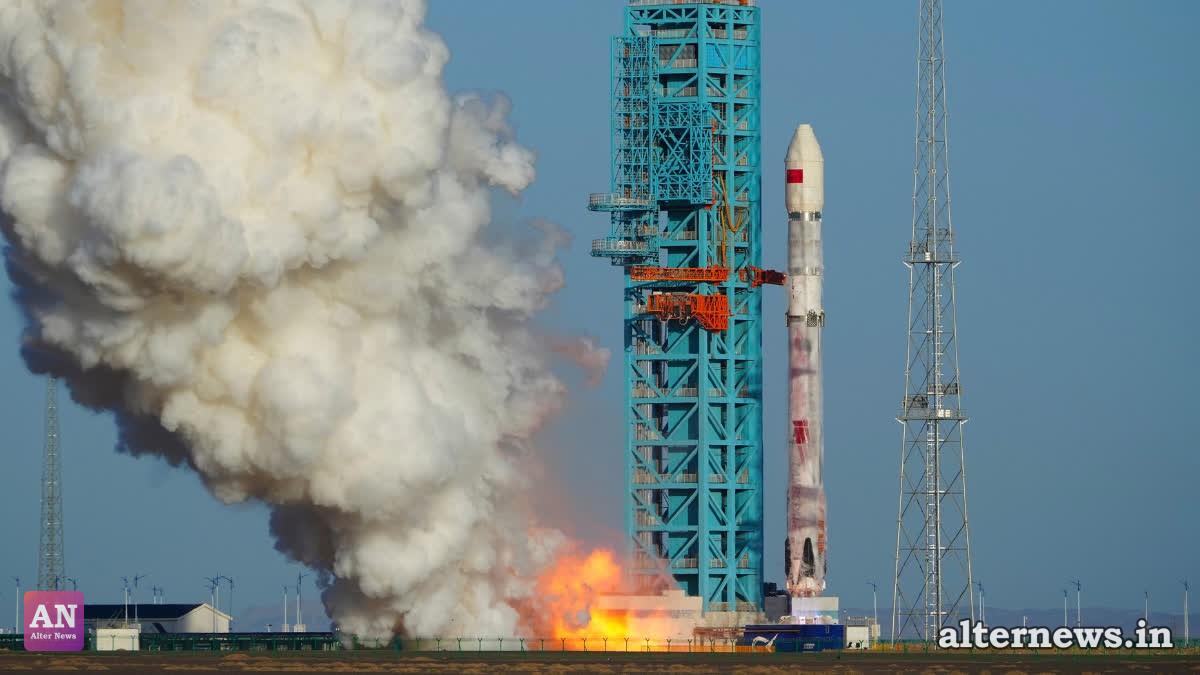
BEIJING — China achieved a historic breakthrough in its commercial space program on Wednesday morning, successfully landing the first stage of a reusable rocket on solid ground for the very first time.
The milestone event took place at the Dongfeng commercial space innovation pilot zone in northwestern China following the launch of the Zhuque-3 Y2 carrier rocket. According to reports from state news agency Xinhua, the rocket’s first-stage booster detached smoothly after liftoff and executed a controlled descent back to the landing pad.
The mission represents China's first successful touchdown on land using deployable landing legs. Chinese aerospace state media hailed the precision touchdown as a "major technological breakthrough" in the nation's push toward mastering sustainable and economical space exploration.
A Two-Pronged Recovery Strategy
Wednesday’s land recovery follows a previous breakthrough in July 2026, when Chinese engineers captured the first stage of a Long March-10B rocket on an offshore platform near Wenchang, Hainan province.
That maritime mission relied on a specialized net-capture system fitted onto a maritime recovery ship rather than conventional landing legs. By successfully executing both land-based leg landings and sea-based catch mechanisms, Chinese space engineers are rapidly building a versatile toolkit for booster retrieval.
| Metric / Feature | Land Recovery (Zhuque-3) | Sea Recovery (Long March-10B) |
| Landing System | Deployable Landing Legs | Net-Capture Floating Platform |
| Location | Dongfeng Pilot Zone (Inland) | Off Wenchang, Hainan (Maritime) |
| Primary Goal | Direct pad recovery & rapid refurbishment | Flexible recovery over ocean flight corridors |
Closing the Gap in the Global Space Race
The ability to return first-stage boosters to Earth intact is the holy grail of modern rocketry. Pioneered commercially by American companies like Elon Musk’s SpaceX and Jeff Bezos’ Blue Origin since 2015, reusable rockets drastically lower the cost per launch by saving millions of dollars in discarded engines and alloy structures.
While traditional deployable legs add dead weight to a rocket—reducing overall payload capability—they remain a proven standard for early-stage reusable fleets. Meanwhile, global competitors continue to push the envelope: SpaceX has moved toward catching its massive Super Heavy boosters mid-air using launch tower "chopstick" arms to eliminate landing legs altogether.
China’s dual success at sea and on land underlines its accelerating ambition to challenge global market leaders. At the same time, nations like Japan and India are ramping up their own initiatives—such as ISRO's Reusable Launch Vehicle (RLV) program—to secure a foothold in the increasingly competitive low-cost launch market.
With its latest touchdown in the desert, China has proven that its commercial space sector is no longer merely following global trends, but actively building the infrastructure required for routine, low-cost access to orbit.