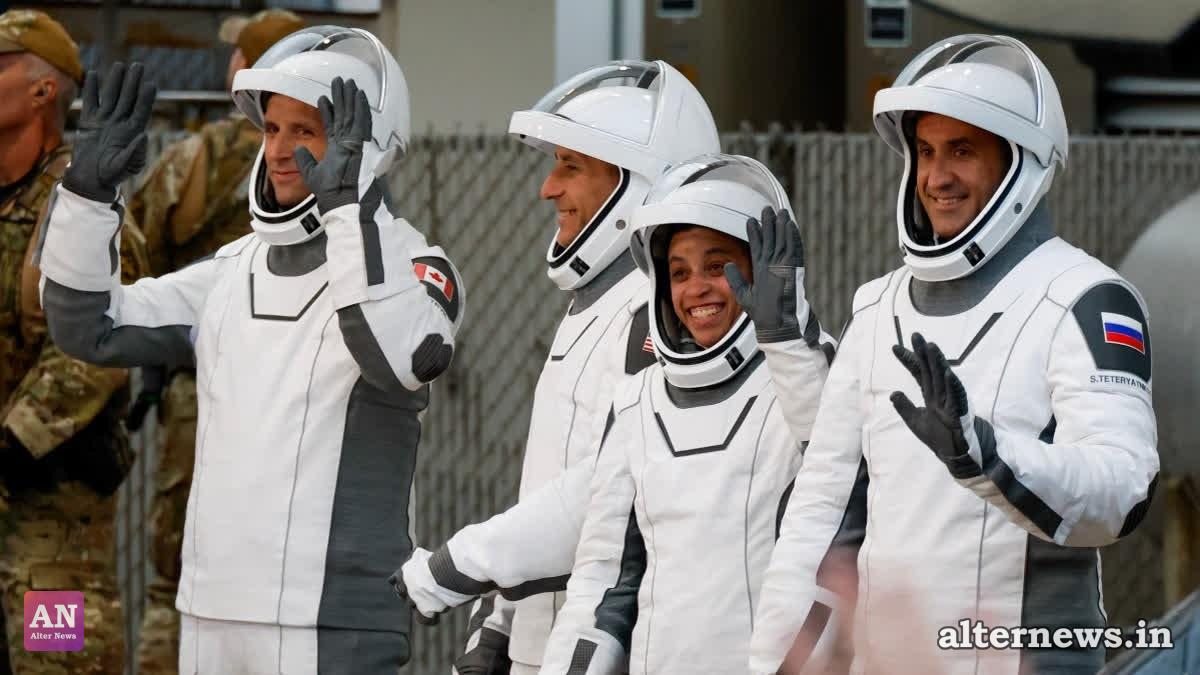
CAPE CANAVERAL — Blasting through the morning skies of Florida, a SpaceX Falcon 9 rocket successfully carried four astronauts toward the International Space Station (ISS) on Thursday. The mission marks the start of a six-month scientific expedition, featuring a historic crew and a uniquely expedited eight-hour journey to orbit.
The launch, originating from the Cape Canaveral Space Force Station, followed a brief three-week delay required for engineers to address a leaking fuel system on the crew capsule. Despite the wait, the flight proved to be one of the quickest transit times yet engineered by Elon Musk's aerospace company, bringing the astronauts to the orbiting laboratory just in time for bedtime.
At the helm of the mission is commander Jessica Watkins, a geologist and veteran astronaut who previously worked with NASA's Mars rover Curiosity. With Thursday's liftoff, Watkins achieved a historic milestone as the first Black woman to lead a crewed orbital flight.
“We really wanted to honor their legacy, honor their resilience and their grit, and bring a little bit of that with us,” Watkins remarked, highlighting how their mission patch and Crew-13 designation pay homage to the legendary, resilient spirit of Apollo 13. The crew arrived at the launchpad riding in black Teslas fitted with license plates reading “Lucky 13.”
Joining Watkins on the journey are three spaceflight newcomers: NASA pilot Luke Delaney, a retired Marine; Canadian Space Agency astronaut Joshua Kutryk, a colonel in the Royal Canadian Air Force; and Russian cosmonaut Sergey Teteryatnikov, a former submariner. They will officially relieve the four astronauts who have manned the orbiting laboratory since February.
For Canadian astronaut Joshua Kutryk, the six-month mission carries a unique personal milestone. Kutryk is set to become the fourth man to welcome a newborn child while in orbit, as his wife, Heather, prepares to give birth to their third child in late November. The Canadian Space Agency has assured full family support, while NASA managers noted they are coordinating communication links to keep Kutryk closely connected to the delivery room from space—continuing a rare tradition of cosmic fatherhood seen in past space missions.
The newly arrived quartet will spend the next half-year conducting critical scientific experiments, maintenance, and research aboard the space station before returning to Earth next spring.