NEW DELHI / BERHAMPUR:
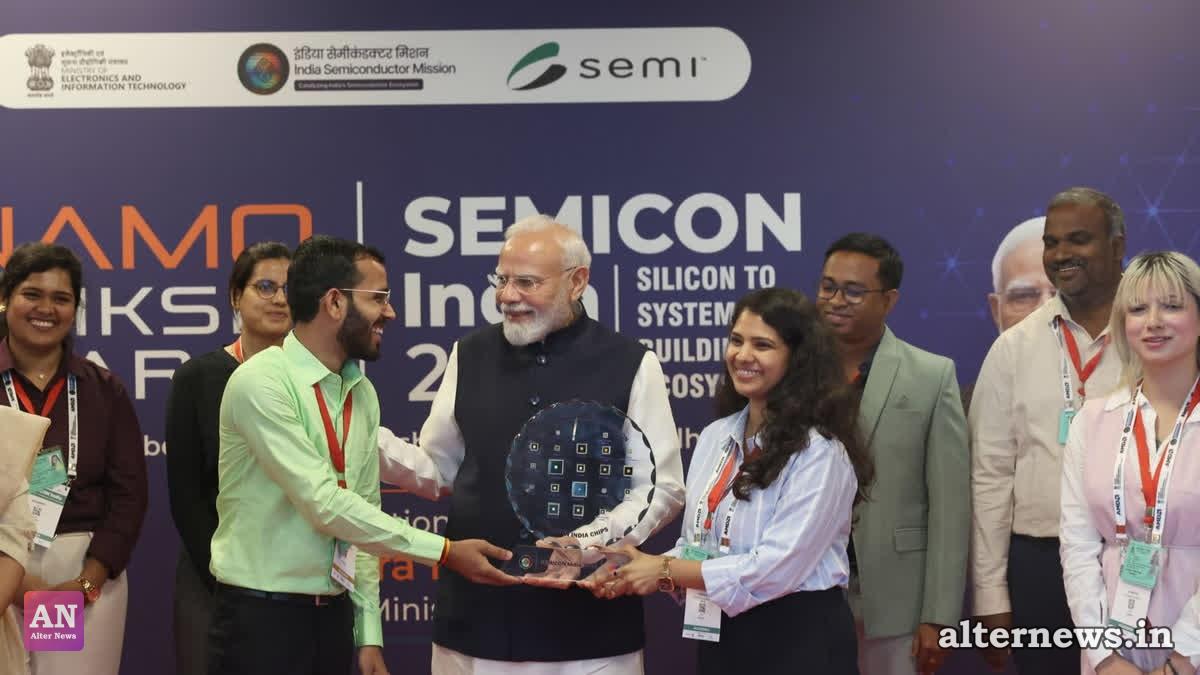
In what marks a monumental milestone for indigenous technological development, Pradeep Kumar Mohanty, a PhD researcher from Odisha, stood before Prime Minister Narendra Modi at SEMICON India 2026 in New Delhi to present a tiny yet powerful home-grown semiconductor chip.
For Mohanty—a native of Aska in Odisha’s Ganjam district and a scholar in the Department of Electronics and Communication Engineering at the National Institute of Technology (NIT), Rourkela—explaining years of rigorous research directly to the Prime Minister was a dream come true.
Securing the Internet of Things (IoT)
The star of the presentation was the ASCON AEAD Security Chip (C2S0091), a lightweight cryptographic integrated circuit engineered to offer robust data encryption and authentication.
The chip was meticulously designed by Mohanty under the expert guidance of Assistant Professor Ayaskanta Swain and Professor Kamalakanta Mahapatra at NIT Rourkela.
A Memorable Interaction
Recounting his interaction with the Prime Minister, Mohanty noted that PM Modi took a keen interest in understanding the technical architecture of the design, how the chip functions, and the roadmap for translating raw technology into commercially viable products.
"The Prime Minister's interest and encouragement have strengthened my resolve to continue working passionately in semiconductor research," Mohanty expressed.
Faculty mentors at NIT Rourkela beamed with pride over the achievement. Professor Ayaskanta Swain highlighted that this functional IC was developed alongside another successful circuit from the previous year, pushing NIT Rourkela's total tally of fully functional, indigenously developed integrated circuits to three.
Fueling India's Semiconductor Ambitions
The broader objective behind these academic milestones is to train a highly skilled workforce of semiconductor professionals, encourage domestic intellectual property creation, and foster self-reliance to address national and societal requirements.
For Odisha, Mohanty’s journey from a small town in Ganjam to the national stage stands as living proof of the state's burgeoning technical prowess. It underscores India’s larger narrative at SEMICON India 2026: rapidly moving past policy dialogues toward robust commercial production, establishing the nation as a trusted, reliable epicentre for global electronics manufacturing.