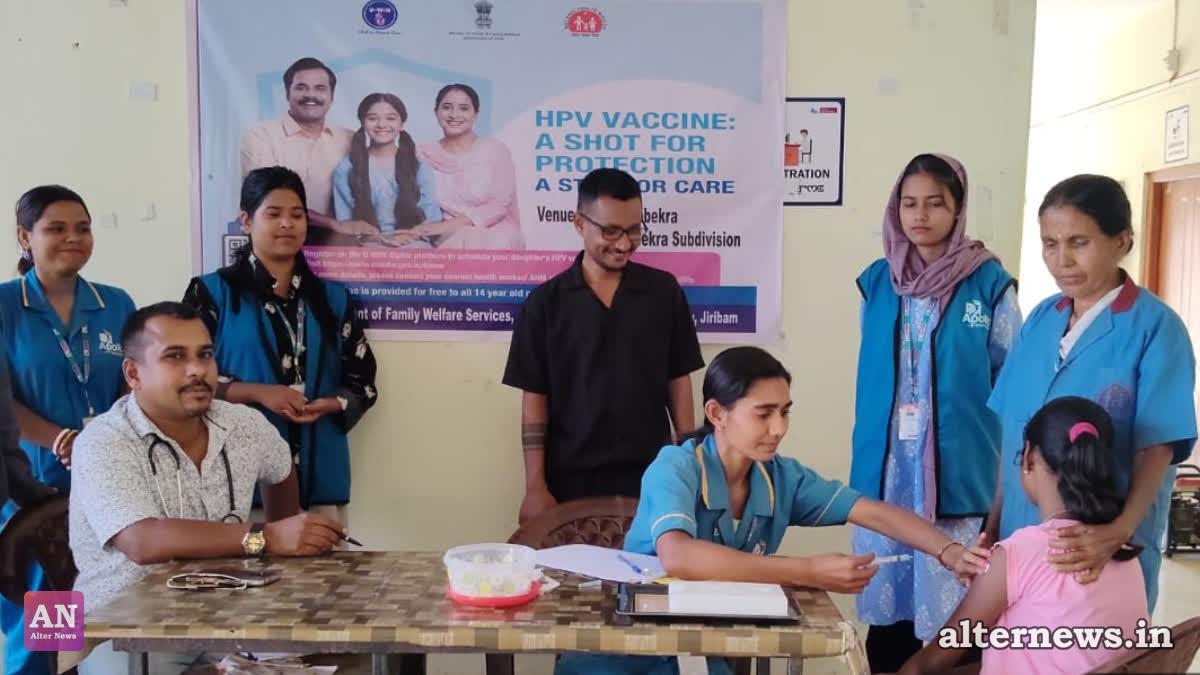
NEW DELHI: India’s landmark National HPV Vaccination Campaign has crossed a major public health milestone, successfully administering over 80 lakh doses of the Human Papillomavirus (HPV) vaccine to adolescent girls nationwide.
According to estimates by the Registrar General of India (RGI), approximately 1.2 crore girls turn 14 annually, making them the core target group for this preventive healthcare initiative.
Uttar Pradesh Leads the Charge
Among all states and union territories, Uttar Pradesh has emerged as the frontrunner, recording the highest number of immunizations with more than 22 lakh adolescent girls successfully vaccinated.
States Achieving 100% Coverage
The Ministry of Health and Family Welfare highlighted that several states have shown exemplary execution, registering 100% coverage of their identified target cohorts.
Meanwhile, states like Bihar, Andhra Pradesh, and Assam have crossed the 90% threshold, Karnataka has surpassed 85%, and regions like Chhattisgarh, Sikkim, Kerala, Telangana, and Odisha have crossed 60% coverage.
Technology and Community Engagement at the Core
The rapid rollout has been heavily supported by the U-WIN digital platform, which allows health officials to track vaccination sessions, monitor coverage at the district level, and trace dropouts or missed beneficiaries in real-time.
To counter vaccine hesitancy, the government deployed grassroot workers including ASHA and ANM workers, alongside teachers and medical professionals, to educate parents on the safety and absolute necessity of the vaccine. Stringent medical protocols, including 24-hour observation setups for managing minor adverse events, have been implemented across all immunization sites to ensure complete safety.
With the campaign moving steadily forward, health authorities are now shifting focus toward tracking down remaining eligible beneficiaries to secure a healthier, cancer-free future for the nation's young daughters.