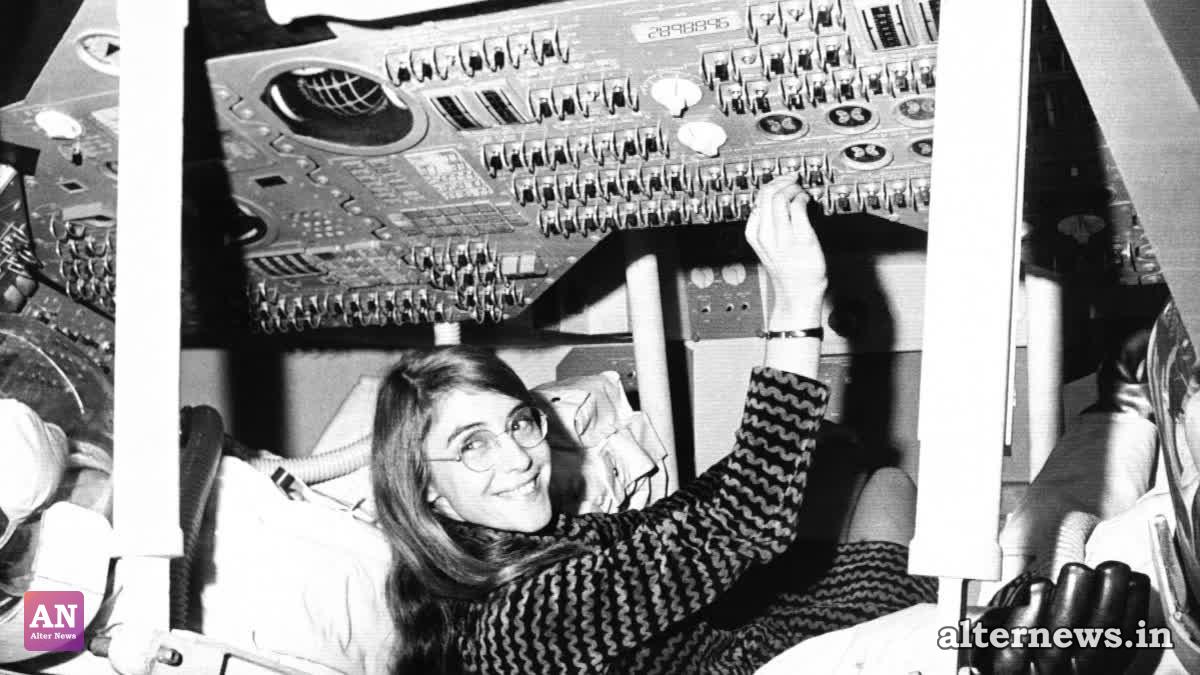
CAMBRIDGE, Mass. — Margaret Hamilton, the trailblazing computer scientist whose pioneering software development guided NASA’s Apollo missions and helped humanity reach the Moon, has passed away at the age of 90.
According to an announcement by the Massachusetts Institute of Technology (MIT), Hamilton died on September 30 at a hospital in Cambridge, Massachusetts. Her passing marks the loss of one of the 20th century’s most influential architects in computer science and space exploration.
Hamilton joined MIT in the late 1950s and later became the first programmer hired for the Apollo project, as well as the first woman to lead a core software development team for the space program. By 1968, she served as the assistant director in charge of the Command and Service Module on-board flight software teams, managing more than 400 engineers and staff who wrote and tested all in-flight code.
At a time when the field of software engineering was practically nonexistent, Hamilton helped invent the discipline itself. Her team pioneered "defensive programming" and priority-scheduling architectures—innovations that proved vital to the success of crewed spaceflight.
Perhaps her most famous contribution came during the historic Apollo 11 moon landing in July 1969. Just minutes before Neil Armstrong and Buzz Aldrin were set to touch down on the lunar surface, the Apollo Guidance Computer was suddenly overloaded with radar data. Thanks to Hamilton’s priority-driven scheduling architecture, the system automatically dropped low-priority tasks to focus exclusively on executing critical landing functions, saving the mission from a potentially catastrophic abort.
Reflecting on her time at MIT and NASA in a later interview, Hamilton noted, "Looking back, we were the luckiest people in the world; there was no choice but to be pioneers."
Following her tenure at MIT, Hamilton authored over 130 technical publications and later founded successful software companies, including Higher Order Software and Hamilton Technologies. In recognition of her monumental contributions to space technology, she was awarded the prestigious Presidential Medal of Freedom by U.S. President Barack Obama in 2016.
Tributes from across the scientific and space communities poured in following the announcement, with NASA and MIT leaders remembering her as a visionary whose software turned the impossible dream of walking on the Moon into a reality.
Hamilton is survived by her daughter, Lauren Hamilton, her son-in-law, her two grandsons, and four great-grandchildren. A memorial service is planned for the spring in Cambridge, Massachusetts.