CAPE CANAVERAL — Deep-space radiation remains one of the most formidable barriers to sustained human presence beyond Earth. However, new research published in Science Advances suggests that a specialized protective wearable could dramatically decrease cancer-causing radiation risks for astronauts during severe solar storms.
Data gathered from female test manikins aboard NASA’s uncrewed Artemis I moon flight in late 2022 demonstrates that the vest can reduce an astronaut's radiation dosage by up to 60 percent during intense solar outbursts.
Testing on the Lunar Frontier
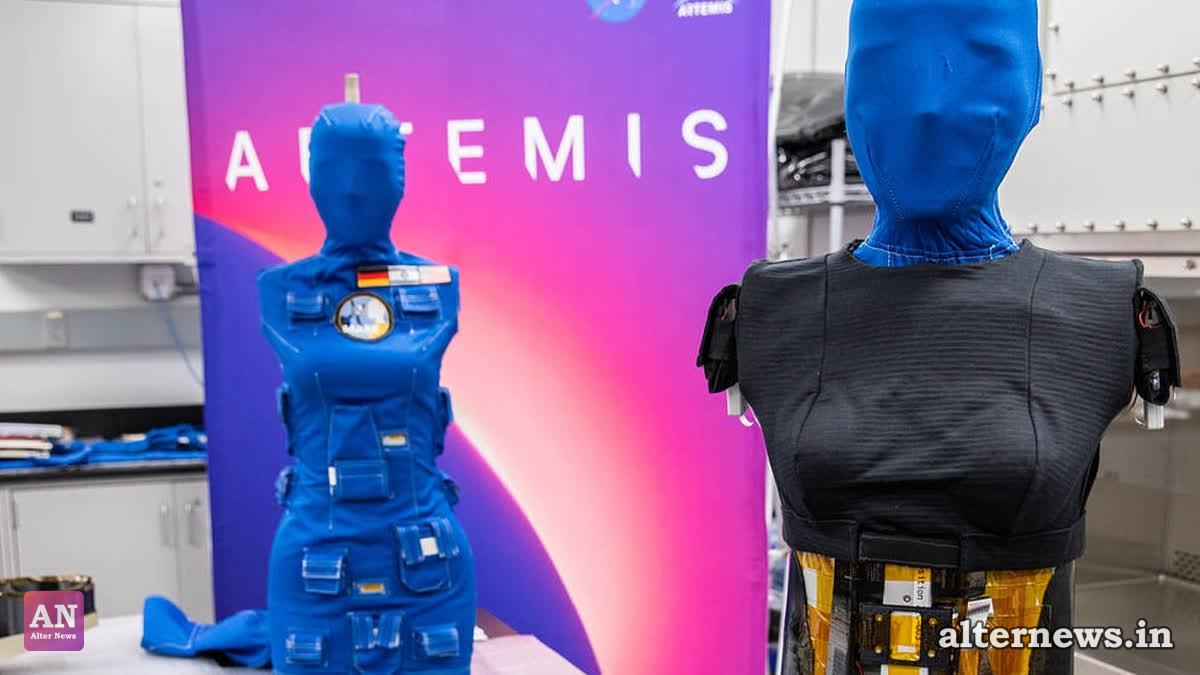
The study analyzed measurements collected by two life-sized female test manikins—named Zohar and Helga—strapped into the passenger seats of NASA’s Orion spacecraft during its nearly month-long flight around the Moon.
While Helga flew without protection, Zohar wore the 57-pound (26-kilogram) AstroRad vest, co-developed by U.S.-Israeli startup StemRad and aerospace giant Lockheed Martin. Both dummies were equipped with thousands of radiation sensors to track exposure across critical organs.
Designed specifically to shield high-vulnerability tissue—including the lungs, bone marrow, stomach, breasts, and ovaries—the garment targets areas where radiation-induced cancer risks are highest. Women are considered particularly sensitive to radiation damage in space environments.
Simulated Protection Against Historic Solar Storms
Although Artemis I did not encounter an active solar outburst, researchers utilized sensor data logged as Orion traversed the inner Van Allen radiation belt. Lead author Jordan Houri of StemRad and his international research team modeled how the vest would perform during extreme solar particle events equivalent to major storms recorded in 1972 and 1989.
The findings showed:
1972-Class Solar Storm: The vest reduces radiation exposure by roughly 60%, sparing astronauts the equivalent of 193 days of baseline deep-space radiation.
1989-Class Solar Storm: The garment lowers radiation absorption by nearly 40%, equivalent to preventing 131 days of unnecessary exposure.
While short Apollo missions in the 1960s and 70s relied partly on luck to avoid deadly solar events, future Artemis crews and planned lunar bases will require long-term shielding. Planned surface stays will last weeks to months, significantly compounding radiation hazards.
The Path to Lighter Wearables
Funded by NASA, the German Aerospace Center, and the Israel Space Agency, the experiment represents the largest radiation study ever conducted beyond low-Earth orbit. Research teams are now leveraging the dataset to refine the design, aiming to shave weight from the 57-pound vest without compromising its shielding efficiency.
While the vest was omitted from the upcoming Artemis II flyby due to space constraints on the short 10-day mission, optimized iterations are expected to be available for future long-duration surface missions to the Moon and, eventually, crewed journeys to Mars.