JODHPUR — What happens inside the human brain when we try to hold a conversation in a deafeningly noisy room? How does the mind instantly swivel attention toward a sudden hazard on a busy road? And why do some individuals retain sharp cognitive function well into old age while others experience rapid memory decline?
Scientists at the Cognitive Brain Dynamics Lab (CBDL) at the Indian Institute of Technology Jodhpur (IIT Jodhpur) are systematically unlocking the answers to these fundamental neuroscientific questions.
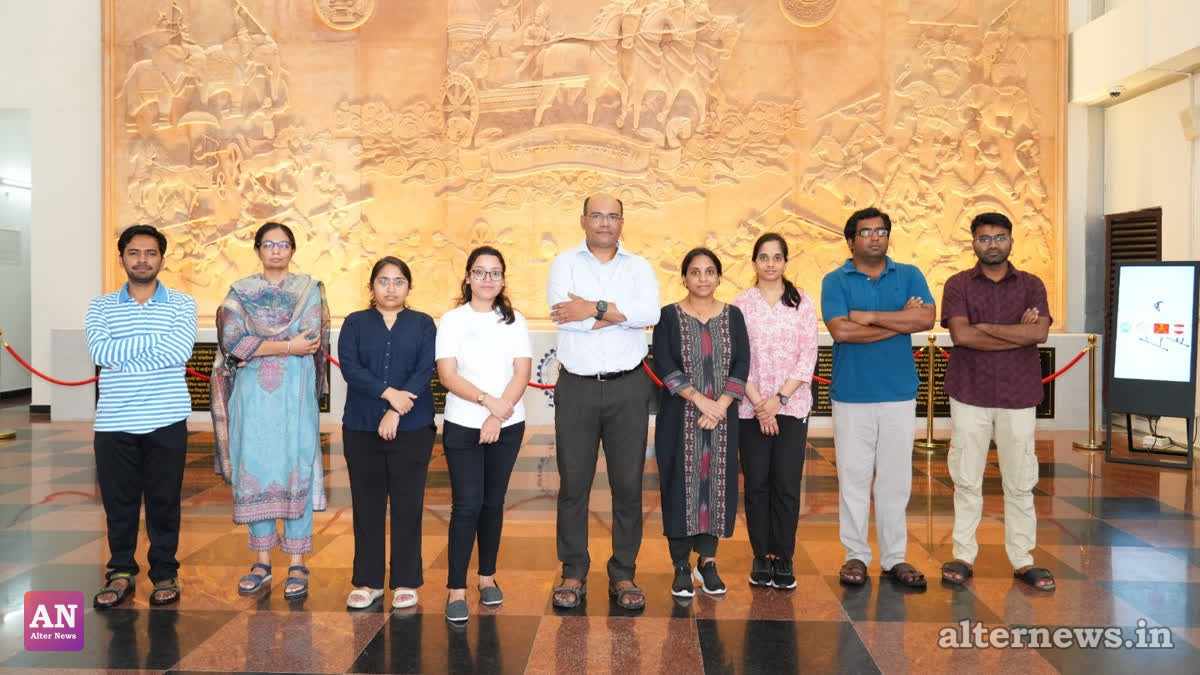
Led by Professor Dipanjan Roy from the School of Artificial Intelligence and Data Science, the research team is combining advanced neuroimaging, artificial intelligence, computational modeling, and signal processing to map how the human brain processes information, adapts to uncertainty, and maintains resilience across different stages of life.
According to a statement released by the Union Ministry of Education, the multi-project initiative—supported through several nationally funded programs—is laying the groundwork for next-generation healthcare technologies, brain-inspired AI architectures, and targeted clinical interventions for mental health conditions.
Teaching the Brain to Filter Noise and Improve Hearing
One of the lab’s most promising breakthroughs centres on how the brain integrates multi-sensory information—combining what we hear with visual cues like lip movements—to decipher speech in cluttered environments.
By examining brain oscillations, commonly known as brain waves, the research team demonstrated that targeted, subtle electrical stimulation of specific brain frequencies can directly influence sensory integration. This neural tuning can alter speech perception and even correct perceptual errors in high-noise settings.
"Our goal is to understand how the brain processes information, adapts to uncertainty, and remains resilient across different stages of life," said Prof. Dipanjan Roy. "By combining neuroscience, AI, and neuroimaging, we aim to translate fundamental principles of brain function into real-world technologies that improve mental health and quality of life."
These findings hold immense potential for designing advanced auditory prosthetics and assistive devices for individuals suffering from severe speech and hearing impairments.
Early Signatures for Memory Loss and Healthy Ageing
As global demographics shift toward an older population, understanding the biological mechanics of memory retention has become a critical public health priority.
Using high-precision diagnostic tools—including Electroencephalography (EEG), Magnetoencephalography (MEG), and complex algorithmic modeling—the IIT Jodhpur team is investigating how variations in attentional control affect working memory, which allows the brain to temporarily hold and process incoming information.
By identifying distinct neural signatures associated with cognitive decline, the researchers hope to establish early-detection tools for neurodegenerative disorders, such as Mild Cognitive Impairment (MCI) and Frontotemporal Dementia, long before clinical symptoms fully manifest.
Real-World Emotion Mapping and Emergency Focus
The research also addresses two other major pillars of cognitive dynamics: emotional processing and sudden attentional reorientation.
Mental Health Mapping: To better understand conditions like depression, anxiety, and obsessive-compulsive disorder (OCD), researchers are deploying functional Magnetic Resonance Imaging (fMRI) in realistic, naturalistic environments. This allows them to monitor how the brain navigates uncertainty and stress in real-time, offering objective neurocognitive markers for clinical diagnoses.
Rapid Reflex Networks: The team has pinpointed specific neural networks responsible for shifting attention during sudden emergencies—such as spotting an oncoming speeding vehicle. Decoding how the brain filters out irrelevant distractions during high-stakes moments could aid in treating neurodevelopmental conditions like Attention Deficit Hyperactivity Disorder (ADHD).
By bridging the gap between fundamental laboratory science and clinical application, the breakthroughs at IIT Jodhpur offer a promising blueprint for the future of brain-inspired medical diagnostics, smart assistive technology, and cognitive rehabilitation.