TAIPEI — In a major escalation of the global technology rift between Washington and Beijing, Taiwanese authorities have formally charged nine individuals, including personnel from U.S. tech powerhouses Nvidia and Super Micro, for allegedly smuggling restricted high-end artificial intelligence servers into mainland China.
The indictments, announced Monday by the Keelung District Prosecutors' Office, detail a sophisticated international network designed to bypass strict export controls on advanced semiconductor technology.
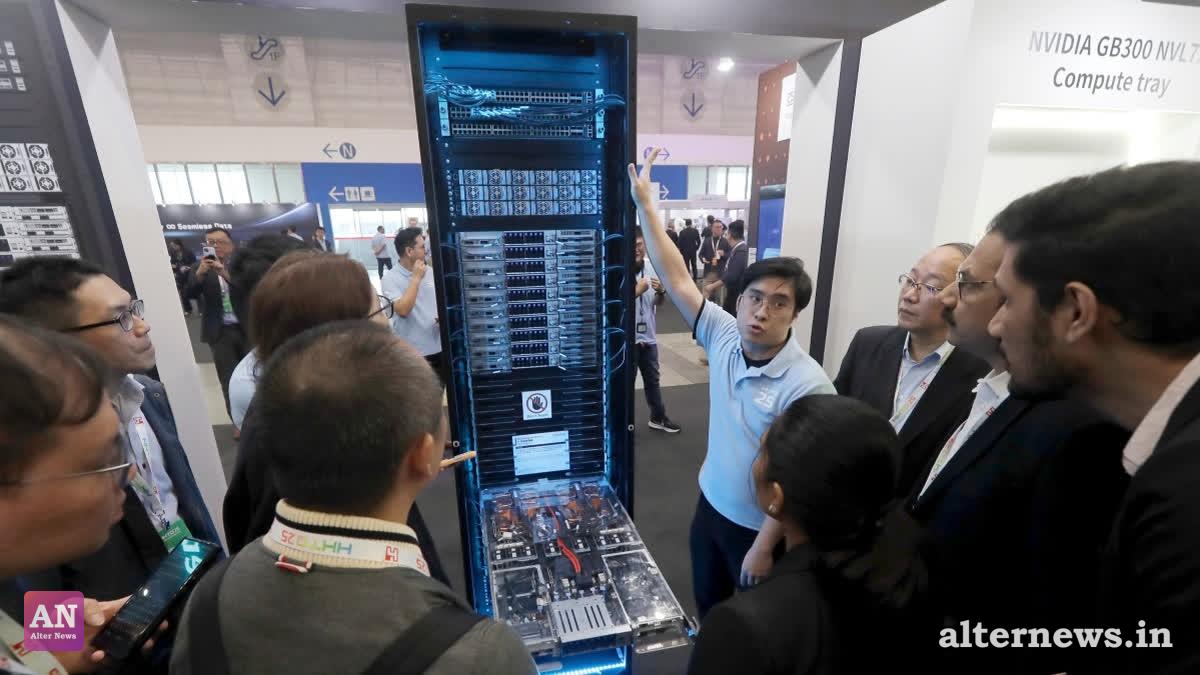
At the center of the investigation are high-performance AI servers housing restricted graphics processing units (GPUs) designated as “B300.” Under current regulations, any export of these advanced processors requires stringent review and government licensing, alongside mandatory on-site client verification by vendor personnel for shipments exceeding eight units.
According to prosecutorial filings, the illicit operation successfully routed 74 restricted AI servers into mainland China through multiple transshipment hubs:
50 servers were routed through Indonesia.
16 servers were shipped directly into China.
8 servers were moved through Japan and Hong Kong before landing on the Chinese mainland.
Investigators revealed that an additional attempt to smuggle 56 AI servers was intercepted and foiled, leaving those units impounded in Taiwan.
To obscure the true end-destination of the hardware, the defendants allegedly established front operations—including a shell company in Japan—and created falsified documentation alongside fake corporate websites to deceive compliance inspectors.
Prosecutors are seeking maximum five-year prison sentences for four key defendants. Among them is a senior Nvidia manager identified only by his surname, Chang, whom authorities labeled as the "key figure" responsible for authorizing the unauthorized release of the B300 hardware. Prosecutorial documents noted that Chang demonstrated a "clearly poor attitude" during post-arrest questioning.
In response to the charges, Nvidia spokesperson Patrick Rutherford stated, "We will work with the Taiwan authorities to help them resolve the allegations as quickly as possible."
San Jose-based Super Micro Computer noted that the charges against two of its former employees stemmed from its own active cooperation with local law enforcement, adding that the firm remains committed to enhancing its global export controls to protect proprietary technology.
The case highlights the intensifying struggle to enforce trade restrictions surrounding cutting-edge chips, which serve as the backbone for modern AI applications, military computing, and complex national security infrastructure.