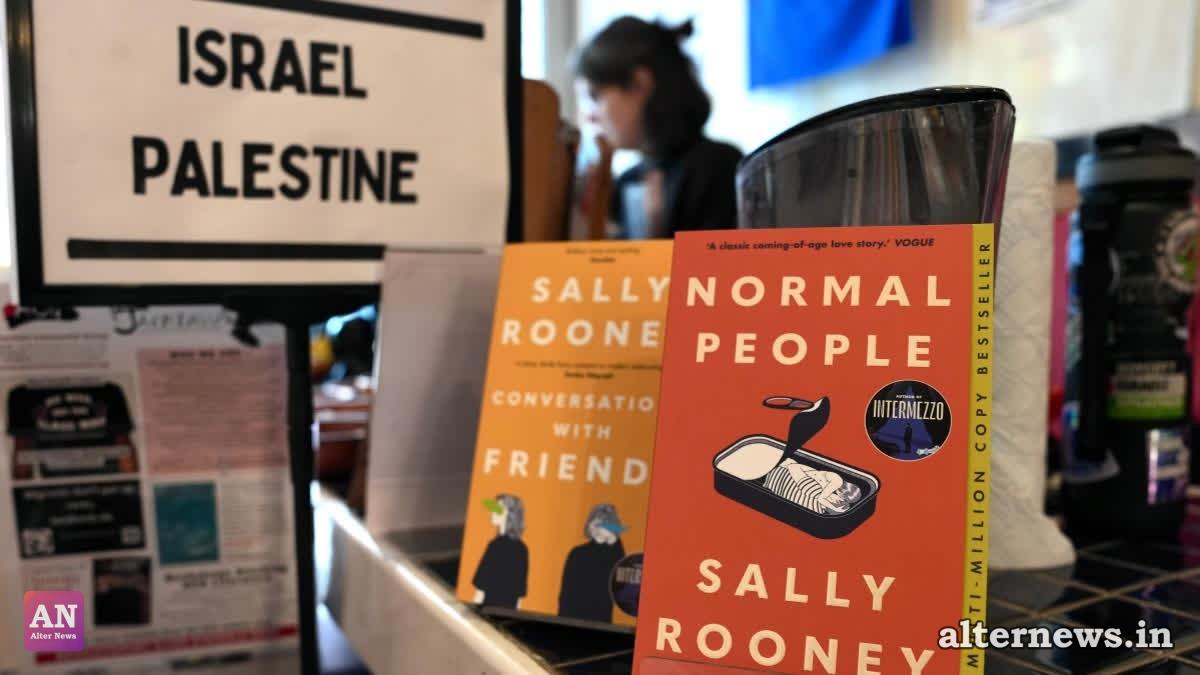
LONDON — British bookstores are scrambling to clear their shelves following a dramatic announcement that award-winning Irish novelist Sally Rooney’s books are being pulled from the U.K. market. The unprecedented move comes after her publisher, Faber, stated it can no longer legally distribute her work or pass on earnings due to the author's vocal and financial backing of Palestine Action, a group proscribed as a terrorist organization by the British government.
The controversy intensified after Rooney openly pledged to donate royalties from her bestselling novels—such as Normal People, Conversations with Friends, and Intermezzo—alongside television adaptation fees, to support Palestine Action.
In an article published in The Irish Times, Rooney defended her position, writing: "I too support Palestine Action. If this makes me a 'supporter of terror' under U.K. law, so be it." She has sharply criticized the U.K. proscription, labeling it "a truly extreme assault on ordinary rights and freedoms."
Faber explained that the current legislative framework in Britain has created an impossible dilemma for the publishing house. Because Rooney intends to channel her proceeds into a banned entity, the publisher cannot legally transfer U.K. earnings to the author. "To sell a writer's work and not be able to pass on earnings is an unconscionable situation for a publisher," Faber said in a statement.
The U.K.’s Labour government outlawed Palestine Action under terrorism legislation following direct-action protests, including an incident where activists breached a Royal Air Force base to protest British military alignment with Israel's military campaign in Gaza. Under the sweeping ban, membership or expression of support for the group is treated as a criminal offense carrying potential prison sentences of up to 14 years.
The ban has triggered massive national debate. Human rights and civil liberties organizations argue that the legislation and subsequent arrests—numbering over 3,000 individuals for actions ranging from holding demonstration signs to digital advocacy—severely infringe upon free speech and the right to protest. Legal representatives for Palestine Action are scheduled to bring a challenge before the U.K. Supreme Court next month to seek an overturn of the ban, with numerous related legal proceedings currently paused pending the court's verdict.
For British booksellers and literary fans alike, the sudden disappearance of one of contemporary fiction’s biggest voices marks a startling collision between international geopolitics, domestic counter-terrorism laws, and the freedom of expression in the publishing industry.