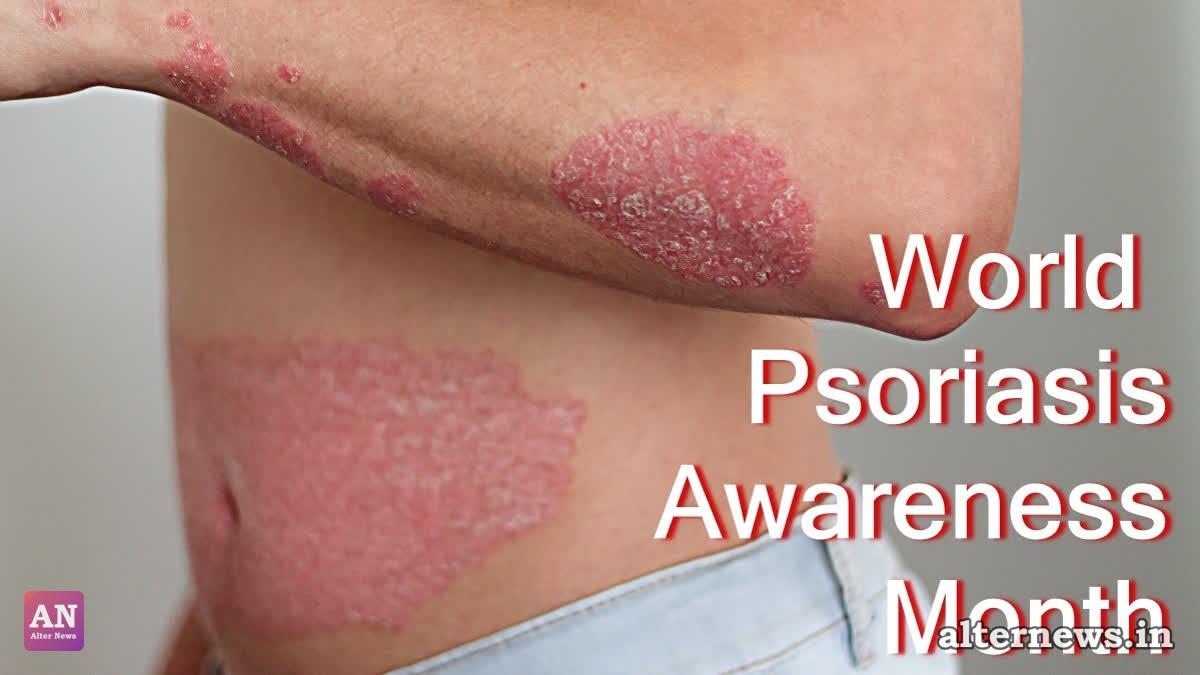
NEW DELHI — As World Psoriasis Awareness Month comes to a close this August, medical experts are urging a shift in how society views and manages this persistent condition. Often dismissed as mere cosmetic dry patches or surface-level rashes, psoriasis is increasingly recognized as a complex, chronic immune-mediated inflammatory disorder that demands comprehensive care.
While visible red, scaly, and itchy plaques commonly surface on areas like the elbows, knees, and scalp, the root cause lies deep within the body’s immune mechanism.
Accelerated Cell Turnover and Psychosocial Toll
In healthy skin, cells gradually grow, mature, and shed over weeks. However, in individuals living with psoriasis, systemic inflammation drastically accelerates this biological cycle. Skin cells rise to the surface in just days, accumulating into thick, elevated scales.
"This chronic inflammatory state drives rapid skin cell turnover," explains Dr. Jagriti Yadav, Medical Director of Lab Operations at Cryoviva Life Sciences. "Beyond physical pain and severe itching—which frequently interrupt restful sleep—the visible nature of these lesions exerts a profound emotional toll. Many patients endure diminished self-esteem, social withdrawal, and psychological distress."
The Horizon: Regenerative Medicine and Stem Cells
Medical researchers are increasingly shifting focus from treating visible symptoms to addressing the underlying inflammatory pathways. Promising avenues include Mesenchymal Stem Cells (MSCs)—naturally occurring cells in human tissues that can also be harvested from sources such as umbilical cord tissue and the placenta.
Scientists are investigating whether MSCs can assist in modulating immune system activity and aiding tissue repair. "The objective is to establish whether their ability to regenerate cells and regulate immunity can have future applications in treating chronic inflammatory disorders like psoriasis," notes Dr. Yadav.
While researchers emphasize that stem cell therapies for psoriasis remain an emerging field requiring extensive clinical validation, these investigations represent a significant step toward targeted therapies.
Holistic Management: Daily Habits Matter
Because psoriasis lacks a single universal remedy, dermatologists tailor treatment protocols to the severity of symptoms, overall health status, and individual patient needs. Medical prescriptions remain the foundation of care, but experts stress that targeted lifestyle adjustments play a key supporting role.
Health professionals recommend maintaining a well-rounded management routine:
Adhering strictly to prescribed dermatological treatments and topical therapies.
Maintaining a healthy weight and eating a nutrient-rich, balanced diet to lower systemic inflammation.
Incorporating regular physical activity and prioritizing quality sleep to aid immune recovery.
Practicing stress management, as psychological stress is a well-documented flare-up trigger.
Avoiding smoking and limiting alcohol, both of which can exacerbate systemic inflammation.
As awareness surrounding the condition grows, the medical consensus is clear: managing psoriasis requires looking beyond what is visible on the surface. Early clinical diagnosis, consistent medical supervision, and healthy daily habits remain the most effective strategy for managing the condition and preserving quality of life.