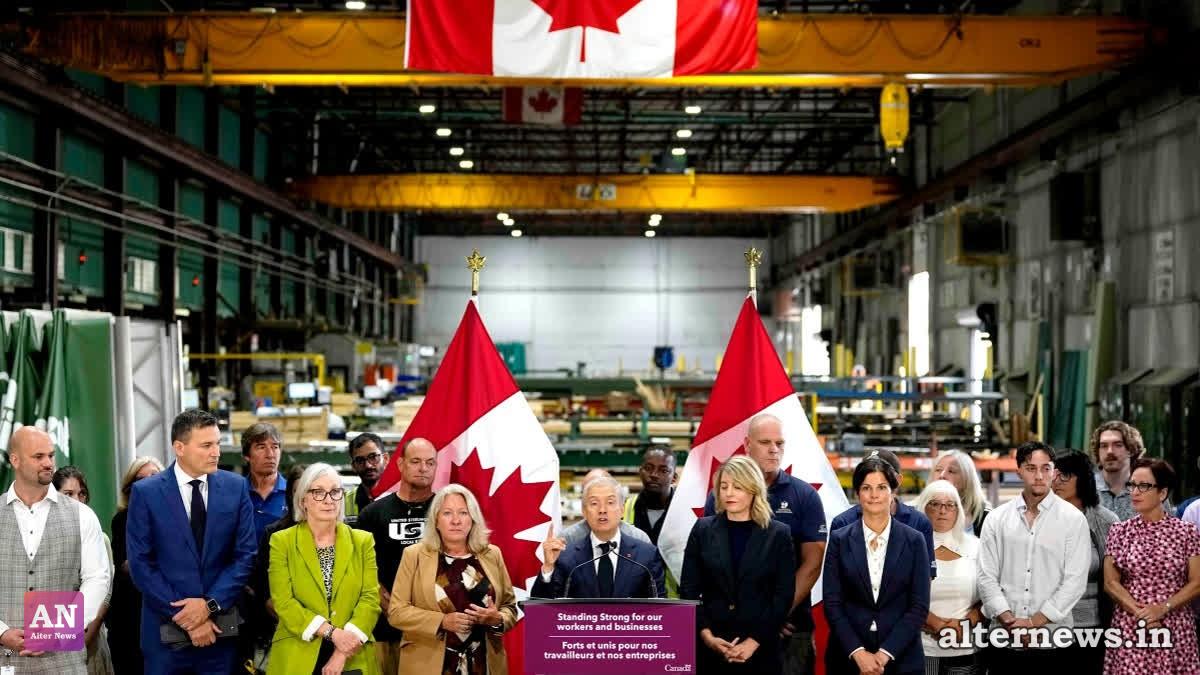
TORONTO — Relations between the United States and Canada reached a perilous breaking point on Tuesday as Ottawa struck back against Washington with retaliatory tariffs targeting roughly $20 billion worth of American products. The swift response escalates a high-stakes trade conflict between the long-standing cross-border partners.
Effective September 8, the Canadian government will match US tariff rates—ranging from 15% to 50%—across more than 700 American goods. The measures will hit industrial mainstays like steel, aluminum, pulp, and paper, alongside consumer staples including dairy products, seafood, clothing, furniture, cosmetics, and toilet paper.
The retaliation comes in response to the Trump administration’s sudden decision over the weekend to slap 50% tariffs on Canadian exports following a complete breakdown in bilateral trade negotiations.
'An Unprecedented Challenge'
Speaking in Ottawa, Canadian Finance Minister François-Philippe Champagne emphasized that Canada was forced into action to protect its domestic economy.
"We did not choose this conflict, but when our economic integration is used as a weapon rather than the foundation for a win-win partnership, we need to stand up," Champagne said, describing the crisis as "an unprecedented challenge imposed on Canada."
Canadian Prime Minister Mark Carney voiced stark criticism of the negotiating tactics employed by the US administration, accusing American officials of attempting to undermine vital Canadian economic sectors.
"We learned during the negotiations that the Americans want to destroy our major industries, including autos, steel, and aluminum," Carney stated. "That was one of the main reasons we said no. It was a bad deal."
Carney rejected the notion that Ottawa would bow to pressure, asserting, "An attitude at the negotiation table that Canada is a subsidiary of the United States is not something we're going to accept."
Trump Escalates Rhetoric
The dynamic worsened early in the week when President Donald Trump warned Canadian leaders to "fall in line" or brace for consequences "far worse" than existing trade measures, threatening additional 50% tariffs on Canadian auto parts, vehicles, and raw steel.
Adding fuel to the dispute, President Trump publicly suggested that the United States is considering renaming Lake Ontario to "Lake America"—a jab aimed directly at Ontario Premier Doug Ford.
President Trump also targeted Prime Minister Carney on social media over reports that US negotiators had framed Quebec’s French-language labeling rules and cultural protections as trade barriers. While Carney defended those policies as non-negotiable cultural rights, Trump posted that he had no interest in interfering with Canadian language rights, accusing the Prime Minister of fabricating the issue for political points in Quebec.
Cushioning the Economic Impact
Canadian officials underscored that the primary objective of the counter-tariffs is to safeguard Canadian enterprises and divert supply chains away from US imports rather than generate government revenue.
Under the new schedule:
50% Duties: Applied to select steel and aluminum products, furniture, and apparel.
25% Duties: Applied to home appliances, dairy products like cheese, seafood, and derivative metal goods.
Existing Tariffs: Previous Canadian counter-duties on US automobiles will stay in effect.
To buffer domestic industries against the fallout, Ottawa announced a $7.5 billion CAD ($5.4 billion USD) support package aimed directly at affected businesses and workers. This brings total tariff-related government support to over $30 billion CAD ($21.7 billion USD) since early 2025.
Small Businesses Caught in the Crossfire
Despite government relief measures, small business owners and workers on both sides of the border are preparing for economic friction. Deeply integrated cross-border supply chains mean that prolonged tariffs could drive up manufacturing costs and consumer prices in both nations.
"To say that we don't need Canada is just disingenuous," said Michael Howard II, co-owner of a furniture manufacturing company in Warren, Michigan. "It's dishonest and just absolutely not truthful. We need our neighbor, but also they need us."
As September 8 approaches, both capitals remain at a standoff, with market analysts warning that sustained tariffs risk disrupting supply chains across North America.