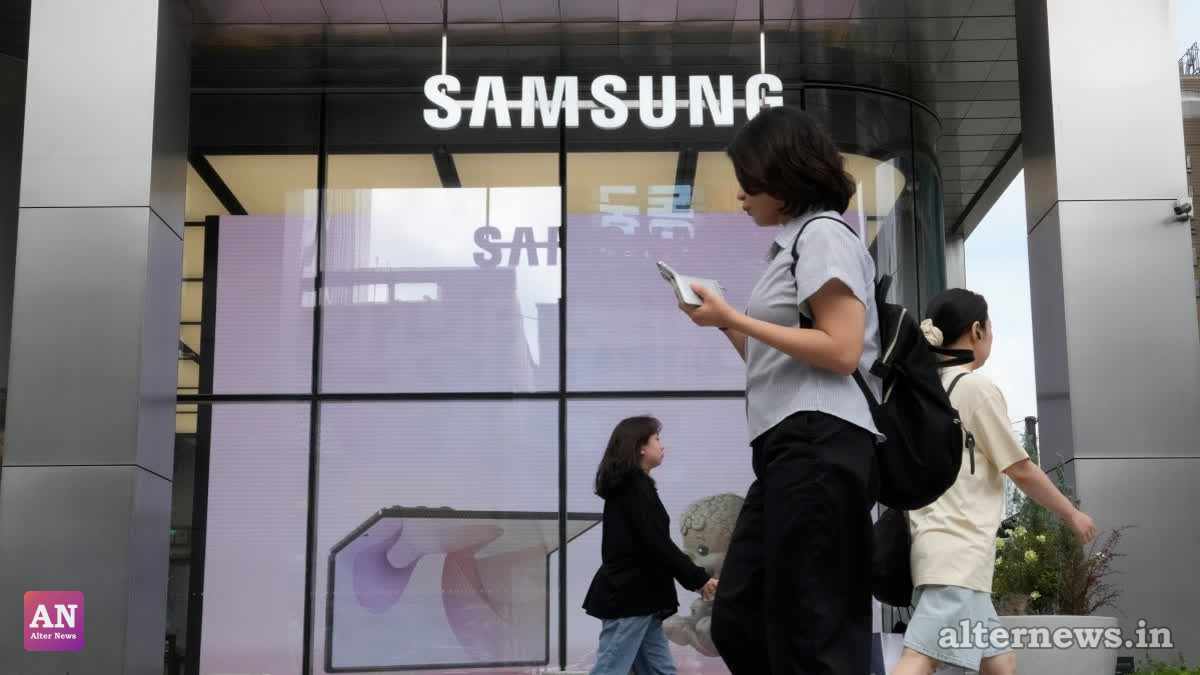
SEOUL — Tech giant Samsung Electronics delivered a landmark financial performance in the second quarter, posting a nearly 1,300% surge in net profit as global appetite for artificial intelligence infrastructure drove semiconductor sales to unprecedented heights.
The South Korean tech giant reported a net profit of 71.62 trillion won ($49.6 billion) for the April–June quarter—up from 5.11 trillion won during the same period last year. Operating income surged by 1,813.8% year-on-year to 89.49 trillion won, while total sales jumped 130% to 171.49 trillion won.
The quarterly results marked the third consecutive quarter of record revenue and operating profit for the world’s leading memory chipmaker, matching consensus forecasts across major financial institutions. Earnings per share reached 10,849 won for both common and preferred shares, representing a 52% increase over the previous quarter.
Semiconductor Division Drives the Boom
While consumer device sales cooled, Samsung's core semiconductor division carried the weight of the company’s performance. The unit generated a record 127.5 trillion won in sales and 89.2 trillion won in operating profit for the quarter.
Industry analysts attribute the sharp turnaround to booming corporate capital expenditure on AI data centers and server networks, which has tightened global supply for high-end memory products, keeping chip prices elevated across DRAM and NAND flash segments.
"Samsung has leveraged its market leadership to capitalize directly on the global AI infrastructure buildout," the company stated in a press release accompanying the earnings declaration.
Bullish Outlook for H2 and Beyond
Looking toward the second half of the year, Samsung executives projected sustained strength in memory chip demand, citing accelerated corporate adoption of agentic AI solutions and expanding server capabilities worldwide.
"The supply-demand gap is expected to widen further next year compared with this year," company representatives noted during an earnings conference call. To capitalize on the momentum, Samsung plans to optimize its product mix for DRAM and NAND memory to better align with evolving enterprise customer requirements.
In addition, Samsung highlighted expected margin improvements in its foundry business, where strategic restructuring efforts are redirecting capital toward high-margin segment growth.
To reinforce its market positioning, Samsung increased its second-quarter capital expenditure to 16.8 trillion won—up 5.5 trillion won from Q1—allocating 15.4 trillion won directly into chip fabrication and research facilities.