WASHINGTON / TORONTO — U.S. President Donald Trump has repeatedly declared that the United States has no economic need for Canada. Taking to social media recently, Trump posted, "WE DON'T NEED CANADA, THEY NEED US!"—doubling down on his long-standing framing of North American bilateral trade.
However, economic data, industry experts, and even members of Trump's own administration present a starkly different reality. Every single day, roughly four million barrels of Canadian crude oil cross the border to fuel American vehicles, power domestic industries, and supply Midwest refineries.
Far beyond energy, the U.S. economy remains intricately tied to Canadian raw materials, agricultural inputs, and manufacturing components.
The Energy Engine Behind American Industry
Canada stands as the second-largest trading partner to the U.S. after Mexico, with total bilateral trade in goods and services reaching approximately $872 billion last year. Energy sits at the core of this economic partnership.
According to the U.S. Energy Information Administration (EIA), imports of Canadian crude oil account for nearly 20% of total U.S. petroleum consumption. A majority of this heavy crude flows directly into refineries across the American Midwest, which were specifically constructed to process Canadian oil into gasoline, diesel, and aviation fuel.
Daniel Béland, a political science professor at McGill University, pushed back directly against the White House narrative, calling the claim that America doesn't need Canada "absolutely false." He pointed out that deep integration in energy and manufacturing creates a mutual dependence that cannot be instantly severed.
The White House has frequently cited the U.S. goods trade deficit with Canada—which reached $48.3 billion last year—as evidence of an unbalanced partnership. However, economists note that energy purchases alone account for that entire gap. Without Canadian energy imports, the U.S. would actually maintain a trade surplus with Canada. Furthermore, Canadian heavy crude typically trades at a discount relative to U.S. benchmark crude, saving American buyers money.
Tariffs, Contradictions, and Critical Materials
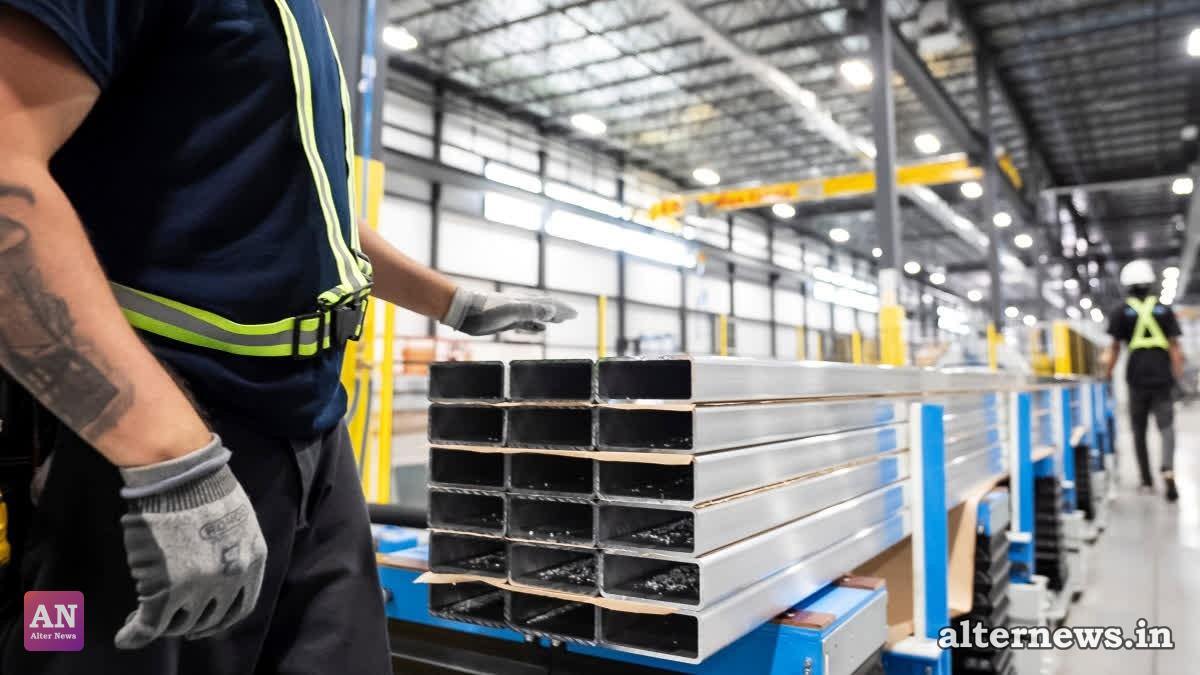
The ongoing trade friction escalated after talks broke down last week, prompting Washington to hit roughly $20 billion worth of Canadian goods with 50% tariffs. While energy exports have so far been exempted, Trump imposed a 50% tariff on Canadian aluminum—even while publicly acknowledging America's reliance on the metal.
"This country desperately needs aluminum," Trump conceded during recent public remarks. "We don't have it. We get it all from Canada for the most part, and we need it badly."
The contradiction highlights key vulnerabilities across U.S. supply chains:
Aluminum: Canada is America’s primary foreign source of aluminum. Smelting requires vast quantities of electricity—an area where hydro-rich Canada holds a dominant structural advantage.
Potash & Agriculture: U.S. farmers rely on Canada for more than 80% of their potash, a critical fertilizer element for Midwestern corn and soybean crops. Even U.S. Ambassador to Canada Pete Hoekstra noted in June: "America has a tremendous amount of things where we have a need... We need potash."
Automotive Integration: Vehicle manufacturing across North America is so intertwined that individual car parts frequently cross the U.S.-Canada border up to six times prior to final assembly. Tariffs on Canadian auto parts or metals directly inflate production costs for automakers in Michigan and Ohio.
Powering the AI Surge: Artificial intelligence infrastructure requires massive electrical capacity. Canada provided 85% of U.S. electricity imports in 2023, and Canadian officials have noted that upcoming hydro and nuclear projects could help power expanding U.S. data centers.
Canadian Political Leaders Debate Leverage
As Washington threatens further levies—including a proposed 50% tariff on Canadian vehicles by 2027—Canadian leaders are debating how aggressively to respond.
Ontario Premier Doug Ford accused the White House of spreading "fake news" regarding Canada's economic relevance, pointing to critical commodities like potash as vital leverage. Former Alberta Premier Jason Kenney suggested that Ottawa should keep targeted export taxes on oil, fuel, or fertilizer on the table if escalation continues, noting such measures would hit U.S. agricultural and automotive sectors hard ahead of upcoming midterm elections.
However, other provincial leaders have urged caution. Alberta Premier Danielle Smith rejected weaponizing oil exports, warning that interrupting crude shipments would cause self-inflicted damage to Canada's economy. Similarly, Saskatchewan Premier Scott Moe opposed resource export tariffs, warning they could drive U.S. buyers toward alternative suppliers like Russia or Belarus. Instead, Saskatchewan announced a targeted 50% reciprocal charge on U.S. alcohol imports.
As trade tensions linger, the economic numbers confirm that while political rhetoric emphasizes independence, the physical supply chains powering North America tell a story of deep interdependence.