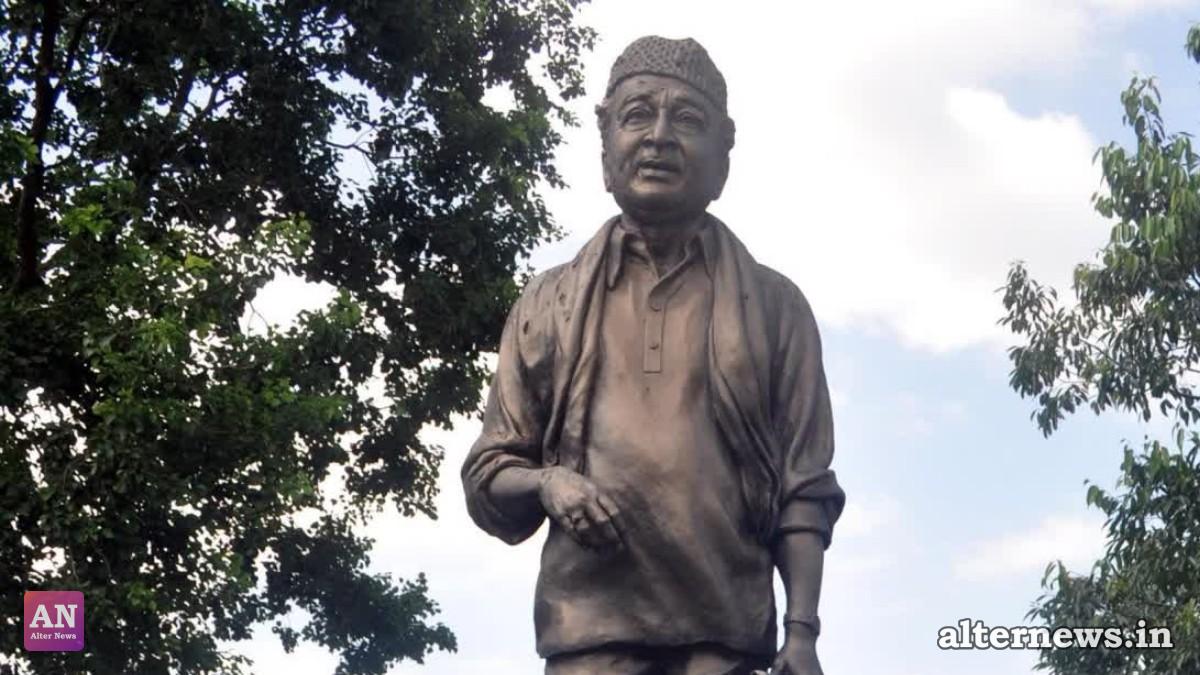
GUWAHATI — As Assam and the nation celebrate the birth centenary of the legendary "Bard of the Brahmaputra," Bharat Ratna Dr. Bhupen Hazarika, the true essence of his artistic legacy demands a deeper examination. Fifteen years after his passing, a familiar pattern has emerged—ceremonial tributes, grand commemorations, and emotional outpourings that often overshadow the core duties owed to his living memory.
Behind the public honors lies a stark reality: Dr. Bhupen Hazarika has increasingly been converted into a commercial brand by opportunists. Yet, a close reading of his extensive musical repertoire reveals that the cultural icon foresaw this very trend. Through his powerful lyrics, he repeatedly raised a stern voice against political maneuverings, societal selfishness, and those who treat culture merely as a commodity.
A Voice Championing Humanity Over Exploitation
Throughout his prolific career as a lyricist, composer, and singer, Dr. Hazarika's works went far beyond mere entertainment; they served as a mirror to society's conscience.
His lyrics frequently confronted the socio-political hypocrisies of his time.
Beyond Commercialization: Reclaiming the Vision
While commercial interests attempt to establish a "Bhupen Hazarika trade mark," critics and cultural observers emphasize that honoring the maestro requires internalizing his message rather than reducing his legacy to superficial events. His vision demanded active social responsibility, unity among diverse communities, and uncompromising resistance against greed.
On his 100th birth anniversary, the true homage to Sudhakantha does not lie in loud fanfare, but in preserving the revolutionary spark of his words—a legacy that continues to roar against corruption, division, and self-interest.