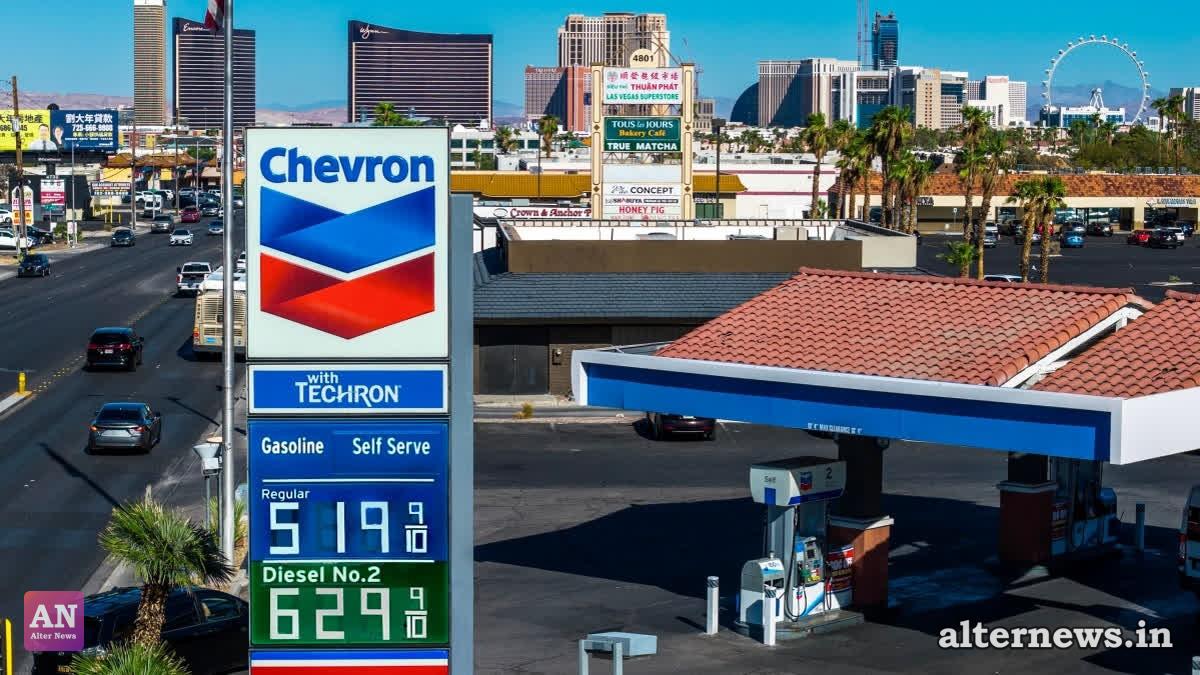
WASHINGTON — American motorists heading out for the final holiday weekend of the summer were met with unprecedented sticker shock at the pump, as U.S. fuel prices reached their highest Labor Day levels in history.
According to data from the AAA motor club, the national average for regular gasoline climbed to $4.14 per gallon ahead of the holiday.
For families across the country, the sustained surge in energy costs has transformed long-standing holiday traditions into costly burdens.
Nicole Collins, a driver refueling in Claymont, Delaware—where regular gas touched $4.199 per gallon—explained that high prices forced her family to stay home for most of the summer.
"Gas is pretty high right now," Collins said while filling up on her way to visit friends in South Carolina.
Geopolitical Strain on Energy Markets
Energy analysts attribute the current price pressure directly to ongoing international conflicts and severe disruptions to key maritime trade routes.
Crucial maritime traffic through the Strait of Hormuz—a vital global transit choke point for crude oil—has plummeted as the waterway remains largely restricted.
"Everything points to the Iran war and the Strait of Hormuz," said Tom Seng, a professor of energy finance at Texas Christian University.
While regular gasoline remains below its absolute, all-time record of $5.02 per gallon set in June 2022, commercial fuels are breaking historic benchmarks.
Refinery Bottlenecks and Global Supply Squeeze
Typically, pump prices experience a seasonal decline toward the end of summer as driving demand softens and refineries transition to producing cheaper winter-blend gasoline.
U.S. oil refineries are currently operating at near maximum capacity—around 98%—amid severe summer heat conditions in key processing hubs like Texas.
Simultaneously, international refining capacity faces pressure on multiple fronts:
Eastern Europe: Ukrainian drone attacks on Russian refining facilities continue to restrict regional diesel outputs.
Asia: Chinese refineries have reported declining production rates, curbing overall fuel exports into global markets.
"There's just less gasoline coming out of those refineries," noted Matthew Metzgar, a clinical professor of economics at the University of North Carolina at Charlotte.
Administration Response and Future Outlook
Speaking on ABC's This Week, U.S. Energy Secretary Chris Wright acknowledged the heavy burden on motorists compared to last year but emphasized that federal authorities are pursuing measure to bolster domestic energy production.
"Yes, they're higher today, but we're doing everything we can to push them down," Wright said.
In the short term, economic advisors suggest drivers utilize fuel-comparison apps to identify cheaper options, pointing out that gas stations along interstate corridors often charge 10 to 15 cents more per gallon than stations located just off main highways.
For additional visual coverage of how regional gas prices are impacting travelers across the country, see this