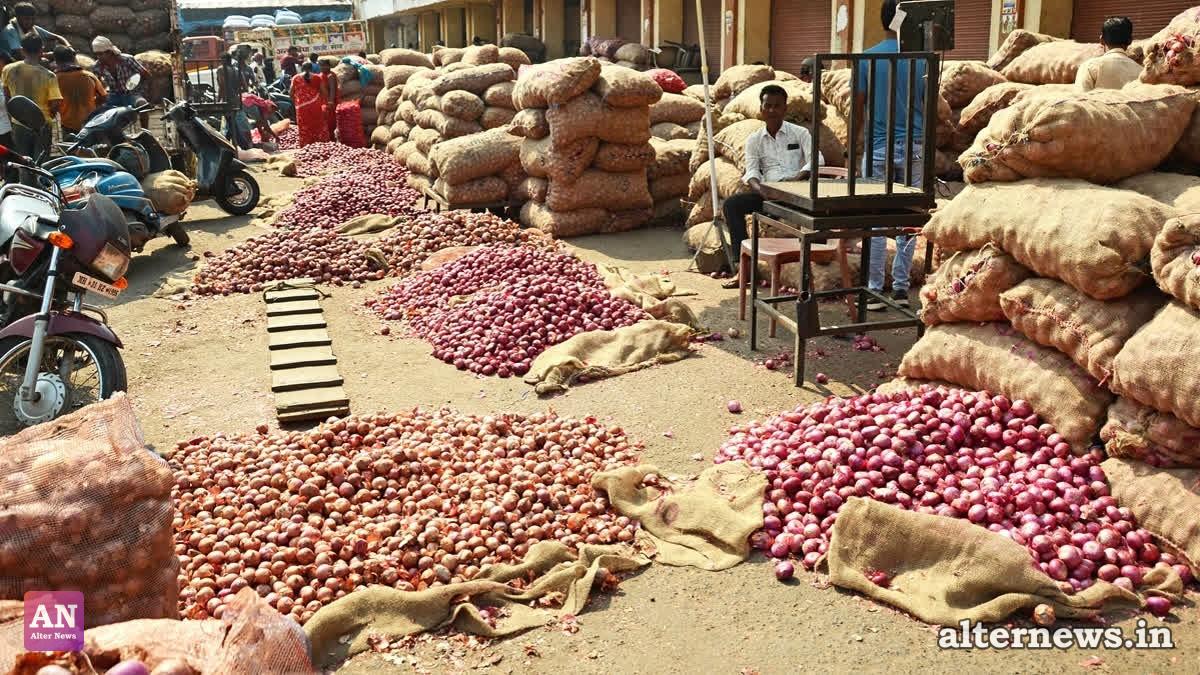
NEW DELHI — Indian households are bracing for an extended period of kitchen budget strain as retail onion prices continue their steep upward trajectory across the country. Market analysts and agricultural experts caution that relief is unlikely until at least mid-November 2026, pointing to a compounding mix of weather-induced crop failures, heavy post-harvest storage losses, and severe gaps in supply chains.
The price surge comes on the heels of rising costs for other essential commodities, including cooking oil, sugar, and LPG cylinders, putting lower- and middle-income families in a tight financial spot ahead of the upcoming festive season.
Unpredictable Monsoon Disruption
The core driver behind the supply squeeze is a delayed and erratic monsoon season across major onion-producing hubs, particularly in Maharashtra, Karnataka, Andhra Pradesh, and Rajasthan.
In Nashik, Maharashtra—regarded as India’s onion capital—the transplantation of the critical Kharif crop has faced unprecedented delays. Against a seasonal average transplantation target of nearly 30,000 hectares, farmers have managed to cover only a tiny fraction of fields. Normally, around 70 percent of planting is completed by early September; this year, excessive dry spells followed by sudden heavy downpours severely disrupted field operations and nursery seedbeds.
As a result, fresh Kharif harvest arrivals—which usually hit wholesale markets by mid-October to bridge seasonal gaps—are pushed back to late November or early December.
Depleting Stored Rabi Stocks and High Spoilage
Between May and October, Indian consumer markets rely almost entirely on stored summer (Rabi) onions. However, unseasonal rainfall during the harvest season in March and April damaged crop quality and drastically reduced its shelf life.
Traditional storage facilities, known locally as kanda chawls, have struggled against high humidity and temperature fluctuations. Market estimates suggest that between 20 to 40 percent of stored stocks have been lost to rot, sprouting, and weight loss. In Nashik's wholesale markets, nearly 80 percent of the 24 lakh tonnes of summer onion reserves have already been liquidated, leaving remaining stocks precariously low.
At the Lasalgaon Agricultural Produce Market Committee (APMC), Asia's largest wholesale onion market, average wholesale rates spiked from around ₹1,740 per quintal in late June to over ₹4,500 per quintal, marking some of the highest levels seen in two years. In retail markets across major metros like Delhi, Chennai, and Mumbai, prices have breached ₹60 per kilogram.
Government Interventions and Market Outlook
To cushion the blow for consumers, the central government has initiated market stabilization measures. Specialized procurement bodies—including NAFED (National Agricultural Cooperative Marketing Federation of India) and NCCF (National Cooperative Consumers' Federation of India)—have begun releasing buffer stocks into high-deficits regions via rail and road express routes.
Mobile vans and fair-price retail outlets in multiple cities are selling subsidized onions at ₹35 per kilogram. Additionally, state governments, such as Tamil Nadu, have launched subsidized distribution drives through urban ration shops and cooperative outlets to tame retail inflation.
Despite these interventions, market operators maintain that retail prices will remain firm until regular, large-volume arrivals from Karnataka, Maharashtra, and Rajasthan stabilize the wholesale supply line toward the end of November 2026.