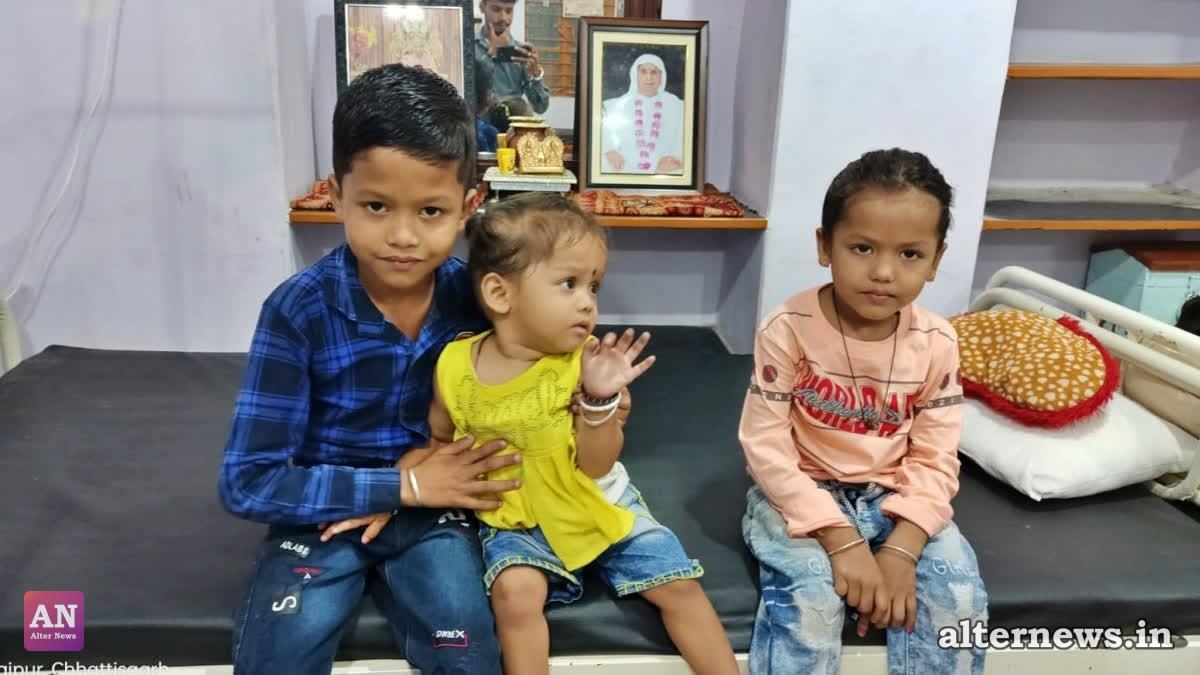
NEW DELHI — In a poignant twist to traditional Raksha Bandhan celebrations—where brothers typically vow to protect their sisters—a two-year-old girl has redefined sibling love by giving her older brother the ultimate gift: a second chance at life.
Som Yadav was just five months old when doctors diagnosed him with Thalassemia Major, an inherited blood disorder that severely impairs the body’s ability to produce healthy hemoglobin. Without sufficient hemoglobin, red blood cells cannot transport oxygen effectively, leaving patients dependent on lifelong, frequent blood transfusions to survive.
Som’s younger sister, Saumya, was later diagnosed with the same severe condition. Hailing from a small, financially vulnerable village, the children's parents faced a relentless monthly ordeal to arrange medicines and compatible blood supplies. For years, finding a permanent cure seemed out of reach because neither parent nor existing family member provided a full Human Leukocyte Antigen (HLA) match.
The family’s trajectory changed drastically following the birth of their third child, Khushi, in 2021.
Through a collaborative healthcare drive organized by Narayana Health, the KASH Foundation, and non-profit organization DKMS Foundation India, the family underwent free high-resolution HLA typing. The results brought an incredible breakthrough: little Khushi was a perfect 12/12 HLA match for her brother Som.
In 2023, at just two years old, Khushi underwent the stem cell donation process. Too young to fully comprehend the clinical medical procedure, the toddler nevertheless became her brother's savior.
Today, Som has recovered, no longer relies on regular blood transfusions, and is living a vibrant, normal life attending school.
India's Escalating Thalassemia Challenge
Som’s victory highlights a vast public health challenge across India, where over 10,000 children are born with Thalassemia Major each year. While stem cell transplantation offers a definitive cure, securing a matching donor remains a formidable obstacle.
Only about 30% of patients find a fully matched donor within their immediate family. For the remaining 70%, the search depends on finding an unrelated donor through global registries—a task made difficult by India's complex genetic diversity and a low donor registration rate.
Speaking on the medical milestone, Patrick Paul, Executive Chairman of DKMS Foundation India, emphasized the urgent need for awareness and donor registration.
"Som and Khushi's story gives Raksha Bandhan a meaningful dimension, but it also highlights an important healthcare reality: not every patient with a blood disorder is fortunate enough to find a matching donor within their family," Paul stated. "Only 0.09% of Indians in the relevant age group are registered as blood stem cell donors. We work to bridge this gap by helping economically disadvantaged patients access high-resolution HLA typing and connecting them with registries worldwide."
As families across the nation celebrate Raksha Bandhan, Khushi and Som’s story stands as a beacon of hope—proving that protection within a family knows no age limit or gender boundaries.